

More news on this day
Oahu has been hit hard by a relentless Kona low that has already soaked Kauai, Maui County, Hawaii Island, Molokai, Lanai and other islands, unleashing torrential rain, flooding and major disruptions to travel across Hawaii.
Get the latest news straight to your inbox!
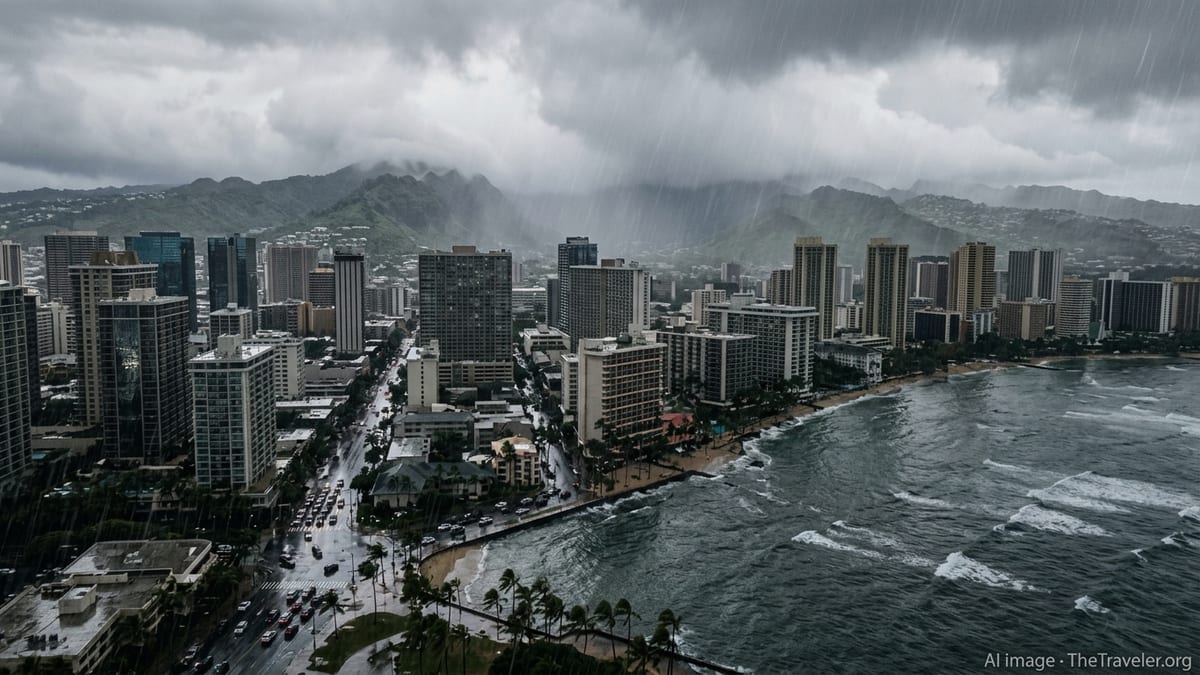
Relentless Winter System Soaks the Island Chain
The latest Kona low, a slow moving winter storm system spinning to the west of Hawaii, has funneled deep tropical moisture over the islands for days, turning normally busy travel corridors into waterlogged bottlenecks. After first hammering Kauai and the western end of the chain, the system shifted east, drenching Oahu before spreading heavy rain and thunderstorms over Maui County and Hawaii Island.
Publicly available information shows that the event follows an earlier round of severe weather that already left soils saturated and waterways running high. As the new surge of moisture moved in, rain rates intensified, especially in windward and mauka areas, where steep terrain helped squeeze out additional rainfall. The resulting runoff quickly overwhelmed drainage systems, sending muddy water across highways, into residential areas and through popular visitor districts.
Reports indicate that the slow pace of the Kona low has been a key factor in the severity of the flooding. Rather than sweeping past in a matter of hours, the storm’s circulation has remained nearly stationary at times, allowing repeated bands of downpours to sweep over the same communities. In many locations, conditions have alternated between brief lulls and bursts of rain heavy enough to obscure visibility and close already saturated roads.
Meteorological agencies describe Kona lows as cold core storm systems that typically form during the cool season and can linger over the region for days. This system fits that pattern, arriving on the heels of another potent Kona low that brought historic flooding and large scale damage across parts of the state earlier in March.
Road Closures, Power Cuts and Disrupted Daily Life
Across Oahu, the latest wave of rain has compounded challenges from earlier flooding. Published coverage notes that thousands of residents have experienced power outages in recent days, particularly in low lying and North Shore communities where floodwater and debris have damaged electrical infrastructure. Utility crews have been working in difficult, muddy conditions to restore service while monitoring for landslides and undercut roadways.
In Honolulu and surrounding urban corridors, key arterial roads have seen recurrent closures as storm drains struggled to keep up. Pooling water and fast moving runoff have made some underpasses and low spots impassable, leading to long traffic backups and detours that ripple through the rest of the city’s already congested network. On the windward side, popular coastal routes have been reduced to one lane in places due to localized landslides and shoulder erosion.
Maui County, including the islands of Maui, Molokai and Lanai, has reported similar problems, with flash flooding cutting off access to rural communities and damaging smaller bridges and culverts. On Hawaii Island, saturated slopes and ongoing downpours have kept emergency advisories in place for neighborhoods prone to river flooding and debris flows. For residents in many of these areas, day to day routines such as commuting to work, shopping for supplies or visiting family have become unpredictable, often hinging on rapidly changing conditions.
Travelers have also been forced to adapt on short notice. Visitors hoping to drive scenic routes such as parts of Maui’s coastal highways or Oahu’s North Shore have encountered barricades, rough detours and long waits as crews assess stability and clear mud and rocks. Tourism businesses that depend on reliable road access, from small inns to tour operators, face a cascade of cancellations and rescheduling as the Kona low prolongs its grip on the region.
Airports, Flights and Interisland Travel Under Strain
The strong Kona low has not only flooded roads but also disrupted air travel, with major and regional airports across the islands contending with intense rain bands, low ceilings and shifting winds. According to airline and airport operations updates, carriers have issued weather advisories, rebooked passengers and, in some cases, canceled or delayed flights when conditions briefly fell below safe operating thresholds.
Honolulu’s Daniel K. Inouye International Airport, the state’s primary hub, has remained open but has experienced periodic slowdowns as ground crews work in heavy rain and standing water to turn aircraft and move baggage. Ground handling operations can become more complex during such events, as lightning, gusty winds and poor visibility trigger additional safety protocols and narrow the windows in which crews can work.
On neighbor islands, smaller airports have felt the strain of the Kona low in different ways. Low clouds and reduced visibility have affected interisland and commuter flights that depend on visual approaches into valley and coastal runways. Some communities, particularly on Maui, Molokai and Lanai, rely heavily on these short hops for essential travel to medical appointments, business trips and family visits. Cancellations and diversions in this segment of the network can quickly cascade, leaving travelers stranded or facing long waits for the next available seat.
Interisland cargo and mail operations have also contended with the storm’s impacts. When flights are delayed or canceled, the movement of fresh food, parcels and critical supplies between islands can slow, adding another layer of disruption for residents and businesses already coping with outages and blocked roads. Logistics companies are working around the weather windows, routing shipments through whichever airports can operate safely at a given time.
Tourism, Bookings and Visitor Safety
Hawaii’s tourism sector, which spans Oahu’s dense hotel districts, Kauai’s resort areas and the smaller visitor hubs on Maui, Hawaii Island, Molokai and Lanai, is facing a complicated mix of short term disruption and longer term concern. Travel industry reporting indicates that the most immediate impacts are schedule related, with visitors experiencing delayed arrivals, missed connections and disrupted itineraries as flights and ferries adjust to the weather.
Once on the ground, many vacationers are finding that outdoor plans need to be scaled back or postponed. Popular beaches and hiking trails have been affected by runoff, murky water and unstable slopes, prompting a wave of advisories to avoid swollen streams, flooded coastal parks and areas with falling rock hazards. Tour and activity providers have shifted to a day by day approach, making decisions each morning based on current warnings and the condition of access roads.
Hotels and short term rentals on Oahu and the neighbor islands are fielding a high volume of questions about safety, refunds and rebooking options. Industry groups have emphasized the importance of flexibility, encouraging travelers to stay in close contact with airlines and accommodations and to pay attention to official forecast updates before setting out on any excursions. For many visitors, the focus has turned from sightseeing to simply staying dry and informed until conditions improve.
Despite the challenges, tourism observers note that many core services remain in operation, particularly in major urban areas where drainage infrastructure is more robust. Restaurants, cultural attractions and indoor venues continue to serve guests, even as staff commute through difficult conditions. The overall message from the travel sector is one of caution rather than alarm, with an emphasis on patience while the Kona low system slowly loses its grip on the islands.
Longer Term Questions About Extreme Rain Events
The back to back Kona lows that have soaked Hawaii this March are prompting broader questions about how the islands handle increasingly intense and frequent heavy rain events. Climate researchers cited in recent analyses point to a trend toward more extreme downpours in the subtropical Pacific, a pattern that can amplify the impacts of systems like Kona lows, especially when they stall over the region.
Infrastructure planners have long regarded flooding and landslides as central risks for island communities built along narrow coastal plains and steep valleys. The damage from repeated storms in quick succession has renewed attention on drainage capacity, slope stabilization and the resilience of critical lifelines such as highways, airports and power grids. Local agencies are beginning to compile detailed damage assessments from this month’s events, information that will likely shape future investment and mitigation strategies.
For the travel industry, the storms are a reminder that Hawaii’s celebrated scenery and mild climate coexist with powerful seasonal systems that can reshape plans in a matter of hours. As the state’s tourism economy continues to rebuild and adapt, operators are increasingly focused on clear communication about weather risks, flexible booking policies and contingency plans for visitors who find themselves suddenly cut off by flooded roads or grounded flights.
Publicly available forecasts suggest that, while the current Kona low is expected to weaken and move away within days, the cleanup and recovery across Oahu, Kauai, Maui County, Hawaii Island, Molokai, Lanai and neighboring islands will take significantly longer. For residents and travelers alike, the priority in the coming days will be navigating lingering disruptions while watching the skies for a long awaited return to more typical trade wind weather.