

More news on this day
A historic Kona low storm system has unleashed days of torrential rain and flooding across Hawaii, disrupting air travel for thousands of visitors from the United States, Japan, Canada, South Korea, Australia, and the United Kingdom as major carriers cancel flights and hotels report a surge of last-minute cancellations and rebookings.
Get the latest news straight to your inbox!
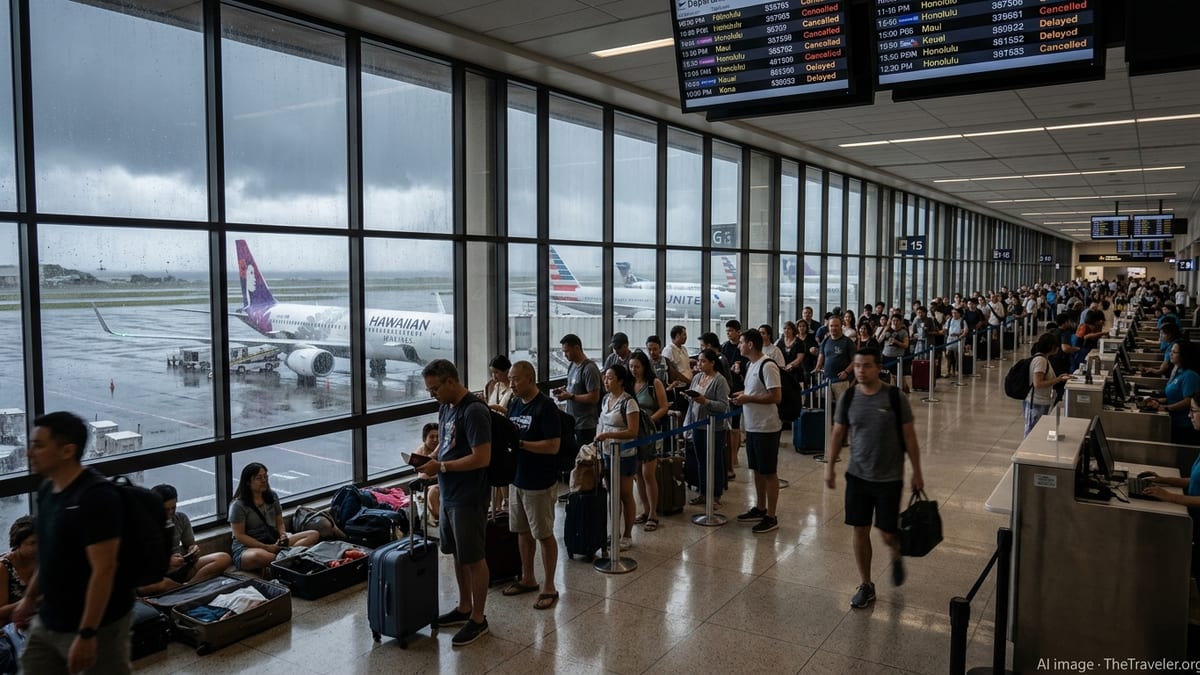
Major Airlines Scramble as Storm Grounds Hawaii Flights
Publicly available airline alerts and traveler reports indicate that Hawaiian Airlines, United Airlines, and American Airlines have canceled or significantly delayed numerous services to and from Hawaii as the Kona low continues to lash the islands. Travel waivers covering March departures were issued for key gateways including Honolulu, Kahului on Maui, Lihue on Kauai, and Kona on Hawaii Island, allowing affected passengers to rebook without standard change penalties.
United has highlighted “Hawaiian Islands severe weather” in recent waiver language, while traveler accounts from Maui and Oahu describe waves of disrupted departures and overnight delays as bands of heavy rain passed over the state. Some travelers reported being rebooked on earlier or later flights to avoid peak impacts of the storm, while others described long queues at check-in counters as ground operations slowed in the extreme conditions.
Hawaiian Airlines, which operates a large share of inter-island services as well as long-haul flights from North America and Asia-Pacific, has also adjusted schedules as the Kona low flooded roads and complicated crew and aircraft positioning. Passengers recount multiple last-minute cancellations and extensive delays on some routes, with rolling changes extending across several days as the storm evolved.
American Airlines passengers connecting through Maui and Honolulu reported cancellations and rebookings that stretched itineraries by days in some cases, particularly for those with complex routings back to mainland hubs. Social media posts and online forums describe confusion at counters as staff worked through backlogs of stranded travelers while dealing with intermittent power and communications challenges tied to the flooding.
International Tourists Face Chaos at Airports and Resorts
The timing of the Kona low system has hit at a busy travel period for visitors from the United States mainland and key long-haul markets. Tourism data for Hawaii shows strong demand from Japan, Canada, South Korea, Australia, and the United Kingdom, and recent posts from travelers in those markets describe sudden flight cancellations, missed connections, and difficult decisions over whether to continue or abandon trips entirely.
Visitors from Japan and South Korea, many of whom route through Honolulu for connections to neighbor islands, report being stranded overnight as inter-island flights were delayed or canceled due to the flooding and high winds. Some travelers describe scrambling to secure last-minute hotel rooms near Honolulu’s airport as ground transportation networks were also disrupted by rising water and debris.
Canadian and UK travelers, often on longer itineraries that combine multiple islands, have reported cascading disruptions when a single domestic segment within Hawaii was canceled. When links between Maui, Kauai, and the Big Island were temporarily suspended or reduced, entire multi-stop vacation plans had to be rewritten, with some visitors choosing to shelter in place on a single island rather than risk further airport transfers during the storm.
Tourists from Australia and New Zealand, who typically face some of the longest travel times to Hawaii, have shared accounts of turning back at departure airports or postponing trips altogether once images of flooded streets, evacuations, and emergency shelters began circulating widely. Travel agents and online booking platforms in those markets have flagged the Kona low as a key driver of last-minute itinerary changes and refund requests.
Hotels, Rentals and Tour Operators Hit by Mass Cancellations
Across Maui, Oahu, Kauai, and Hawaii Island, accommodation providers are reporting an unusual concentration of short-notice cancellations and rebookings as the storm’s impacts became clear. Public posts from visitors and hosts describe tense exchanges over refund policies, particularly for nonrefundable stays that fell just outside the specific date windows covered by airline waivers or formal emergency declarations.
On Maui, travelers with upcoming bookings in Kihei and other low-lying coastal areas reported seeking refunds after seeing footage of floodwater rescues and road closures linked to the Kona low. Some hosts and property managers pointed to standard cancellation rules and platform policies, while guests argued that the combination of hazardous driving conditions, closed highways, and canceled flights made arrival effectively impossible.
Hotels along key resort corridors on Oahu and Maui, according to industry commentary and booking data cited in local coverage, have been fielding a wave of requests to shorten stays, move dates into late March or April, or switch islands entirely. Some large properties have responded by relaxing change fees or offering credits for future stays, while others have maintained stricter policies, prompting travelers to pursue travel insurance claims instead.
Tour and activity operators, including snorkeling excursions, road-to-Hana drives, and hiking tours, have likewise seen widespread cancellations as rivers swelled, trails closed, and coastal waters turned muddy and hazardous. Many are offering full refunds or open-date vouchers, but the concentration of cancellations over a few days is expected to weigh on small businesses that depend on consistent visitor traffic.
Flooding and Power Outages Deepen Travel Disruptions
The Kona low has delivered what meteorologists describe as one of the most significant flooding events to hit parts of Hawaii in more than two decades, with published reporting citing evacuated neighborhoods, submerged vehicles, and homes pushed from their foundations on Oahu. Hawaiian Electric has documented thousands of customers without power at various points over the past several days, particularly on Oahu’s North Shore and areas already saturated by earlier winter storms.
Airport operations have been affected not only by the rain and low cloud ceilings but also by damaged roads and intermittent power and communications. Travelers and residents have shared images and accounts of highways and rural roads blocked by debris and standing water, forcing detours or full closures. That has limited the ability of both visitors and staff to reach airports and hotels, compounding the impact of airline schedule changes.
On Maui, publicly available county and state updates have referenced closed or restricted sections of iconic routes, including the Hana Highway, which serves both as a vital connection for residents and a major tourist attraction. With sections limited to local traffic only in recent days, visitors have been urged to avoid nonessential travel into storm-affected regions and to stay alert to changing conditions.
Emergency shelters opened in parts of Hawaii County and other jurisdictions as the Kona low intensified, providing refuge for residents and visitors caught in heavily flooded zones. While most visitors have remained in hotels or short-term rentals, shelter openings underscore the severity of the system and add to the uncertainty facing travelers trying to decide whether to continue with late-March trips.
Rebooking Challenges and What Travelers Are Being Told
According to airline advisories and traveler experiences shared online, passengers holding tickets with Hawaiian, United, and American have been encouraged to monitor flight status frequently and take advantage of limited-time travel waivers. These waivers generally permit one change without a fee for trips touching affected Hawaiian airports within specified dates, provided new travel occurs by a stated deadline and between the same city pairs.
In practice, some travelers report difficulty securing desirable alternatives as seats on remaining flights out of Honolulu, Kahului, and Kona fill quickly. Long hold times with airline call centers, crowded airport customer service desks, and uncertainty over when the most intense rainfall will end have added to the stress, particularly for families traveling with young children or older relatives.
Travel insurance providers are beginning to see an uptick in claims tied to the Kona low, according to statements and guidance published by major insurers. Policies that cover weather-related interruptions may reimburse additional hotel nights, meals, and alternative transport for travelers who can document that flights were canceled or destinations rendered inaccessible by the flooding.
Travel industry analysts note that the storm is likely to prompt renewed scrutiny of cancellation and waiver policies for both airlines and lodging providers serving Hawaii. With damage estimates already projected in the billions and recovery expected to take time in the hardest-hit communities, observers expect continued volatility in flight schedules and booking patterns to and within the islands in the coming weeks.