

More news on this day
A powerful Kona low parked over Hawaii in mid March 2026 has unleashed the worst flooding in decades across Oahu and parts of Maui County, forcing evacuations, stranding visitors and severely disrupting air, road and ferry travel just as spring tourism peaks.
Get the latest news straight to your inbox!
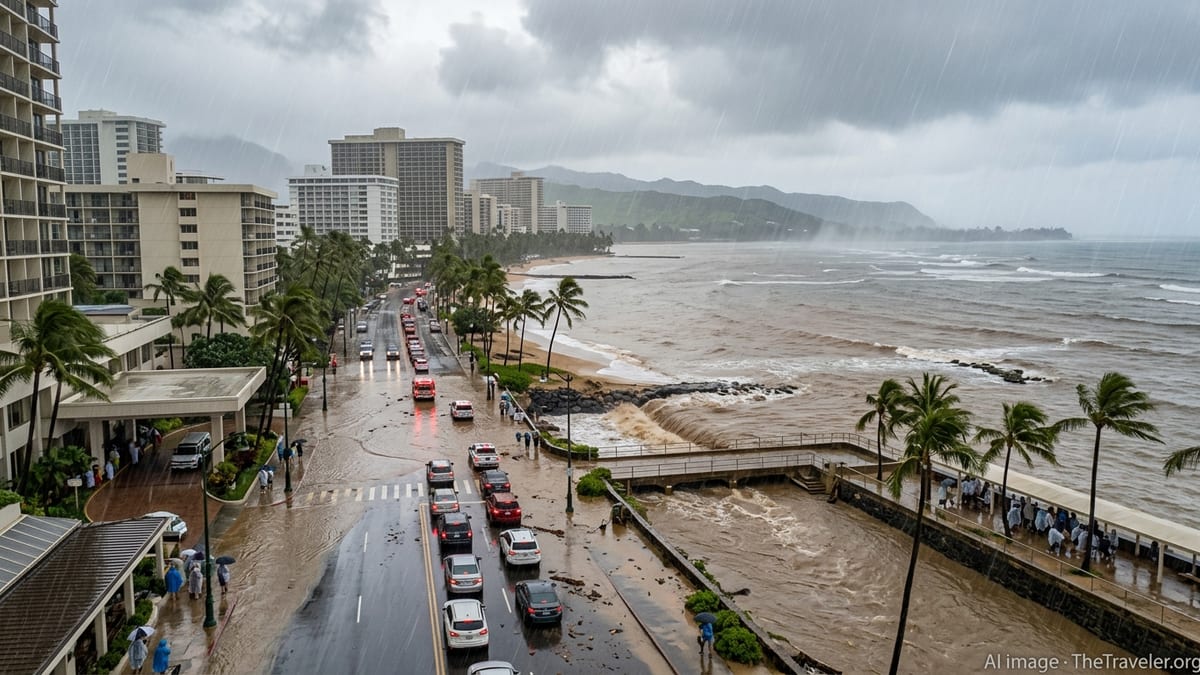
Record Rains and Rapidly Rising Waters
Publicly available information from the National Weather Service and state agencies shows that a slow moving Kona low pressure system settled northwest of the islands around March 10, 2026, drawing deep tropical moisture over the state for days. The result has been bands of intense showers and thunderstorms repeatedly slamming the same areas across Oahu, Maui, Molokai and Lanai, with forecasters describing it as the most significant flooding event in roughly 20 years.
Local reporting indicates that parts of Oahu’s North Shore and central valleys saw muddy floodwaters swallow streets, sweep vehicles off roadways and push some homes from their foundations. On Maui, runoff from steep watersheds sent torrents into low lying districts from Kihei to Lahaina, while retention basins neared capacity. Posts from residents and visitors on public forums describe water lapping at doorways of condo complexes, leaking through high rise lanais and pooling in hotel driveways.
Hydrologic data cited in weather briefings suggests that rainfall totals in some windward and leeward pockets of Maui County and Oahu climbed into the double digits over several days. Combined with already saturated ground from earlier winter storms, the deluge translated quickly into flash flooding, rising streams and debris laden flows that overwhelmed aging drainage systems and low lying coastal roads commonly used by tourists.
Evacuations, Power Cuts and Brown Water Warnings
According to published coverage of the unfolding disaster, evacuation orders and advisories were issued for thousands of residents in flood prone corridors north of Honolulu and in vulnerable neighborhoods on Maui. Sirens and emergency alerts urged people in areas downstream of older dams and near overflowing streams to move to higher ground, with some shelters taking in displaced families and visitors whose accommodations became unsafe.
Hawaiian Electric’s public updates show that at the height of the storm more than 10,000 customers on Oahu and additional pockets across Maui County lost power as floodwaters and high winds damaged lines and equipment. Although crews restored electricity to many neighborhoods within a day, several communities, including parts of the North Shore, remained without service into the weekend, affecting hotels, vacation rentals and small tourism businesses.
At the shoreline, the runoff created a different kind of hazard. State health advisories and local reports point to widespread brown water conditions as stormwater laden with sediment, debris and sewage spilled into bays and nearshore waters around Oahu, Maui, Molokai and Lanai. Visitors were urged to avoid swimming and snorkeling at affected beaches, with some lifeguard towers flying brown water warning signs even on otherwise calm days.
Flight Cancellations and Road Closures Snarl Tourist Plans
For travelers, the Kona low’s impact has been felt first at the airport. Airline travel waivers circulated online starting around March 12 allowed ticketed passengers to rebook trips to Honolulu, Kahului and Kona without change fees during the height of the storm. Despite these measures, publicly available information from airline trackers and passenger accounts shows dozens of delays and cancellations into and out of Oahu and Maui as heavy rain, low visibility and gusty winds disrupted operations.
Stranded travelers described overnight stays in mainland hubs while waiting for seats to open, as well as unexpected extra nights in Waikiki and Kihei when return flights to the continental United States were scrubbed. Some carriers consolidated lightly booked flights, further complicating itineraries for those with island hopping plans that included Molokai and Lanai.
On the ground, major tourism corridors have been intermittently cut off. Local traffic alerts and resident reports describe closures along sections of the H-1 and Kamehameha Highway on Oahu due to ponding and landslides, while the scenic routes that draw visitors on Maui including parts of the Honoapiilani Highway near Olowalu and roadways through Kihei experienced high water, debris and temporary shutdowns. Ferry links within Maui County also operated on weather dependent schedules, leaving some day trippers recalculating plans at the last minute.
A Nightmare Week for Island Visitors
For many tourists, particularly those arriving in mid March expecting sun filled beach days, the timing of the Kona low has been especially challenging. The storms struck just as spring break travel from North America and Asia ramped up, crowding flights and accommodations at the very moment flexibility became most necessary. Public posts across travel forums detail families weighing whether to cancel road to Hana excursions, snorkeling tours off Lanai, or interisland hops to Molokai as conditions deteriorated.
Travelers already on the islands have reported long lines at rental car desks and customer service counters as they attempt to rearrange bookings, extend hotel stays or switch to properties on less affected coasts. Some visitors cited difficulty securing refunds for pre paid vacation rentals in low lying neighborhoods where streets turned into rivers, highlighting how extreme weather can collide with strict cancellation policies.
At the same time, those sheltering in place in resort districts that escaped the worst inundation have faced closed pools, shuttered beachfronts and canceled excursions due to water quality alerts and unsafe offshore conditions. For many, the combination of cabin fever, uncertainty about transportation and concern over local communities’ recovery has transformed a long anticipated holiday into a stressful and unpredictable experience.
What Travelers Should Expect in the Days Ahead
Forecast discussions from meteorologists suggest that while the core of the Kona low has begun to drift away from the islands, trailing bands of heavy showers and isolated thunderstorms may persist into the early part of the new week, particularly over Maui County and the eastern end of the chain. This pattern means the risk of additional flash flooding, rockfalls and renewed brown water advisories will likely linger even as skies periodically clear.
Travel industry updates indicate that airlines are gradually normalizing schedules but continue to adjust individual flights based on local weather and airport conditions. Visitors with upcoming trips to Oahu, Maui, Molokai or Lanai are being encouraged through public advisories and company statements to monitor itineraries closely, build in extra connection time and be prepared for last minute gate changes or delays.
On the islands themselves, road crews and utility teams are working through damage assessments, debris removal and repairs. Some popular hiking trails, scenic drives and rural beach parks are expected to remain closed or restricted while authorities evaluate erosion, fallen trees and infrastructure damage. Even in areas where resorts and main streets are open, travelers over the next several weeks are likely to encounter detours, muddy shorelines and a visible cleanup effort that reflects the scale of this March 2026 Kona low event.