

More news on this day
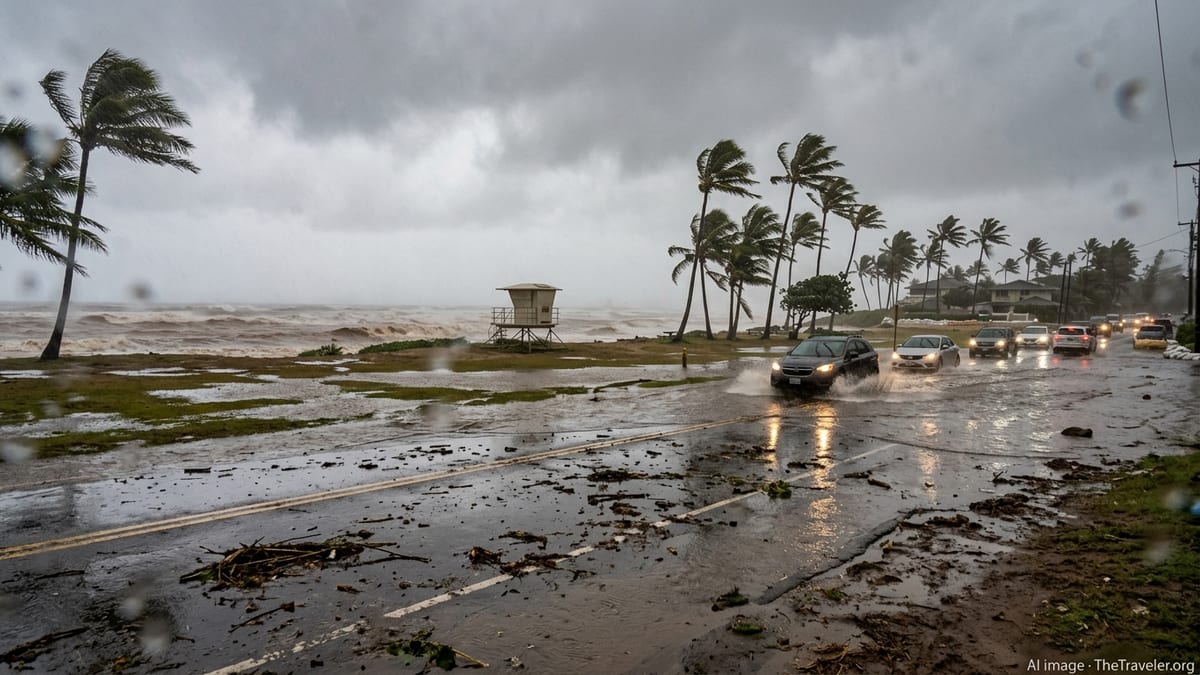
A powerful Kona low that first inundated Kauai, Maui County, Hawaii Island, Molokai and Lanai has now unleashed torrential rain on Oahu, triggering destructive flooding, power outages and widespread disruption to travel across Hawaii at the peak of the spring visitor season.
Get the latest news straight to your inbox!
Relentless Rains Batter Oahu After Week of Islandwide Flooding
Publicly available information from the National Weather Service and regional media describes the slow moving Kona low as one of the most disruptive late winter systems to hit Hawaii in more than two decades, with back to back storms soaking already saturated ground. Earlier heavy rains inundated Kauai, Maui County, Hawaii Island, Molokai and Lanai, and the latest round has now focused on Oahu, where flash flooding has swept through communities from the North Shore to urban Honolulu.
Reports indicate that floodwaters north of Honolulu pushed homes off their foundations, swallowed vehicles and forced evacuations in low lying neighborhoods. On Oahu’s North Shore, muddy water has inundated streets in towns better known for world class surf breaks, while swollen streams and drainage canals have overflowed into residential areas.
Statewide, the storm sequence has left thousands of households without power at various times, and utility crews have struggled to access damaged lines due to road closures, landslides and standing water. Emergency updates shared by local news outlets describe this month’s flooding as the worst on Oahu in roughly 20 years, compounding damage from earlier downpours on other islands.
Meteorologists characterize Kona lows as winter storm systems that draw in deep tropical moisture on southerly winds, reversing Hawaii’s normal trade wind pattern. This configuration tends to focus heavy rain on typically drier leeward coasts, catching visitors off guard and placing intense pressure on infrastructure not designed for prolonged deluges.
Road Closures, Washed Out Bridges and Island Hopping Disruptions
Transportation networks on multiple islands have been hit hard as successive rain bands moved from west to east. On Kauai, localized landslides and flooding have periodically closed portions of Kuhio Highway, limiting access to popular North Shore resort areas and forcing detours that add significant time to even short journeys.
Across Maui County, published coverage notes closures and restrictions on segments of the Hana Highway after rockfall and erosion undermined sections of the narrow coastal route. Travelers have reported checkpoints allowing only local traffic in some storm damaged areas, with rental cars turned back to prevent congestion and to keep access clear for cleanup and utility vehicles.
On Hawaii Island, social media posts and local reporting describe closures along Highway 11 between Kona and Hilo, as well as temporary shutdowns of the Hokulia bypass due to flooding and debris. Rural roads in both windward and leeward districts have seen washouts, sinkholes and fallen trees, leaving some communities partly cut off until waters recede.
Interisland travel has also been affected. Flight tracking data and airline advisories show weather related delays and cancellations on routes linking Honolulu with Lihue, Kahului and Hilo as bands of heavy rain, low ceilings and gusty winds passed over key airports. Inter island ferries and harbor operations have been interrupted at times by rough seas and debris filled water, further complicating movement for residents and visitors.
Air Travel Headaches and Ripple Effects for Visitors
The timing of the storms during a busy spring travel period has magnified the impact on visitors. Travelers have reported extended waits at Honolulu’s Daniel K. Inouye International Airport as airlines consolidate flights, swap aircraft and work through weather related backlogs. According to airline advisories, carriers have been issuing flexible change policies for Hawaii bound itineraries, but rebooking options have been constrained by high load factors.
On Maui and Kauai, resort operators and vacation rental hosts have been contending with a mix of cancellations and stranded guests. Some visitors have sought to leave early to avoid further disruption, while others have been unable to reach airports or alternative accommodations because of localized flooding and roadblocks. Discussions on major travel forums highlight confusion over what is open, which routes are safe, and whether tours and excursions will operate on a given day.
Retail and hospitality businesses in storm affected areas have faced rolling closures as staff struggle to commute and as properties grapple with water damage, power cuts and intermittent telecommunications outages. In certain low lying commercial districts, floodwater has entered shops and restaurants, resulting in lost inventory and temporary shutdowns.
Travel planners note that even visitors staying in parts of the islands spared from the worst flooding are feeling the effects. Popular attractions such as scenic coastal drives, waterfall hikes and snorkeling tours have been curtailed due to high turbidity, fast moving streams and concerns over debris and contamination in near shore waters.
Brown Water Advisories and Beach Safety Concerns
The Kona low’s torrential rainfall has triggered widespread brown water advisories as runoff from mountains and urban areas flows into the ocean. Information published by Hawaii’s health authorities warns that brown or murky coastal water can contain sewage overflows, animal waste, pesticides and other pollutants washed from roads and agricultural land, increasing the risk of illness for swimmers and surfers.
Recent advisories have covered large stretches of shoreline on Oahu, particularly near urbanized watersheds where storm drains and canals discharge directly into the sea. Social media posts and local commentary also point to ongoing concerns on Kauai, Maui and Hawaii Island, where rivers and gulches have been running high and heavily discolored.
Water quality advocates have urged extra caution at river mouths, small boat harbors and beaches with visible runoff plumes, noting that even iconic swimming areas can become temporarily unsafe after extreme rain. For visitors, this has meant last minute changes to itineraries focused on snorkeling, stand up paddling or surf lessons, with operators canceling or relocating sessions when conditions fail to improve between squalls.
In many resort zones, lifeguard towers and hotel staff have been advising guests to heed posted warnings, avoid entering the ocean during and immediately after heavy downpours, and consider alternative activities such as cultural experiences, museum visits or indoor dining until seas clear and bacteria levels subside.
What Travelers Can Expect in the Days Ahead
Forecast discussions from the National Weather Service suggest that while the core of the Kona low is gradually moving away from the state, lingering moisture bands may continue to produce showers and localized heavy rain through the early part of the week. With soils still saturated from earlier storms, forecasters caution that even moderate additional rainfall could quickly lead to renewed flooding in vulnerable areas.
Travel industry updates emphasize that conditions can vary significantly over short distances in Hawaii. While one side of an island may be contending with road closures and swollen streams, leeward resort districts just a short drive away may see improving weather and a rapid return to near normal operations as skies clear.
Tourism professionals advise that anyone with near term plans monitor airline notifications closely, check with accommodations about local access and utilities, and remain flexible about activity schedules. Many tour providers offer real time updates through their booking platforms or social channels, allowing travelers to pivot from ocean outings to indoor or upcountry experiences when coastal conditions deteriorate.
For those already in the islands, the consensus from publicly available advisories is to treat closed roads, barricades and brown water warnings seriously, avoid driving through standing water, and allow extra time for airport transfers. As the Kona low finally weakens and trade wind patterns reestablish, Hawaii’s visitor infrastructure is expected to gradually recover, but cleanup and repairs in the hardest hit communities on Oahu, Maui County, Kauai and Hawaii Island are likely to continue well beyond the end of the storm itself.