

More news on this day
A powerful Kona Low storm system drenching Hawaii has triggered widespread flooding, airport disruption and hundreds of flight cancellations, leaving tourists from the United States, Japan, Canada, Australia and the United Kingdom stranded across the islands and on the mainland as airlines scramble to reset global schedules.
Get the latest news straight to your inbox!
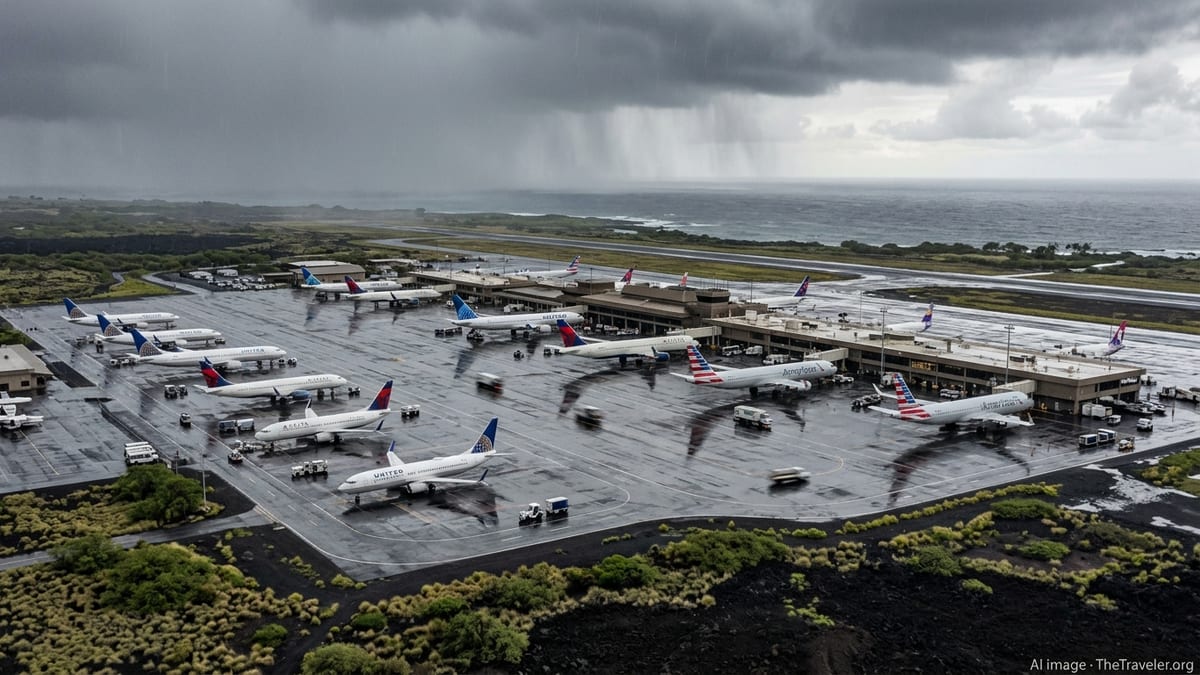
Historic Kona Low Unleashes Severe Weather Across the Islands
The latest Kona Low, a type of cold-core low-pressure system that can park south or west of Hawaii, has brought days of torrential rain, strong winds and dangerous surf across multiple islands. Publicly available weather data and local coverage describe road closures from Hilo to Kona, overflowing drainage systems and widespread flash flooding that has pushed emergency services and infrastructure close to capacity.
Hawaii County and island municipalities have activated shelters and emergency facilities to accommodate both residents and visitors affected by the storm. Community centers and gymnasiums have been used as temporary refuges for those evacuating flooded homes or unable to reach their accommodations due to blocked roads. Images and accounts shared in local forums depict vehicles stalled in rising water, mud and debris on coastal highways, and persistent heavy rain obscuring visibility.
Although Kona Lows are a recurring winter-season phenomenon in Hawaii, meteorologists note that this episode ranks among the more disruptive in recent years because of its slow movement and multi-day rain bands. The prolonged nature of the system has meant that localized flooding repeatedly impacts the same communities and transport corridors, compounding the effect on both daily life and tourism.
Airports Struggle as Four Hundred Flights Are Grounded
Commercial aviation has been particularly hard hit. Flight tracking data and airline operations updates indicate that roughly four hundred flights connected to Hawaii have been cancelled or significantly delayed over several days as the Kona Low intensified. The impact spans interisland routes, U.S. mainland connections and long-haul flights linking Hawaii to Asia, Canada, Australia and Europe.
At Ellison Onizuka Kona International Airport on Hawaii Island and Kahului Airport on Maui, reports from passengers describe terminals crowded with travelers sleeping on floors, food outlets running short of supplies and long lines for rebooking desks. Periods of heavy rain, low ceilings and wind shear have restricted operations or temporarily halted takeoffs and landings, forcing airlines to ground aircraft or divert inbound flights to alternate airports when possible.
The ripple effects have extended well beyond the islands. Major U.S. hubs with strong Hawaii links, including West Coast gateways, have reported waves of cancellations and rolling delays as aircraft and crews fall out of position. Long-haul flights from Japan, Canada, Australia and the United Kingdom have been cancelled or rescheduled, with some carriers opting to suspend specific Hawaii rotations until weather and airport conditions stabilize.
Tourists From Five Key Markets Face Prolonged Disruptions
The storm has caught many visitors at the peak of their vacations or on final travel days, creating complex itineraries to untangle. Travelers from the continental United States, Japan, Canada, Australia and the United Kingdom constitute five of Hawaii’s most important tourism markets, and all have felt the impact of the grounded flights and uncertain schedules.
Accounts shared on social and travel platforms describe families from North America and Europe sleeping in terminals overnight, couples from Japan facing repeated cancellations of their return flights, and Australian visitors struggling to secure new connections home after wide-scale schedule changes. In several cases, travelers report that intervention by airlines or travel insurance providers has been the difference between securing hotel rooms and remaining in crowded public areas during the worst of the storm.
Those still on the islands but away from airports are facing separate challenges. Road closures and localized flooding have left some visitors unable to reach departure airports or even to move between resort areas and nearby towns. Travel forums highlight concerns over limited availability of rental cars, scarcity of last-minute accommodation in less-affected areas and uncertainty about when conditions will improve enough for normal sightseeing and interisland excursions to resume.
What Stranded Travelers Need to Know Right Now
For visitors currently in Hawaii or with imminent departures, publicly available airline and airport updates stress the importance of monitoring flight status frequently and avoiding unnecessary trips to the airport without confirmed bookings. Most carriers are offering change-fee waivers and flexible rebooking windows for affected Hawaii itineraries, though seat availability varies widely depending on route and travel date.
Travelers whose flights have been cancelled are being encouraged in published guidance to use airline apps and websites as the first line of rebooking, as call centers and in-person desks are experiencing extended wait times. Passengers whose packages were booked through tour operators or online travel agencies may also be able to leverage those companies’ disruption support teams to arrange new flights or temporary accommodation.
Accommodation remains a key concern for those who cannot fly out immediately. Some travelers report success obtaining storm-related flexibility from hotels, vacation rentals and resorts, particularly when local authorities issue advisories against unnecessary travel. Others describe stricter adherence to existing cancellation policies, making travel insurance coverage a potential lifeline for recouping unexpected costs linked to weather-related delays.
Safety, Insurance and Future Travel Planning
Safety guidance from emergency management materials emphasizes avoiding flooded roadways, staying clear of swollen streams and drainage channels, and heeding any local advisories about landslides, beach closures and contaminated coastal waters following heavy runoff. Visitors are advised to follow instructions from hotel staff, transport operators and local announcements and to allow extra time for any essential travel between accommodations and airports.
For travelers with upcoming trips to Hawaii, the ongoing Kona Low is a reminder of the value of comprehensive travel insurance that explicitly covers severe weather disruptions. Policy documents should be checked for provisions relating to trip interruption, missed connections, additional accommodation, and meals and local transport costs during extended delays. Documentation such as airline cancellation notices, receipts for extra costs and any official advisories can be important for subsequent claims.
Travel planning specialists often recommend building flexibility into itineraries during Hawaii’s wetter months, particularly for travelers combining multiple islands or relying on tight connections home. Allowing an extra buffer day at the end of a trip, booking refundable or changeable hotel rates where possible and keeping critical events at least a day or two after scheduled return can reduce exposure to prolonged weather events like a Kona Low.
As the storm system slowly weakens and moves away, aviation operations are expected to normalize gradually rather than all at once. Travelers heading to or from Hawaii over the coming days are likely to encounter residual delays, altered flight times and crowded rebooked services, making advance preparation and up-to-date information essential for navigating the aftermath of this historic Kona Low.