

More news on this day
A powerful Kona low storm system battering Hawaii has triggered significant disruption across the state’s air network, with at least 29 flights canceled and 74 more delayed on Thursday and Friday, affecting travelers on Hawaiian, Alaska, Delta, Southwest and other major carriers serving Honolulu, Kauai and Lihue amid landslide warnings and flooding concerns.
Get the latest news straight to your inbox!
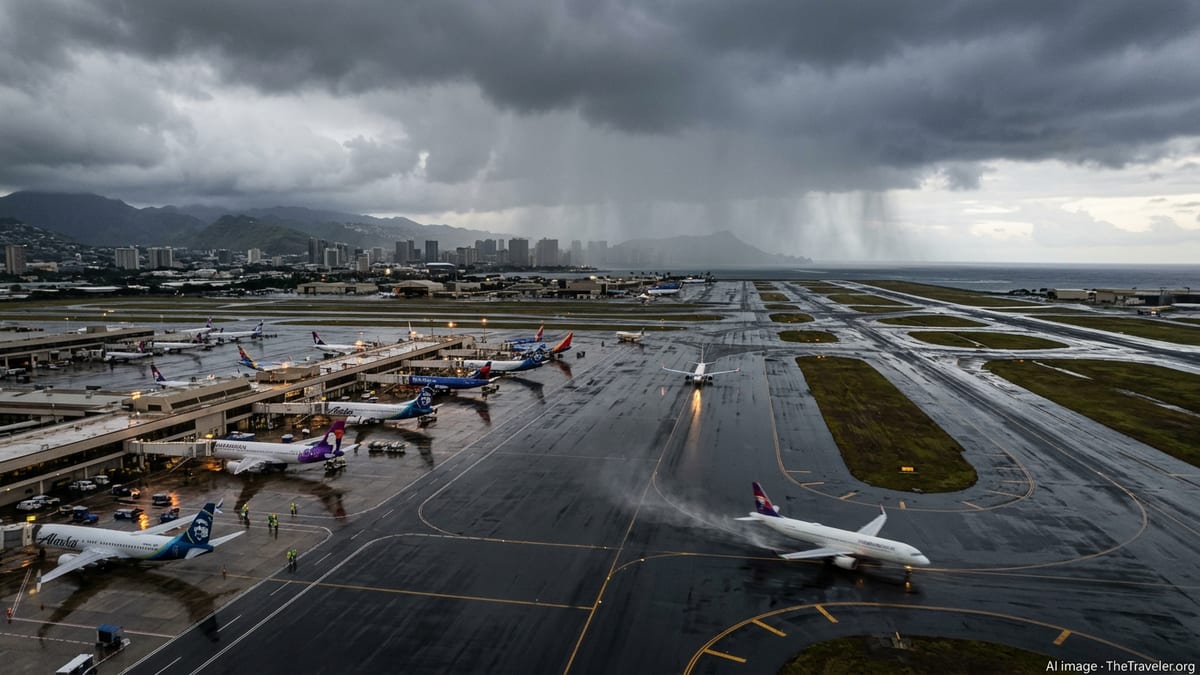
Storm System Stalls Over Islands, Forcing Carriers to Cut Schedules
Forecasters say a complex Kona low has stalled to the northwest of Hawaii, funneling repeated bands of heavy rain and strong winds over the main islands this week. The system has produced thunderstorms, saturated hillsides and localized flooding, prompting authorities to warn of possible landslides along steep terrain on Kauai and Oahu and to caution residents and visitors to avoid nonessential travel.
Airlines responded by trimming schedules and increasing built in recovery time on key interisland and mainland routes. By early afternoon local time, at least 29 departures and arrivals across the islands had been canceled and 74 more delayed, according to airport and airline operations updates. The majority of the disruptions were clustered around Honolulu’s Daniel K. Inouye International Airport and Lihue Airport on Kauai, which both handle heavy interisland and transpacific traffic.
Hawaiian Airlines, the state’s largest carrier, led the list of cancellations as it adjusted interisland frequencies and some West Coast flights to match shifting weather windows. Alaska Airlines, Delta Air Lines and Southwest Airlines also reported delayed or canceled services, particularly on routes connecting Honolulu and Lihue with cities along the US West Coast, where tight turnarounds left little margin for storm related slowdowns.
Operations managers said the goal was to proactively thin schedules and consolidate lightly booked flights rather than risk last minute ground stops that could leave passengers stranded at crowded gates. Even so, rolling delays built through the day as aircraft and crews fell out of position, and as ramp workers at open air island airports slowed ground handling for safety amid gusty crosswinds and intense downpours.
Honolulu Hub Sees Rolling Delays and Crowded Concourses
Honolulu, the state’s primary aviation hub, has borne the brunt of the disruption as both interisland and long haul flights fed into the storm affected grid. Periods of reduced visibility and strong crosswinds lengthened the spacing between landings and takeoffs, cutting hourly capacity and forcing temporary ground holds for some arrivals from the mainland and neighbor islands.
Inside the terminal, passengers described long lines at customer service counters as travelers scrambled to rebook missed connections to neighbor islands and onward international flights. Families headed home from vacations, island residents returning from medical appointments and military personnel transiting through Oahu all vied for limited open seats later in the week.
Airport officials urged passengers to arrive early, travel with carry on bags when possible, and remain flexible about routing, noting that some travelers bound for Kauai or the island of Hawaii were being offered rebookings through alternate gateways depending on weather and seat availability. With hotel occupancy already tight during the spring break period, airline provided overnight accommodations were limited, leaving some travelers to seek last minute rooms on their own when evening departures canceled.
Despite the disruption, Honolulu’s airfield continued to operate throughout the day, with flight crews reporting bumpy but manageable conditions on approach and departure. However, the combination of wet runways, gusty winds and lightning risk meant ramp closures and safety checks were frequent, contributing to the accumulation of departure delays across multiple airlines.
Kauai and Lihue Face Landslide Risks and Islandwide Travel Challenges
On Kauai, where steep cliffs and narrow coastal highways are particularly vulnerable to heavy rain, emergency managers highlighted the risk of rockfalls and landslides as the storm persisted. While Lihue Airport remained open, several flights were canceled or significantly delayed as airlines weighed the forecast for wind shear and localized downpours in and out of the Garden Island.
Visitors flying out of Lihue reported being rebooked onto earlier or later departures than originally scheduled, with some itineraries rerouted through Honolulu instead of flying nonstop to mainland hubs. Rental car agencies noted extended returns as travelers waited out road closures or heavy cells of rain before heading to the airport, compressing check in and security lines into shorter, more crowded windows.
For those staying on Kauai, county officials and resort operators urged people to monitor weather alerts, stay off closed trails and avoid driving through flooded areas, mindful that a blocked highway can quickly cut access to the airport. The combination of aviation disruptions and fragile road infrastructure meant even modest schedule changes could cascade into missed flights for guests staying on the island’s more remote north and west shores.
Ferry and interisland cargo operations were also affected, with rough seas and port slowdowns complicating the movement of supplies and baggage between islands. Airlines said that, in a few cases, checked bags had to be staged for later flights once conditions improved, and advised passengers to keep medications, valuables and at least a day’s essentials in carry on luggage.
Airlines Issue Weather Waivers and Urge Flexible Planning
In response to the prolonged impact of the Kona low, several airlines serving Hawaii issued travel waivers, allowing customers with tickets to or from affected airports to change their itineraries without standard change fees. The waivers generally covered travel through mid March for flights involving Honolulu, Lihue and Kona, and in some cases permitted rebooking to alternate dates or nearby islands within a specified window, subject to seat availability.
Hawaiian, Alaska, Delta and Southwest all encouraged passengers with upcoming trips to monitor their flight status closely and to consider shifting to earlier departures or different days where possible. Customer service teams reported high call volumes as travelers sought to move island hopping segments away from the worst of the storm’s forecast timeline, or to build in longer layovers at Honolulu to protect key connections to mainland or international flights.
Travel advisors recommended that visitors avoid planning tight same day connections between separate tickets during the storm period, particularly when arriving from overseas and continuing immediately to a neighbor island. With the potential for sudden ground stops or air traffic control delays, even flights that eventually depart can do so too late to preserve onward journeys on different reservations.
Budget conscious travelers were also warned that last minute walk up fares on remaining open flights could be significantly higher than advance purchase tickets, and that rebooking through online travel agencies might introduce additional complexity if multiple airlines were involved. Directly coordinating with the operating carrier, they said, remained the most reliable way to secure confirmed alternatives during a weather event of this scale.
What Travelers Can Expect in the Coming Days
Meteorologists expect the Kona low to remain a factor for Hawaii through the weekend, though the intensity and distribution of rain and wind may vary from day to day as the system slowly weakens and shifts. That forecast suggests that sporadic delays and targeted cancellations are likely to continue, especially on shorter interisland routes where aircraft and crews cycle rapidly between airports exposed to changing conditions.
For travelers currently in the islands, airlines advised building extra time into airport transfers, packing patience and preparing for schedule adjustments. Those with flexible plans may find it easier to accept reroutes or date changes that help carriers smooth operations and avoid last minute cancellations. Travelers beginning journeys from the mainland or abroad were encouraged to confirm that hotels, car rentals and activities could be adjusted if flights are rescheduled closer to departure.
Industry analysts noted that Hawaii’s reliance on a small number of key airports and a dense web of interisland flights means that any prolonged weather disruption can ripple quickly through the network. While modern aircraft and navigation systems allow pilots to safely operate in most conditions, ground handling and air traffic control constraints still limit how many flights can land and depart when storms set in over the Pacific.
As the state watches for additional landslide reports and continues to issue localized flash flood advisories, officials reiterated that safety remains the top priority. Travelers bound for Honolulu, Kauai and other islands over the coming days were urged to stay informed, stay flexible and be prepared for the possibility that their Hawaii flight experience may involve some weather related detours before skies fully clear again.