

More news on this day
A powerful March 2026 Kona low has unleashed the worst flooding Hawaii has seen in more than two decades, inundating parts of Oahu, Maui, Molokai and Lanai, knocking out power, forcing evacuations and turning spring holidays into a logistical nightmare for thousands of visitors.
Get the latest news straight to your inbox!
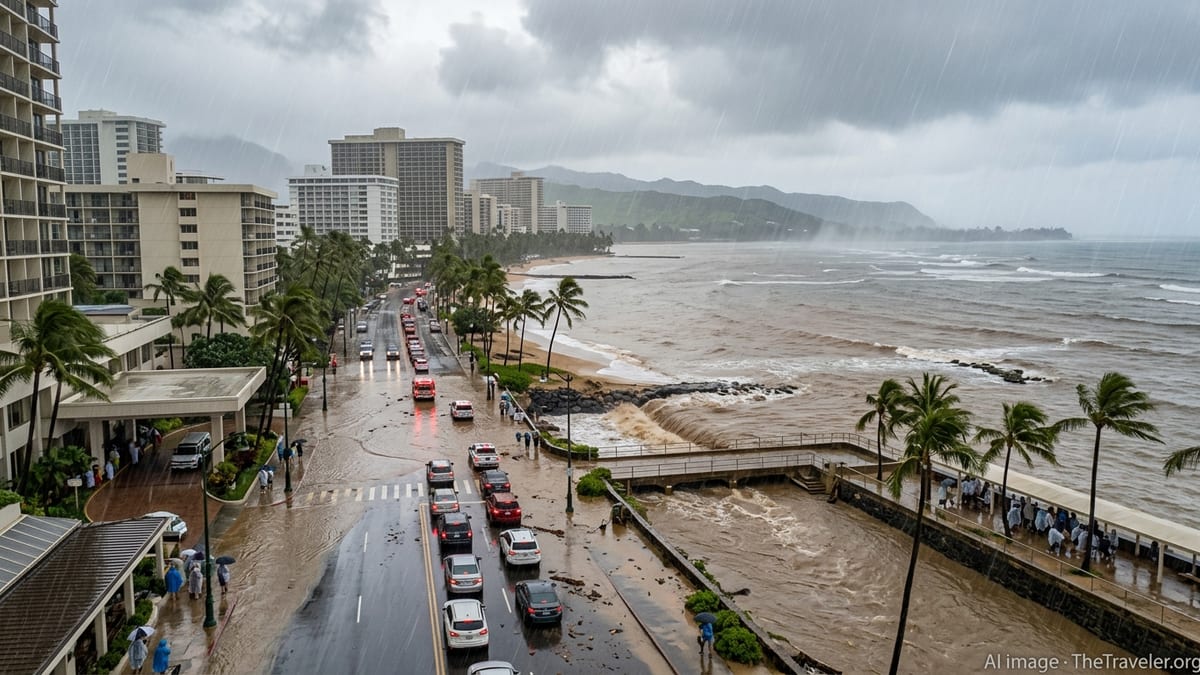
Record-Breaking Rains Turn Paradise Into Disaster Zone
The March 2026 Kona low, a slow-moving low-pressure system south of the islands, first prompted an emergency proclamation on March 9 as meteorologists warned of days of heavy rain, thunderstorms and damaging winds across the state. As the storm stalled and intensified, bands of torrential rain repeatedly swept over the same areas, rapidly overwhelming drainage systems and river channels.
By March 20 and 21, publicly available information described the resulting flooding as Hawaii’s worst in more than 20 years, with muddy torrents lifting homes and vehicles, scouring roads and submerging neighborhoods. On Oahu’s North Shore, a region normally associated with big-wave surfing and resort escapes, evacuation orders earlier in the week were followed by reports of homes damaged, vehicles swept away and deep floodwater cutting off access to key communities.
The flooding extended well beyond Oahu. Maui’s already scarred west side, still recovering from the deadly 2023 Lahaina wildfire, saw rain-swollen retention basins pushing authorities to escalate advisories to evacuation warnings for parts of Lahaina. In Maui County’s other islands, including Molokai and Lanai, the Kona low’s moisture-laden bands delivered intense downpours that filled gulches and low-lying pastureland, sending muddy runoff across rural roads and resort access routes.
Power infrastructure struggled to cope. Reports from utility updates in mid-March indicated tens of thousands of customers losing electricity at various points as substations and lines were impacted by floodwaters, falling trees and saturated ground. On Oahu alone, outages peaked in the tens of thousands before crews slowly restored service between successive pulses of heavy rain.
Evacuations, Dam Concerns and Stranded Communities
As the rainfall peaked, the state’s emergency framework moved into high gear. The March 9 statewide emergency proclamation for the Kona low cleared the way for mobilization of resources across the islands, and subsequent public updates highlighted growing concern around aging flood control infrastructure.
On Oahu, attention focused on a 120-year-old dam north of Honolulu that approached critical levels as runoff surged downstream. Publicly available information from national and local coverage noted that warnings about potential dam failure accompanied early-morning evacuation messages, with sirens sounding in low-lying communities and text alerts instructing people in at-risk zones to leave immediately.
By March 20, reports indicated that more than 5,000 people had been ordered to evacuate at various stages of the event, with over 200 flood rescues carried out on Oahu alone since the onset of the storm. Rescue teams used high-water vehicles and boats to reach motorists trapped on submerged roads and residents cut off in homes where water rose with alarming speed. While there were no immediate reports of fatalities, hospitals treated people for injuries and hypothermia after swift-water rescues.
In Maui County, the combination of steep terrain and recent wildfire burn scars intensified runoff, sending debris-laden flows into streets and properties. Visitors staying in normally dry vacation districts like Kihei described overnight floodwater rescues and sudden road closures that left neighborhoods temporarily isolated. On Molokai and Lanai, smaller populations and more limited infrastructure meant that even localized flooding had outsized effects on access to supplies and medical services.
Airlines, Ferries and Roads: Travel Plans Upended
For travelers, the Kona low translated directly into cancellations, detours and long hours of uncertainty. As rain and strong winds spread across the archipelago, airline travel advisories expanded. Publicly available notices pointed to severe-weather travel waivers covering the main Hawaii gateways, allowing passengers booked into Honolulu, Kahului and other airports between March 12 and 15 to rebook without typical change fees.
Yet even with waivers in place, visitors already on the islands found themselves stranded when interisland flights were delayed or cancelled due to low visibility, lightning and crosswinds. At Honolulu’s Daniel K. Inouye International Airport, travelers reported crowded terminals and lengthy rebooking lines as airlines shuffled aircraft and crew to cope with weather disruptions. Kahului Airport on Maui, a major hub for visitors to resort areas such as Wailea and Kaʻanapali, also experienced cascading delays as bands of heavy rain passed directly overhead.
On the ground, critical transport corridors bore the brunt of the flooding. On Oahu, North Shore routes and sections of the windward coast saw closures where pavement buckled or water overtopped bridges. On Maui, flood-prone areas near Kihei and along segments of the Honoapiʻilani Highway were repeatedly shut, cutting off direct access to some of the island’s most popular beach resorts. Secondary roads on Molokai and Lanai, often narrow and unlit, became hazardous or impassable in the dark as runoff poured across low spots.
Ferry and small-boat services linking Maui, Molokai and Lanai also faced interruptions, with rough seas and strong winds forcing schedule changes. For travelers relying on prebooked interisland transfers, the web of cancellations created chain reactions for hotel stays, rental cars and activities that had been planned months in advance.
Tourists Caught in the Middle of a Prolonged Emergency
The timing of the March 2026 Kona low has been particularly disruptive, arriving during a busy spring break travel window when Hawaii typically hosts a surge of mainland and international visitors. Many vacationers had locked in nonrefundable accommodations long before forecasts showed a significant Kona low setting up south of the islands.
As images of flooded streets and rescues began to circulate, some travelers attempted to cancel trips at the last minute, often running into strict cancellation policies from airlines, short-term rental platforms and individual hosts. Accounts shared publicly by visitors describe disputes over refunds for bookings in hard-hit areas like Kihei, where floodwaters reportedly reached residential and resort neighborhoods.
Those who decided to travel anyway have faced a very different version of Hawaii than expected. Beach closures, brown-water advisories at popular swimming spots and shut-down hiking trails have limited outdoor activities even in areas spared the worst structural damage. In pockets of Oahu, Maui, Molokai and Lanai, hotel guests have coped with intermittent power, elevator outages and restaurant closures when supply deliveries were delayed by damaged roads.
Travel forums filled with questions about whether it was ethical or practical to proceed with planned visits, especially to communities still digging out from mud and debris. Some posts from local residents urged visitors to delay nonessential trips to the hardest-hit districts so that limited resources could focus on cleanup and essential services rather than tourism demand.
What Travelers Need to Know in the Days Ahead
As of March 23, forecasts still indicated lingering bands of showers and isolated thunderstorms linked to the Kona low, though the core of the system had begun drifting away from the islands. Flood watches and advisories remained in place for portions of the state as saturated ground increased the risk of additional flash flooding, landslides and toppled trees.
Publicly available information from weather agencies and emergency management channels advised continued caution on the roads, especially at night and in rural or low-lying areas. Travelers were urged to monitor airline and airport updates closely, as even brief bursts of heavy rain could trigger new delays or diversions. With some neighborhoods still without full power or water service, accommodation options in the most affected zones remained constrained.
For visitors planning trips in the coming days and weeks, the key message from published guidance is to remain flexible. That includes allowing extra time between interisland connections, confirming hotel and rental car status before departure, and preparing for last-minute itinerary changes if another round of heavy rain develops. Travelers are also encouraged by local tourism advisories to consider shifting stays toward less-impacted parts of each island, where infrastructure has remained largely intact and where tourism dollars can support workers whose hours were cut during the storm.
As cleanup operations continue on Oahu, Maui, Molokai and Lanai, the March 2026 Kona low is emerging as a stark reminder of how quickly Hawaii’s tranquil postcard scenes can give way to life-threatening conditions. For tourists caught in its path, the storm has transformed dream vacations into complicated logistics exercises, underscoring the importance of real-time information, generous cancellation policies and a willingness to adapt when the islands’ dramatic weather turns severe.