

More news on this day
South Korea is pushing its air transport network beyond pre-pandemic capacity, with recent data showing international flights surpassing 2019 levels and plans advancing to restore a long-discussed air link between Incheon and Jeju Island.
Get the latest news straight to your inbox!
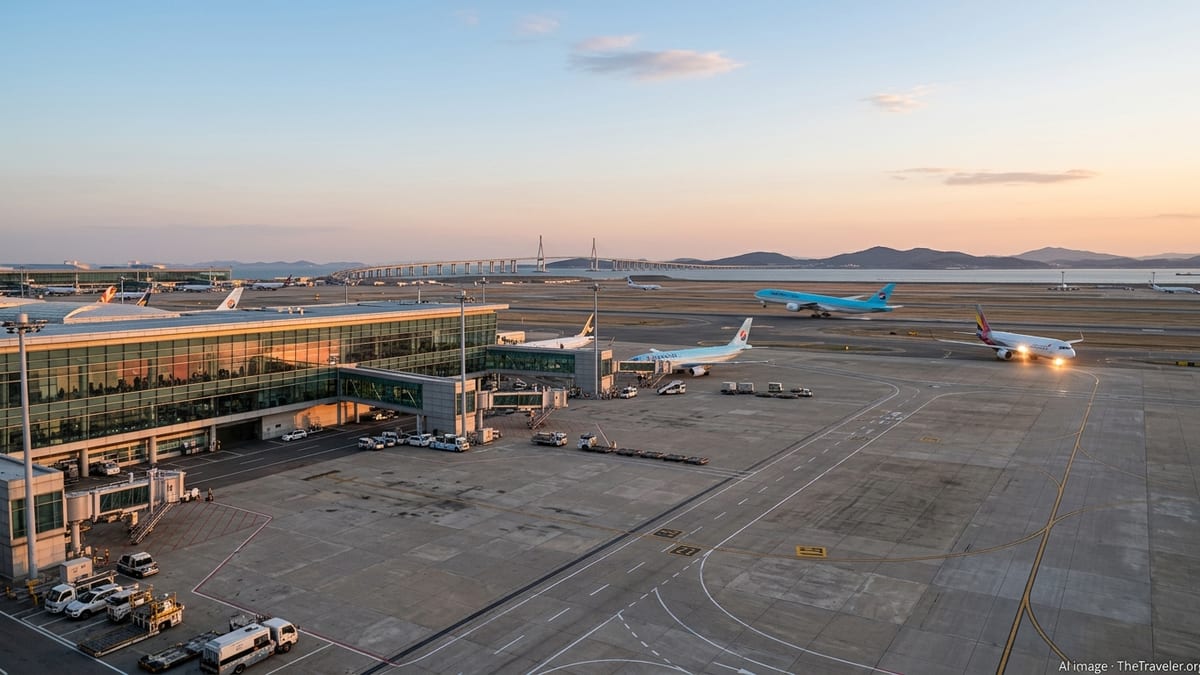
International traffic surpasses 2019 benchmark
Recent aviation statistics indicate that traffic in Korean airspace has moved decisively beyond pre-pandemic levels. Published figures for 2025 show more than 1 million flights handled in the country’s skies for the first time, with an average of 2,778 daily movements, roughly 20 percent higher than the previous record set in 2019. International services accounted for the majority of this growth, with more than 780,000 cross-border flights operated over the year.
Airlines based in South Korea have been steadily rebuilding and then expanding their overseas networks since border restrictions eased. Publicly available data and industry bulletins show that capacity additions have been concentrated on regional markets in Northeast and Southeast Asia, where leisure and business demand has rebounded quickly. As a result, overall international supply measured in flights and seats from Korean airports is now above the 2019 baseline, even as some individual carriers continue to adjust specific routes.
Industry analyses suggest that this expansion aligns with broader global trends. International aviation data for 2024 and 2025 point to global passenger traffic finally exceeding 2019 levels, with Seoul Incheon featuring among the world’s busier hubs by total passengers and growth rate. This context has encouraged Korean carriers and policymakers to treat the current period as one of consolidation and strategic growth rather than simple recovery.
Incheon emerges as a super hub for international routes
Incheon International Airport, serving the greater Seoul area, has been at the center of the renewed expansion. Operator statistics and independent news coverage report that passenger volumes at Incheon reached record highs in 2025, exceeding 74 million travelers and surpassing the airport’s previous peak before the health crisis. This surge is closely linked to a dense schedule of services to Japan, China and other parts of Asia, as well as long-haul flights to Europe and North America.
South Korean and foreign carriers have continued to add new destinations from Incheon or increase frequencies on existing ones. Examples include expanded schedules to cities in China such as Fuzhou and Weihai, as well as additional flights to Japanese regional airports like Kobe and Hakodate during the 2025 summer season. These moves have pushed the airport’s international capacity above its pre-pandemic levels and strengthened its role as a regional transfer hub.
Industry reports also highlight structural changes in Korea’s airline sector, including the ongoing integration of major full-service carriers and the rapid growth of low-cost airlines. These developments are reshaping how capacity is deployed. While some regional hubs still operate below their 2019 international flight counts, Incheon has absorbed more long-haul and high-density regional services, concentrating international traffic at the country’s main gateway.
Restoring the Incheon–Jeju Island air corridor
Alongside international growth, attention is turning to the air link between Incheon and Jeju Island, a route seen as strategically important for both tourism and domestic connectivity. Historically, Jeju has relied mainly on domestic flights from Seoul’s downtown Gimpo Airport and other Korean cities, with limited international access. Travelers arriving in Korea via Incheon have often needed an additional surface transfer to Gimpo before continuing to Jeju, adding time and complexity to itineraries.
Public discussions in Korea’s aviation and tourism sectors indicate a renewed interest in reviving or expanding direct connections between Incheon and Jeju. The goal is to create a more seamless entry point for international visitors heading straight to the island’s resorts and natural attractions, while also easing congestion at Gimpo. Industry commentary points out that Jeju’s airport has physical and operational constraints, making smart scheduling of direct Incheon services a potential way to manage demand more efficiently.
Airline planning documents and local media coverage suggest that the Incheon–Jeju corridor is being evaluated as part of a broader redesign of domestic and international flows. As international flights through Incheon continue to increase, restoring this domestic link would allow passengers from overseas markets to connect within the same airport complex, rather than shifting across the Seoul metropolitan area. This is expected to appeal particularly to tour groups and independent travelers arriving from Japan, China and Southeast Asia.
Balancing regional airports and national connectivity
The focus on increasing international flights and reviving the Incheon–Jeju route comes as policymakers work to balance connectivity across the country. Data compiled from Korea’s transport authorities and recent news reports show that, while total air traffic has surpassed 2019 levels, some regional airports still handle fewer international flights than before the pandemic. In particular, reductions in overseas services from cities such as Busan have drawn attention to the need for a more even distribution of air links.
Low-cost carriers have responded by incrementally rebuilding networks from multiple Korean cities, adding seasonal and year-round routes to Japan, China and Southeast Asia. For Jeju, the combination of more direct services from foreign cities and a restored link to Incheon is viewed by analysts as a way to diversify access and reduce reliance on a single domestic gateway. This strategy could also support regional tourism initiatives aimed at spreading visitors more evenly across the country.
Industry assessments note that upcoming infrastructure projects, such as planned new airport facilities in other parts of Korea, could further shift traffic patterns over the next decade. In the near term, however, the priority is to manage rapid growth in demand safely and efficiently within existing airports, while ensuring that flagship routes like Incheon–Jeju fit into a coherent national network.
Implications for travelers and the tourism sector
For international travelers, the increase in flights above pre-pandemic levels means more choice in timings, airlines and connection options through Korean airports. With Incheon handling more international and transfer traffic than ever, passengers are likely to see additional frequencies on popular regional routes, new secondary city links and potentially shorter connection times to domestic destinations once the Incheon–Jeju route is restored.
Tourism-focused organizations view these developments as an opportunity to attract longer stays and higher spending. Easier access to Jeju Island directly from Incheon could encourage travelers to combine city breaks in Seoul with beach and nature-focused itineraries, without the need for complex domestic transfers. This is particularly relevant for visitors with limited vacation time who benefit from simplified door-to-door journeys.
At the same time, analysts caution that capacity growth must be matched by investments in airport operations, environmental management and community engagement. With traffic now exceeding 2019 benchmarks, questions around noise, emissions and sustainable tourism are returning to the fore. Publicly available planning documents indicate that Korean authorities and airport operators are exploring measures such as upgraded terminal facilities, improved public transport links and technology-driven efficiency gains to support the next phase of expansion.