

More news on this day
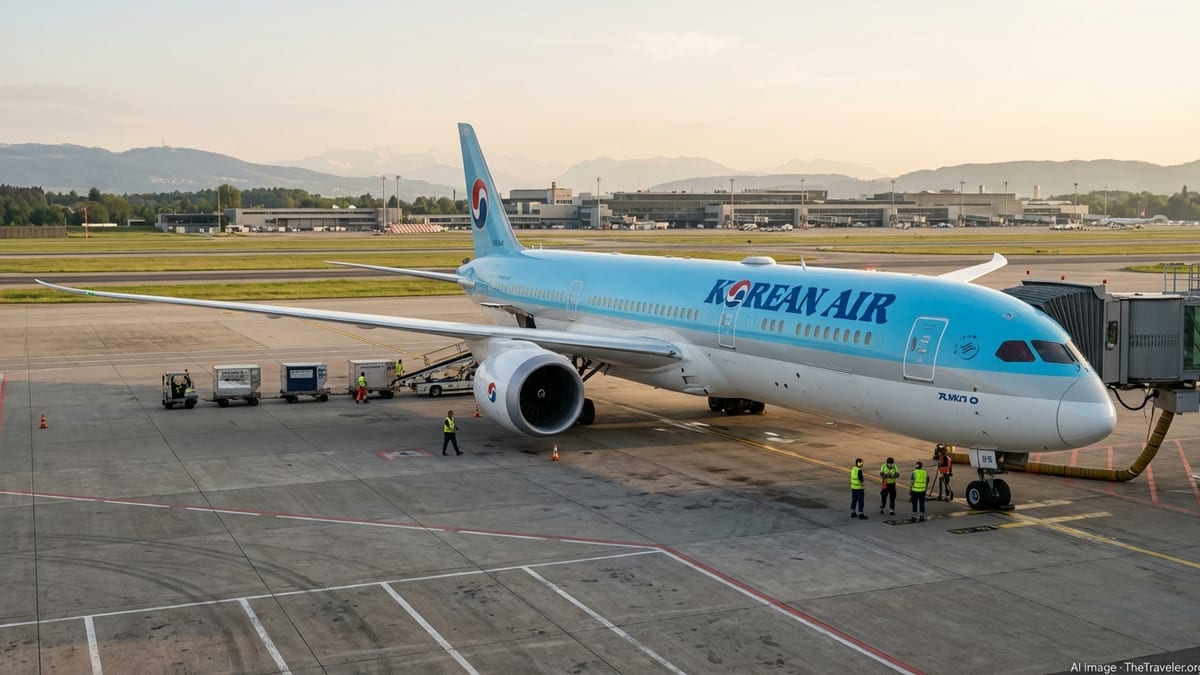
Korean Air is set to launch its Boeing 787-10 Dreamliner on the Seoul Incheon–Zurich route from June 2, 2026, a fleet upgrade timed to celebrate 50 years of serving the Swiss city and to capture rising demand on one of the carrier’s oldest European links.
Dreamliner Upgrade for a Historic European Gateway
The 787-10, the largest member of Boeing’s Dreamliner family, will take over Korean Air’s three-times-weekly summer service between Seoul Incheon and Zurich from June 2 to October 24, 2026. The move follows the planned resumption of the route on March 31, 2026, and reflects renewed confidence in long haul travel between Northeast Asia and Central Europe.
Zurich holds a special place in Korean Air’s network. After Paris, it is the airline’s second-oldest European destination, with flights dating back half a century. The decision to assign one of its newest and most efficient widebody aircraft to the route underscores the market’s resilience and strategic value, particularly for connecting traffic between Europe and wider Asia via Seoul.
Industry data indicate that Korean Air has seen consistently strong loads on long haul services into Europe, with Switzerland benefiting from a mix of leisure travelers, premium corporate demand and transfer passengers heading to destinations across Japan, Southeast Asia and Oceania. The introduction of the 787-10 is expected to add both capacity and product differentiation on a route that competes with one-stop itineraries via major Gulf and European hubs.
Operating within the airline’s broader summer schedule, the Zurich rotation gives Korean Air an additional high profile platform for its newest cabin products and upgraded branding, supporting its ambition to reinforce Seoul Incheon as a key Northeast Asian hub for Europe-bound traffic.
More Seats, Higher Efficiency on the Boeing 787-10
Korean Air’s 787-10s are configured with 325 seats, including 36 Prestige Class seats and 289 in economy. Compared with the smaller 787-9 that has previously appeared on other European routes, the stretched variant provides around 15 percent more capacity for both passengers and cargo, yet retains the Dreamliner’s fuel efficiency and lower emissions profile.
The 787-10 is distinguished by a longer fuselage, measuring just over 68 meters, which allows the airline to add seats without significantly compromising comfort. The type is optimized for high demand routes of medium to long range, fitting well with the approximately 9,000 kilometer sector between Seoul and Zurich. Korean Air has been gradually weaving the aircraft into its long haul network after initial deployments on regional routes in Japan, Southeast Asia and North America.
The Dreamliner family is central to Korean Air’s fleet renewal plans. The carrier has committed to additional 787-10s as part of a wider long haul expansion strategy that also includes the Boeing 777-9. By assigning the 787-10 to Zurich, the airline can replace older twin aisle aircraft with a more efficient jet that offers reduced fuel burn per seat and lower noise levels for both passengers and airport communities.
The new aircraft will also carry Korean Air’s refreshed livery and corporate identity, rolled out on recent deliveries as the airline prepares for its planned integration with Asiana Airlines later in the decade. Zurich-bound passengers will be among those experiencing the updated look on one of the newest airframes in the fleet.
Prestige Suites 2.0 and an Upgraded Economy Experience
Beyond the capacity boost, Korean Air is using the 787-10 deployment to showcase its latest onboard product. In business class, branded as Prestige Class, the aircraft introduces the new Prestige Suites 2.0, a staggered layout with direct aisle access for every passenger and sliding doors for added privacy. High partitions and a refined, muted color palette create a sense of seclusion in the cabin.
The design draws inspiration from Jogakbo, traditional Korean patchwork, which appears in subtle patterns across seat shells and cabin finishes. Each seat converts into a fully flat bed measuring about 198 centimeters in length, with a generous pitch and width tailored for long haul rest. Large 24 inch 4K screens and Bluetooth audio pairing bring the entertainment system in line with the latest industry standards, while expanded personal storage and charging options support business travelers and frequent flyers.
In economy, the 787-10 features the airline’s updated New Economy cabin in a 3-3-3 layout. Seats offer a 32 inch pitch, a recline of up to 120 degrees and a width of around 17 inches, along with redesigned cushioning aimed at improving comfort on flights of more than 10 hours. Each seat is equipped with a 13 inch 4K monitor and individual USB-C charging, narrowing the gap with many premium economy offerings across the industry.
The aircraft is also fitted with inflight Wi-Fi, enabling passengers to stay connected throughout the journey. Combined with the Dreamliner’s larger windows, higher cabin humidity and lower pressurization altitude, Korean Air is positioning the Zurich service as a flagship example of its next generation long haul experience.
Strategic Boost for Seoul–Europe Connectivity
For Zurich Airport, the arrival of the 787-10 marks a notable capacity and product upgrade from one of its longest standing intercontinental partners. The three weekly summer-season flights strengthen links not only to South Korea but also to Korean Air’s wider Asian network, which spans major cities in Japan, China, Southeast Asia and Oceania.
The timing aligns with growing two way tourism and business flows between Switzerland and Asia. Swiss outbound travel demand to destinations such as Japan and Southeast Asia has recovered strongly, while inbound visitors from Korea and neighboring markets increasingly use Zurich as a gateway to the Alps and key financial and technology centers. Enhanced cabin comfort and connectivity are expected to appeal to high yielding corporate clients as well as to leisure travelers seeking a one stop journey between Europe and Asia.
Korean Air’s commitment to Zurich also has a symbolic dimension. As the airline marks 50 years of service to the Swiss city, executives have framed the 787-10 deployment as a sign of confidence in the route’s long term prospects. The route’s longevity, despite shifts in global demand and competition from rival hubs, highlights Zurich’s role as a stable, premium market for transcontinental services.
Looking ahead, industry observers will be watching whether Korean Air considers additional frequencies on the Seoul–Zurich route beyond the 2026 summer season, particularly as more 787-10s join the fleet and the planned integration with Asiana expands the combined group’s reach in Europe. For now, the upgraded aircraft marks a significant milestone, combining a historic anniversary with the arrival of one of the most modern widebodies in the sky.