

Korean Air is introducing new late-night flights between Seoul Incheon and Osaka Kansai from March 19, 2026, targeting growing demand for flexible, short-haul travel between South Korea and Japan on one of Northeast Asia’s busiest city pairs.
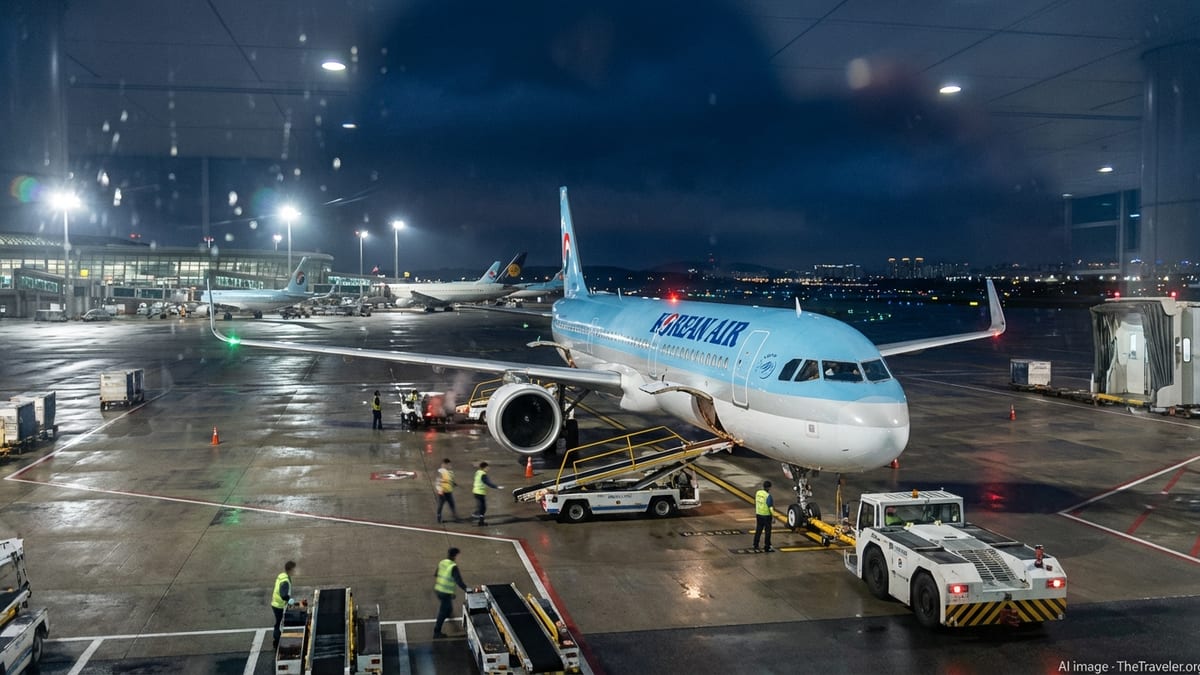
New Red-Eye Option on a Heavily Traveled Corridor
From March 19, 2026, Korean Air will shift one of its Seoul Incheon–Osaka Kansai rotations into late-evening and overnight hours, effectively creating a red-eye option on the busy route. The move adds a new layer of schedule flexibility for both South Korean and Japanese travelers, as well as international passengers connecting through Seoul on long-haul itineraries.
Industry schedules indicate that the new pattern will see a daily evening departure from Incheon to Kansai, arriving in Osaka late at night, with a corresponding return service in the early-hours window. This timing contrasts with Korean Air’s existing daytime and early-evening services and marks the first time the airline has committed one of its regular Seoul–Osaka frequencies to red-eye hours as part of its planned network structure for the northern summer season.
The airline’s decision comes as the Seoul–Osaka market continues to show resilient demand following the reopening of international travel and the normalization of air links across Northeast Asia. The short hop between the South Korean and Japanese hubs has evolved from a leisure-dominated route into a vital connector for business, tourism, and transfer traffic, prompting carriers to explore new ways of spreading out capacity across the day.
Expanded Schedule Builds on Six-Daily Service
Korean Air has steadily grown its Osaka presence over the past two years, formalizing six daily rotations between Seoul and Kansai, supplemented by flights from Seoul’s secondary airport, Gimpo. Previous seasonal additions on the route have now been absorbed into the regular schedule, cementing the airline’s role as one of the key players linking the two cities.
The late-night departure is being layered on top of Korean Air’s existing frequencies rather than replacing a daytime service. That means travelers will continue to see a spread of morning, midday, and afternoon flights from both Incheon and Gimpo, while gaining the option to travel much later in the evening. For time-sensitive passengers such as weekend city-break visitors or business travelers trying to maximize productivity, the additional choice is expected to be particularly attractive.
With six or more round trips operating on peak days once all services are accounted for, the carrier’s Osaka operation now mirrors the intensity of some of its major regional trunk routes. Combined with rival South Korean and Japanese airlines flying between Seoul and Kansai, total daily frequencies on the corridor regularly exceed 30 departures, underscoring the competitive stakes and the importance of schedule differentiation.
A321neo Takes the Night Shift
Korean Air plans to deploy its Airbus A321neo on the new late-night Seoul–Osaka flights, leveraging the narrow-body jet’s efficiency and cabin upgrades on this short-haul sector. Configured with 182 seats, including eight lie-flat or recliner-style seats in the premium cabin and 174 in economy, the aircraft is designed to deliver a more comfortable experience during what are often considered inconvenient hours.
The A321neo already operates a growing share of Korean Air’s Japan network and is also used on recently launched routes such as Incheon–Kobe. Its quieter engines and improved fuel burn make it well suited to late-night operations out of noise-sensitive airports, while modern interiors and upgraded inflight entertainment help offset the fatigue associated with overnight travel.
Although the flying time between Incheon and Kansai typically sits under two hours, the red-eye configuration allows Korean Air to align the outbound and inbound legs with key connection banks at Incheon. Passengers originating in Osaka can arrive in Seoul just in time to connect onto early-morning departures to Europe, the Americas, and Southeast Asia, many of which leave before dawn or shortly thereafter.
Catering to Demand for Flexible, Short-Haul Travel
The introduction of late-night Seoul–Osaka flights reflects a broader shift in travel behavior between South Korea and Japan. As visa-free travel and frequent low-cost promotions have normalized cross-border city breaks, travelers have become more sensitive to departure and arrival times, prioritizing options that maximize time on the ground over simply choosing the cheapest fare.
Weekend travelers, in particular, are likely to benefit from the new schedule. A Friday or Saturday night departure from Seoul allows passengers to finish a full workday before flying, then wake up in Osaka with a full day ahead. Conversely, a post-evening Osaka departure back to Incheon means visitors can enjoy dinner or late shopping before heading to the airport, minimizing time lost to travel.
For Korean Air, responding to this demand involves more than just adding capacity. By reshaping its daily timetable to include early-morning and late-evening services, the carrier can better segment its customer base, appealing simultaneously to cost-conscious leisure travelers, frequent business flyers, and long-haul transfer passengers who value seamless connectivity across multiple time zones.
Seoul–Osaka: One of Asia’s Busiest City Pairs
The Seoul–Osaka corridor ranks among the busiest short-haul international routes in Asia, with multiple full-service and low-cost airlines competing aggressively on price and frequency. Carriers such as Asiana Airlines, Peach Aviation, Jeju Air, Jin Air, Air Seoul, T’Way Air, Eastar Jet, and Air Busan all operate on the sector, in addition to Korean Air’s comprehensive schedule from Incheon and Gimpo.
Before the pandemic, seat capacity between the two cities regularly surged during peak travel seasons such as Golden Week in Japan and major holidays in South Korea. In the years since international travel reopened, that pattern has returned, with airlines now fine-tuning the balance between year-round frequencies and seasonal extras. Korean Air’s decision to anchor a late-night rotation in its permanent schedule rather than as a limited-time operation signals confidence in the structural strength of demand.
The route’s appeal lies in its blend of purposes. Osaka and the wider Kansai region attract South Korean visitors interested in food, shopping, culture, and theme parks, while Japanese travelers use Seoul as both a destination and a gateway to onward long-haul journeys. With just under two hours of flying time and a distance of around 540 miles, the link is short enough to support spontaneous travel yet important enough to feature prominently in airline network planning.
Part of a Wider Japan Network Realignment
The new late-night Osaka flights are being introduced against the backdrop of a broader realignment of Korean Air’s Japan network for the northern summer season of 2026. The carrier is adjusting frequencies to several regional Japanese cities, increasing service on routes such as Aomori, Komatsu, and Niigata while trimming flights to others including Kagoshima and Nagasaki.
These adjustments reflect Korean Air’s efforts to match seat supply with where demand is strongest, while also taking into account aircraft availability across its mixed fleet of wide-body and narrow-body jets. Osaka, one of the country’s most important inbound gateways alongside Tokyo and Fukuoka, remains central to that strategy, with the late-night Incheon–Kansai rotation reinforcing its role as a core trunk route rather than a purely leisure-focused market.
Further highlighting the importance of Japan to the airline’s network, Korean Air has recently deployed its new Airbus A350-900 on select Japan routes, including the Seoul–Osaka sector during the 2025 season. The use of long-haul aircraft on relatively short segments illustrates how high-density, high-yield markets like Osaka can help support broader fleet and brand objectives, particularly as Korean Air integrates Asiana Airlines and positions itself as a larger global carrier.
Improved Connectivity for International Travelers
While the late-night Seoul–Osaka flights will be welcomed by point-to-point travelers, they are equally significant for passengers connecting through Incheon from North America, Europe, and Southeast Asia. Korean Air’s Incheon hub relies on carefully timed “banks” of arrivals and departures, allowing travelers to make relatively short connections between regional Asian flights and long-haul services.
By routing one Osaka rotation into the red-eye window, Korean Air can now offer same-night or early-morning connections that were previously impossible without an overnight stop in Seoul. For example, a traveler arriving in Incheon in the late afternoon from a European city could connect onto the evening Osaka flight, arriving in Kansai before midnight, or vice versa, arriving in Seoul before sunrise and continuing onward to another international destination a few hours later.
This improved connectivity is especially important for corporate travelers and those on tight itineraries, who often seek to minimize hotel nights and maximize working time in their destination. It also underlines Incheon’s ambition to compete with other major Asian hubs, such as Tokyo, Hong Kong, and Singapore, where late-night and early-morning bank structures are already well established.
Competitive Pressures and Future Growth Prospects
Korean Air’s move to add late-night flexibility on the Seoul–Osaka route comes amid intensifying competition from low-cost carriers that have also experimented with off-peak departures. By offering a red-eye option on its full-service product, the airline is positioning itself to capture travelers who are price-sensitive yet unwilling to compromise on frequent-flyer benefits, baggage allowances, or onboard comfort.
Analysts expect further schedule tweaks in the months ahead as airlines continue to respond to fluctuations in South Korea–Japan demand, currency movements, and evolving tourism trends. With a planned full integration of Asiana Airlines into Korean Air’s operations by early 2027, the combined carrier is likely to reassess capacity and timings on key routes such as Seoul–Osaka, potentially consolidating overlapping flights while preserving or even expanding high-demand time slots like late-night connections.
For now, the addition of red-eye flights between Incheon and Kansai underscores how closely Korean Air is tracking traveler behavior on this flagship route. As more passengers look to squeeze extra hours out of their trips, the ability to fly overnight or in the very late evening is becoming less of a niche offering and more of an expected part of a modern, flexible flight schedule between South Korea and Japan.