

More news on this day
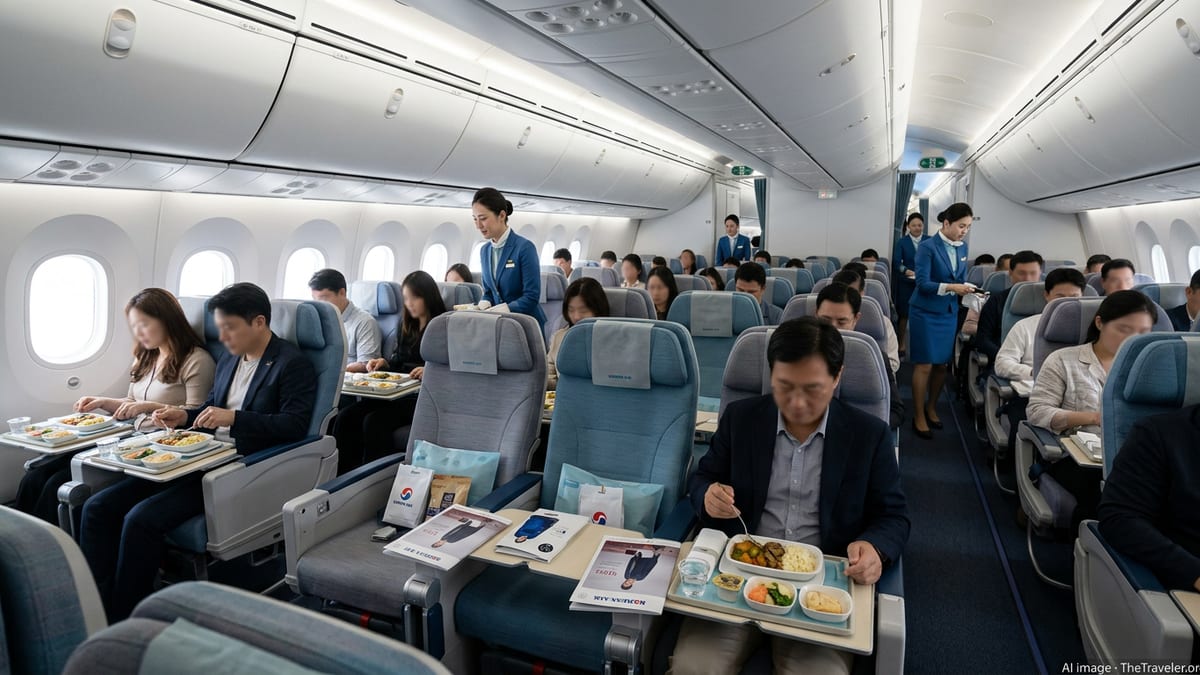
Korean Air is moving to take full ownership of its in-flight catering and duty-free operations, a shift that marks a new phase in the carrier’s post-pandemic restructuring and service upgrade strategy as it prepares for deeper integration with Asiana Airlines.
Get the latest news straight to your inbox!
Strategic Reversal After Pandemic-Era Divestment
The decision represents a notable reversal from Korean Air’s 2020 move to carve out and sell its catering and in-flight duty-free businesses to private equity firm Hahn & Company in order to secure liquidity during the height of the COVID-19 crisis. At that time, the airline transferred operational control while retaining a minority stake to stabilize supply and service quality.
Publicly available information indicates that the separated business, branded Korean Air Catering & Duty Free, continued to provide meals and onboard retail services to the flag carrier under long-term agreements. Industry coverage notes that Korean Air’s stake in the unit was structured to preserve influence over standards, but day-to-day operations and strategic decisions were largely driven by external ownership.
With the aviation market now firmly in recovery and Korean Air advancing a multi-year merger and integration program with Asiana Airlines, the carrier is refocusing on core customer touchpoints. Bringing catering production and duty-free management back under full control aligns with a broader shift away from crisis-driven asset sales and toward long-term brand and product investment.
Analysts following the airline’s restructuring have framed the renewed ownership as part of a deliberate clean-up of legacy crisis structures that no longer reflect Korean Air’s financial position or its ambition to compete more aggressively in premium long-haul markets.
Tighter Control Over Food, Retail and Brand Experience
Full control of in-flight catering and onboard retail allows Korean Air to align every aspect of the passenger experience more closely with its brand positioning. According to industry and trade coverage, the airline has already been revamping menus, partnering with high-profile chefs and experimenting with more regionally focused dishes, especially on long-haul routes and premium cabins.
With end-to-end oversight of production facilities, logistics and onboard sales, the carrier is expected to accelerate menu innovation and respond more quickly to passenger feedback. This includes the ability to refine portion sizes, course sequencing and dietary options, as well as to coordinate better between cabin layouts, galley design and service routines.
Duty-free operations are likewise a critical interface with international travelers, particularly on long-haul flights linking Seoul with North America and Europe. Reports on the airline’s retail strategy suggest that full ownership will make it easier to tailor product assortments, pricing and promotions to specific routes and customer segments, while integrating onboard offers with digital pre-order platforms and loyalty programs.
Travel industry observers note that the move also supports Korean Air’s efforts to differentiate itself from low-cost competitors by emphasizing curated food, beverage and retail experiences that highlight Korean culture, premium local brands and exclusive collaborations.
Positioning for Asiana Integration and Network Growth
The renewed control over catering and duty-free comes as Korean Air progresses with the complex integration of Asiana Airlines, which is set to reshape South Korea’s aviation landscape over the next several years. Public disclosures and widely reported merger timelines indicate that Asiana’s brand will be phased out and operations absorbed into Korean Air, with full integration targeted around the middle of the decade.
As the combined airline harmonizes fleets, cabins and route networks, having a wholly owned catering and retail arm is expected to simplify standard-setting across both legacy carriers. This will be particularly important for aligning premium cabins, where consistency in plating styles, course timing and wine selection contributes significantly to perceived value.
Industry analysis suggests that consolidated procurement of ingredients and retail inventory could generate economies of scale, lowering unit costs while funding investments in higher-quality components and more sustainable packaging. A unified in-flight retail strategy may also allow Korean Air to renegotiate supplier terms and secure more favorable conditions for high-demand luxury and beauty brands popular with transit passengers through Incheon.
The integration with Asiana is also prompting Korean Air to plan for increased long-haul capacity and a more pronounced role as a Northeast Asia hub carrier. In that context, a closely controlled catering and duty-free platform is viewed as a strategic asset that supports both brand coherence and operational reliability during a period of rapid change.
Service Upgrades, Sustainability and Digital Innovation
Beyond ownership structure, Korean Air has been signaling a broader push to upgrade onboard services, including new menu concepts, refreshed amenities and enhanced lounge offerings at Incheon. Reports on recent service changes describe collaborations with noted Korean chefs and an emphasis on ingredients and recipes that present Korean cuisine in a contemporary, globally accessible way.
The airline is also weaving sustainability goals into its catering operations. Public information from company and group sustainability communications points to initiatives such as lighter and more environmentally friendly meal containers, reduced single-use plastics and a greater focus on waste reduction. Direct control over catering production is expected to make it easier to test and scale such measures across the network.
On the retail side, Korean Air is moving toward tighter integration between onboard duty-free sales, mobile platforms and loyalty programs. Travel and aviation outlets have highlighted a growing industry trend toward pre-order systems, personalized product recommendations and contactless payment solutions that extend the shopping window before and after the flight. Full ownership of the duty-free unit positions the carrier to invest in these digital tools without navigating the constraints of an external majority owner.
For passengers, these changes may translate into a more seamless journey in which meal choices, special dietary requests and shopping preferences are captured in advance, synchronized with frequent flyer profiles and reflected consistently across flights and cabins.
Competitive Implications in Northeast Asia’s Aviation Market
Korean Air’s consolidation of catering and duty-free operations comes amid intense competition in the Northeast Asian aviation market, where major carriers in Japan, China and the wider region are also investing heavily in product upgrades. Industry observers note that airlines are increasingly differentiating not only through seat hardware and schedules but also through the overall service ecosystem that includes food, retail, and digital engagement.
By reclaiming full ownership of its in-flight service backbone, Korean Air is signaling that these elements are too central to its competitive strategy to remain partly outside the group. Aviation analysts suggest that this could pressure regional rivals and independent catering firms to rethink partnership models, potentially prompting further consolidation in the inflight services sector.
For destination markets served by Korean Air, particularly key tourism and business hubs in North America and Europe, the move is another indicator that the carrier aims to position itself as a premium gateway to Korea and the broader region. Enhanced meals, more curated duty-free assortments and smoother digital interactions may become part of how the airline markets the journey to and through Seoul as an experience in itself.
While the full impact on pricing, onboard offerings and route-level profitability will take time to emerge, the strategic direction is clear: in-flight catering and duty-free are returning to the heart of Korean Air’s business model as it prepares for a new era of consolidated operations and renewed global travel demand.