

More news on this day
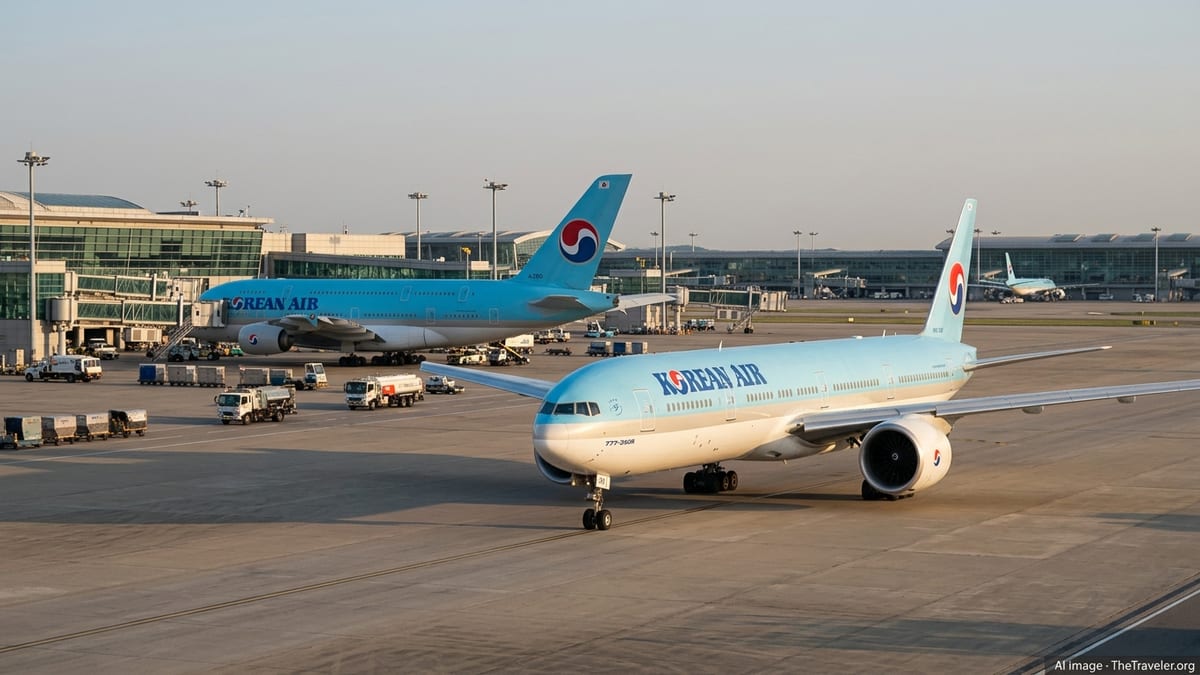
Korean Air is progressing with a significant long-haul fleet reshuffle, phasing out Airbus A380 operations on 11 routes and shifting capacity toward more efficient Boeing 777-300ER aircraft as part of a broader drive to cut fuel burn, modernize cabins and adapt to evolving demand patterns.
Get the latest news straight to your inbox!
Network Realignment Reduces Reliance on A380 Superjumbos
Publicly available schedule data for the current and upcoming seasons indicates that Korean Air has removed the Airbus A380 from 11 previously served routes, aligning the carrier with a global trend away from four engine widebodies. The changes affect a mix of transpacific and Europe bound services that historically relied on very high seat counts but now see more variable demand and rising fuel and maintenance costs.
The airline continues to operate a smaller number of A380 flights on core trunk routes where demand and slot constraints still justify the type. However, the withdrawal of the double deck aircraft on a double digit set of city pairs signals that the superjumbo is increasingly being treated as a niche tool rather than a backbone of the long haul network.
Industry analysis notes that the decision comes as Korean Air navigates tighter competition on key corridors, integration work linked to the Asiana tie up, and pressure to demonstrate capacity discipline. Cutting A380 exposure on routes with uneven year round loads gives the carrier more latitude to adjust frequencies without leaving large numbers of empty seats in off peak periods.
The rebalanced network also reflects the growing importance of connectivity via Seoul Incheon, where more, smaller gauge aircraft can offer improved schedule choice compared with a few very large departures. This approach can be especially attractive for premium and corporate travelers seeking flexibility rather than sheer seat volume.
Boeing 777-300ER Becomes the Workhorse on Former A380 Routes
On the routes losing A380 service, Korean Air is primarily turning to its Boeing 777-300ER fleet, which offers a sizable long haul capacity while consuming significantly less fuel per seat than a lightly loaded superjumbo. Operational data and independent fuel efficiency studies have consistently placed the 777-300ER among the more economical large twin engine platforms in long haul service when configured efficiently.
The 777-300ER gives Korean Air the range needed to serve North American and European gateways from Seoul with full passenger and cargo payloads, while its twin engine design reduces maintenance complexity relative to the four engine A380. For an airline managing both high fuel prices and long stage lengths, this balance between capability and cost is a key factor in fleet planning.
In addition to pure economics, the 777-300ER provides greater flexibility in adjusting capacity across seasons. Airlines can more easily vary frequencies with this type, deploying additional services during peak travel months and trimming schedules in shoulder periods without the step change impact that comes with adding or removing an A380 rotation.
For Korean Air, which operates a diverse intercontinental network spanning major business centers and leisure markets, this flexibility supports more granular revenue management. The carrier can segment routes by yield profile and tailor 777-300ER deployment to maximize returns, rather than relying on very high density aircraft that may be difficult to fill consistently at profitable fares.
Cabin Strategy: From First Class Cuts to Premium Economy Expansion
The move away from A380s on 11 routes dovetails with Korean Air’s evolving cabin strategy on the 777-300ER. Published fleet plans show that 11 Boeing 777-300ERs are undergoing a comprehensive interior retrofit that removes traditional first class seating in favor of a three class layout built around business, premium economy and economy cabins.
This shift reflects broader long haul trends in which demand for classic first class has concentrated on only a handful of ultra high yield routes, while premium economy has emerged as a strong revenue contributor. On many city pairs where the A380 once offered extensive premium seating capacity, a modernized 777-300ER with an expanded premium economy cabin can generate higher total revenue per flight by better matching what travelers are willing to pay.
Reports indicate that the first of these reconfigured 777-300ER aircraft is scheduled to enter service in the second half of 2025, with modification work continuing through 2026. As more refurbished jets join the fleet, Korean Air gains the ability to align aircraft type, seating mix and route level demand, particularly on sectors where A380 withdrawal is already planned or underway.
For passengers, the transition is expected to bring newer hard products and more consistent cabins compared with the aging A380 interiors. Business class suites, improved inflight entertainment systems and upgraded economy seating on the 777-300ER are being positioned as selling points, especially for travelers who previously selected A380 flights primarily for comfort rather than the specific aircraft model.
Efficiency and Sustainability Pressures Shape Fleet Decisions
Beyond commercial considerations, environmental and regulatory pressures are adding momentum to Korean Air’s shift away from four engine widebodies. Larger, heavier aircraft like the A380 tend to post higher fuel burn and associated emissions per trip, particularly if they are not operated at very high load factors throughout the year.
Industry fuel efficiency benchmarks on transpacific routes have highlighted the advantages of modern twin engine aircraft, including the 777-300ER and newer generation types such as the Airbus A350, which Korean Air has also ordered in significant numbers. By pulling A380s from 11 routes and increasing reliance on more efficient airframes, the carrier can improve its overall emissions profile while preparing for tighter sustainability reporting requirements.
The change also aligns with long term fleet renewal plans that anticipate a gradual phase out of both A380s and Boeing 747 passenger operations as next generation twins arrive. Korean Air has referenced a future widebody mix built around aircraft with better fuel economy, longer range and lower maintenance costs, attributes that support both environmental commitments and financial performance.
As governments and investors scrutinize airlines’ climate strategies more closely, incremental steps such as reallocating capacity from superjumbos to 777-300ERs are likely to be viewed as practical measures within a broader decarbonization pathway. While not a complete solution, they contribute to measurable improvements in fuel efficiency per available seat kilometer.
What Passengers Can Expect on Affected Routes
For travelers, the most visible change from Korean Air’s A380 pullback on 11 routes will be a different boarding experience and cabin layout. The transition to 777-300ER operations means the loss of the A380’s upper deck and on board spaciousness, but it also brings more modern and standardized interiors as retrofit work progresses.
Seat maps published in booking systems show that passengers may see modest reductions in total seat count on some flights, which could lead to higher load factors during busy periods. However, frequency adjustments and network optimization may offset this effect by spreading demand across more departures rather than concentrating it on a small number of very large aircraft.
Premium travelers who favored the A380 for quieter cabins may find that the latest generation 777-300ER business class products, including privacy focused suites and upgraded bedding, help narrow the comfort gap. At the same time, the planned expansion of premium economy on the 777-300ER fleet offers an additional option for leisure and small business travelers who want extra space without the cost of business class.
Overall, the withdrawal of A380s from 11 Korean Air routes and the corresponding shift toward 777-300ER operations illustrate how fleet strategy, cabin design and network planning intersect. As the airline continues to refine its long haul offering, passengers are likely to see further adjustments in aircraft assignments and onboard products, with efficiency and revenue optimization remaining central themes.