

More news on this day
Thousands of Korean travelers have been left scrambling for a way home as airlines slash routes across the Middle East amid escalating regional conflict, closing key air corridors and stranding tourists at Gulf and transit hubs.
Get the latest news straight to your inbox!
Flights Axed Overnight as Conflict Shuts Key Airspace
Publicly available flight data and Korean media reports indicate that the latest surge in hostilities involving Iran, Israel and the United States has rapidly choked off commercial air links across parts of the Middle East. Governments in Iran, Israel, the United Arab Emirates, Qatar and other states have partially or fully closed their airspace at various points, forcing carriers to divert, delay or cancel services.
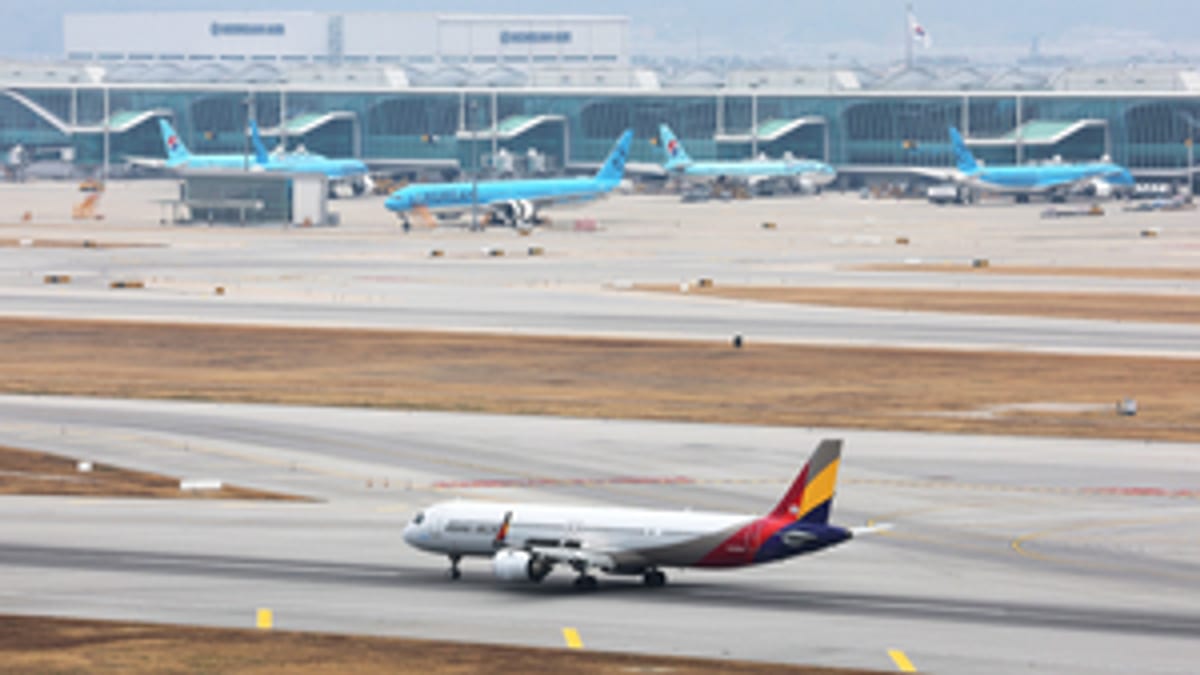
Korean Air, the country’s main long-haul operator, implemented emergency diversions and cancellations on its Incheon–Dubai service after regional airspace restrictions tightened in early March. Industry coverage notes that the route was South Korea’s last remaining direct passenger link into the broader Middle East, following an earlier suspension of the Incheon–Tel Aviv service that has remained off the schedule since the Israel–Hamas war erupted in October 2023.
Global aviation advisories describe an increasingly narrow corridor over Saudi Arabia as one of the only viable east–west paths still open, with air traffic control stretched as wide‑body jets funnel through a limited slice of sky. Analysts say that once missile activity or new restrictions affect that corridor, airlines face hard choices between lengthy detours, fuel‑intensive routings or outright cancellations.
The sharp rise in operational risk has collided with a spike in jet fuel prices linked to the conflict, putting additional pressure on Korean carriers that were already wrestling with higher costs on long‑haul routes. Industry commentary in Seoul suggests that every flight into the region now carries significantly higher financial and insurance burdens, a key factor behind the decision by several airlines to pull back capacity.
Stranded at Gulf Hubs as Seat Shortages Bite
As routes vanished, Korean tourists who had used Dubai, Doha and Abu Dhabi as convenient gateways for package tours and business trips found themselves stuck in airport lounges and hotel lobbies. Foreign ministry briefings and domestic news coverage estimate that around 3,000 Korean nationals were stranded at one point in the United Arab Emirates alone following a wave of cancellations.
Travelers report struggling to secure seats on remaining services to Northeast Asia as airlines consolidate operations and prioritize core routes. Some have been forced to wait days for rebooking, while others are piecing together complex itineraries through Europe or Central Asia, adding long layovers and substantial extra costs to what began as routine holidays.
Government figures cited in Korean media indicate that roughly 6,300 Korean nationals departed Middle Eastern countries over a recent seven‑day stretch, many on packed flights arranged or facilitated by Seoul. Yet the same data suggest that more than 14,000 citizens remain spread across 14 countries in the region, illustrating the scale of the logistical challenge as commercial options shrink.
Reports from expatriate communities warn that the tight capacity environment has also attracted opportunists. Social media posts and local press stories describe private brokers touting high‑priced “evacuation” seats on chartered jets out of Gulf airports, prompting Korean embassies to caution nationals against scams and to rely on verified airline or government channels instead.
Seoul Steps In With Alerts, Charters and a Rapid Response Team
In response to the mounting disruption, South Korea has activated an emergency support system for citizens abroad. Publicly available government information shows that the Ministry of Foreign Affairs convened cross‑agency meetings with defense, transport and intelligence officials to map out evacuation routes and contingency plans as Middle Eastern airspace tightened.
Seoul raised travel alerts to higher levels for several Gulf and Levant states, advising against nonessential trips and urging those already in high‑risk areas to depart as soon as flights are available. For Iran, where commercial options have been particularly constrained, the advisory has effectively discouraged all travel, with the embassy repeatedly calling on remaining nationals to leave when possible.
According to published coverage, authorities have arranged special flights and ground convoys to move Korean tourists out of chokepoints. Buses have been used to shuttle groups from Israel into Egypt, while separate overland routes have taken travelers from Iran into neighboring Turkmenistan, where they can connect to onward flights. In the Gulf, at least one government‑chartered service operated in partnership with a local carrier to lift more than 200 passengers from Abu Dhabi to Incheon.
Police and foreign ministry officials have also readied a rapid response team able to deploy into the region if conditions deteriorate further. Public statements indicate that the unit’s role would include coordinating with local authorities, organizing secure transport to departure points and supporting consular staff working to keep track of scattered tourists.
Airlines Slash Broader Networks as Costs Climb
The turmoil in the Middle East is rippling through the wider Korean aviation sector, compounding existing financial pressures. Industry analysis suggests that surging jet fuel prices linked to the conflict, together with a weaker Korean won, have sharply increased international operating costs just as airlines were rebuilding their long‑haul networks after the pandemic.
Local business media report that both full‑service and low‑cost Korean carriers have entered various forms of emergency management, reviewing route profitability and trimming frequencies on long sectors. Some airlines have reportedly reduced services not only to the Middle East but also on high‑cost transpacific and Southeast Asian routes as they seek to stem mounting losses.
Observers note that the consolidation is occurring in parallel with the integration of major carriers following ongoing merger efforts, raising concerns among consumer advocates about reduced competition and higher fares. With fewer operators willing or able to absorb the risks of flying into volatile regions, travelers from Korea may face a prolonged period of limited options to reach destinations stretching from North Africa to the eastern Mediterranean.
Travel industry groups warn that tour operators specializing in Israel, Jordan, Egypt and Gulf stopovers are already seeing cancellations and are scrambling to redesign itineraries around safer hubs. For many, that means routing customers through Europe rather than the Middle East, swapping efficient nonstop connections for longer, costlier journeys.
Travelers Confront Complex Detours and Insurance Gaps
For individual Korean travelers, the consequences of the airspace squeeze and route cuts extend well beyond missed flights. Corporate travel advisories highlight that many standard insurance policies include broad exclusions for disruptions linked to war or armed conflict, leaving some tourists to absorb the costs of last‑minute rebookings, extra nights of accommodation and alternative transport.
Specialist risk briefings urge travelers with upcoming itineraries touching the Middle East or nearby air corridors to monitor airline schedule changes closely and to understand the limits of their coverage. Passengers are being advised to look for flexible fare conditions, keep itineraries as simple as possible and avoid nonessential transits through high‑risk hubs where sudden closures can trigger cascading delays.
Even for those determined to proceed, the practical hurdles are mounting. With capacity tightened and operational costs elevated, fares on remaining indirect routes have climbed, while longer detours through safer airspace add hours to flight times between Asia and Europe or Africa. Travelers heading from Seoul to destinations such as Istanbul, Cairo or Tel Aviv now face the prospect of multiple stops and unpredictable travel times.
As the regional crisis grinds on, industry observers say Korean travelers may need to adjust expectations and planning horizons. The era of easy, affordable connections via Middle Eastern hubs has given way to a more fragile network, where sudden route cuts can leave even seasoned flyers stranded and in urgent need of support.