

More news on this day
South Korean travelers are finding themselves stranded or scrambling for alternative routes as escalating conflict in the Middle East triggers sweeping airspace closures, mass flight cancellations, and sharp reductions in capacity on some of Korea’s most important long-haul corridors.
Get the latest news straight to your inbox!
Gulf Hubs Shut Down, Cutting a Vital Bridge for Koreans
The latest round of hostilities involving the United States, Israel, Iran, and Gulf states has led to partial or total closures of airspace across the region, disrupting operations at major hubs such as Dubai, Doha, and Abu Dhabi. Publicly available air traffic data and aviation analytics indicate that thousands of flights have been canceled since late February, with Middle Eastern airline capacity in March falling by more than half compared with a year earlier. This has fractured the core transit network that carries a significant share of South Korean passengers to Europe and beyond.
Industry trackers report that more than 14,000 flights connecting Asia and Europe through Gulf hubs have been scrapped in recent weeks, forcing carriers to reroute or ground services. For Korean travelers, these hubs had served as convenient one-stop gateways from Incheon to popular destinations across Europe, North Africa, and the Middle East. With those corridors suddenly constricted, itineraries that once relied on seamless connections through Dubai or Doha have turned into multi-leg odysseys via secondary hubs in East Asia or Southeast Asia.
Reports from travel forums and airline advisories describe scenes of lengthy queues, crowded transit areas, and confusion among passengers attempting to rebook. Many South Koreans who departed before the closures are discovering mid-journey that their onward sectors through the Gulf have disappeared from schedules, leaving them marooned in intermediate cities such as Singapore, Bangkok, or Istanbul while airlines work through mounting backlogs.
The impact is particularly acute for travelers whose itineraries involved multiple carriers. As Gulf-based airlines scale back or pause operations and partner airlines reroute around restricted airspace, traditional interline connections have become harder to honor, with some passengers being advised to claim refunds and start again on entirely new tickets.
Korean Carriers Slash Middle East and Long-Haul Flights
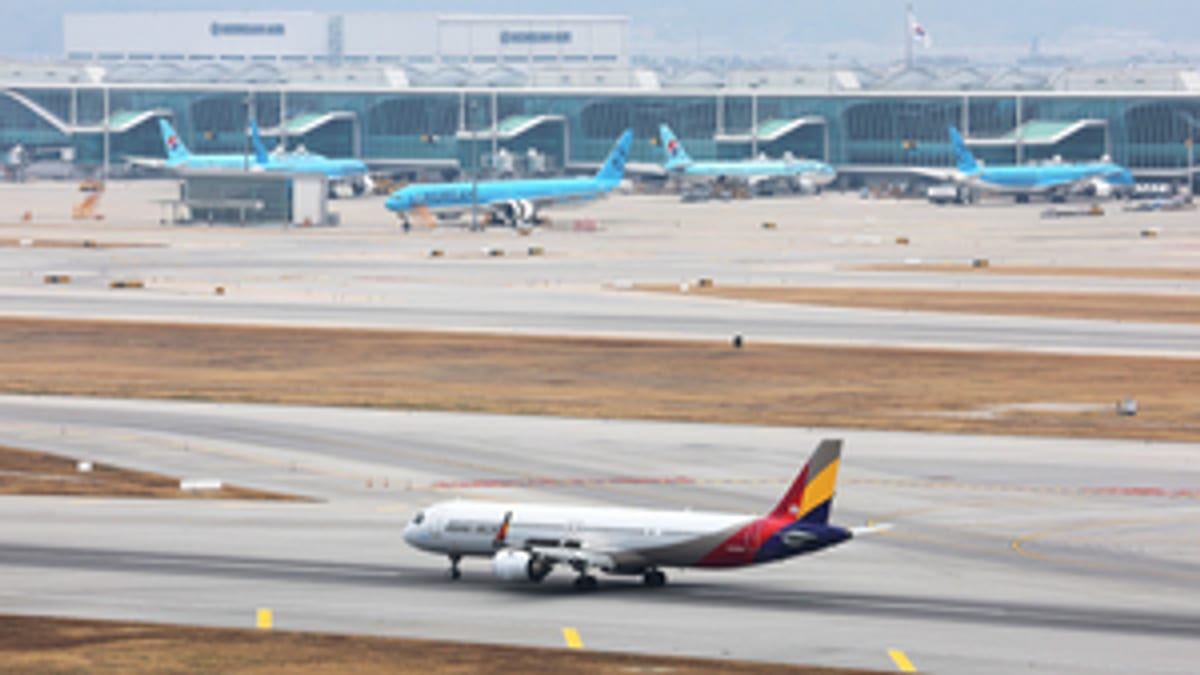
South Korea’s own airlines are increasingly entangled in the turmoil. Korean Air initially curtailed flights to the region in late February, including services to Dubai, after U.S. and Israeli strikes on Iranian targets heightened security risks. Korean media report that the airline has extended suspensions on its Incheon–Dubai route and sharply reduced flights touching Iranian or surrounding airspace, affecting both passenger and cargo operations.
The disruption coincides with a steep spike in jet fuel prices linked to the conflict, magnifying the financial strain on Korean carriers. Domestic business coverage indicates that Korean Air and several low cost affiliates have entered what they describe as emergency management, citing fuel costs that have more than doubled from pre conflict levels. Fuel typically accounts for around 30 percent of an airline’s operating expenses, and executives warn that some long haul services are now uneconomical to operate at previously scheduled frequencies.
Asiana Airlines, in the midst of a protracted merger process with Korean Air, has also begun trimming its international network. Company statements summarized in Korean press show at least 14 round trip flights cut across several routes for April and May, primarily to protect profitability as costs surge and demand patterns shift. While these reductions are concentrated in Northeast and Southeast Asia, airline planners acknowledge that instability in Middle Eastern airspace is complicating long haul scheduling and aircraft deployment decisions.
Budget carriers such as Jin Air and other Korean low cost operators, which lack the financial cushioning of larger full service airlines, are under particular pressure. One carrier has publicly declared emergency management, while others are quietly paring back marginal routes and delaying planned expansions. For price sensitive Korean travelers who rely on low cost options to reach long haul destinations via Gulf or South Asian hubs, the cuts limit already narrowing choices.
Stranded Passengers Face Price Spikes and Patchwork Rerouting
For individual travelers, the most visible consequence is a wave of last minute itinerary changes, often accompanied by significant extra costs. Travel search platforms and fare trackers show economy ticket prices on some Asia Europe routes up by more than 20 percent since late February, with many of the lowest fares disappearing altogether. Rerouted flights that once connected Seoul to European cities in under 15 hours can now take several hours longer as aircraft detour around closed airspace or connect through more distant hubs.
Accounts compiled from travel blogs, social media posts, and airline customer updates describe Korean passengers facing multi day delays as they wait for available seats on alternative services. In some cases, travelers report being routed on circuitous paths such as Incheon to Tokyo or Osaka, then onward to Southeast Asia and finally to Europe in order to bypass the Middle East entirely. Long layovers in third country hubs have become common, stretching already exhausting journeys into multi segment marathons.
Refund and rebooking rules vary by airline, adding another layer of complexity. Some carriers are waiving change fees and offering full refunds on affected Middle East itineraries, while others provide rebooking only onto their own networks, which may have limited capacity. For South Koreans traveling on separate tickets or mix and match low cost combinations, there is often no automatic protection, leaving passengers to negotiate with multiple airlines or seek travel insurance support.
Travel agents in Seoul report increased demand for assistance from clients trying to piece together new journeys at short notice. With availability tightening and fares rising across the board, many stranded Koreans are opting to delay or cancel trips to Europe and the Middle East altogether, especially for non essential travel such as tourism or short business visits.
Government and Industry Grapple With a Moving Target
The South Korean government is monitoring developments closely as part of a broader response to the Middle East crisis. Public statements reviewed in domestic media highlight ongoing coordination between transport authorities, the foreign ministry, and local airlines, with a focus on keeping essential air links open while prioritizing safety. Officials are working with carriers to adjust the country’s summer schedule and maintain core connections, even as some planned expansions are scaled back.
Separately, freight and logistics companies based in Korea are reporting significant disruptions in air cargo flows to and from the Middle East and Europe. Industry newsletters note that freight rates on long haul lanes linking Asia with Europe have risen by more than 50 percent in the weeks following the conflict’s escalation, reflecting reduced bellyhold capacity on passenger jets and longer routings for dedicated freighters. This adds further cost pressure for exporters and importers, particularly in sectors such as electronics and automotive parts.
Aviation analysts in Seoul caution that the situation remains highly fluid. While some Gulf states have begun reopening airspace for limited operations, others retain strict restrictions, and airlines are wary of returning to volatile corridors too quickly. Planning horizons for schedule recovery are short, often measured in days or weeks rather than months, making it difficult for Korean carriers to commit to stable timetables.
There is also growing concern about the longer term implications for South Korea’s global connectivity. The country has spent years positioning Incheon International Airport as a Northeast Asian hub feeding traffic to Europe, North America, and the Middle East. If Gulf hubs remain constrained or less attractive for transit, Korean airlines may need to deepen partnerships with European and Asian carriers, accelerate direct long haul services, or explore alternative routings that avoid high risk regions entirely.
What Korean Travelers Can Expect in the Coming Weeks
For now, publicly available booking data and airline statements suggest that disruption will continue at least through late April, with the potential for further volatility if regional tensions escalate again. Travelers departing South Korea in the coming weeks are being advised by travel agencies and consumer advocates to check flight status frequently, as schedules remain subject to sudden change.
Industry guidance emphasizes several practical steps for Korean passengers: avoiding tight connections involving Gulf hubs, allowing generous layover times when rerouting via alternative cities, and keeping contact details up to date in airline booking profiles. Those with imminent departures are encouraged to monitor official airline announcements and airport information screens rather than relying on static itinerary printouts issued weeks earlier.
Travel insurers active in the Korean market are also adjusting their messaging. Policy documents reviewed by consumer groups indicate that coverage for war related disruptions can be highly variable, with some plans excluding events linked to armed conflict, while others offer limited benefits for delays and cancellations. Travelers are being urged to review terms carefully before departure and to keep documentation of any extra expenses incurred while stranded.
Despite the turmoil, aviation experts note that airlines and regulators have gained experience managing sudden airspace closures in recent years, from volcanic ash clouds to pandemic related shutdowns. As Korean carriers rework networks and global partners adjust alliance schedules, the expectation is that more stable alternatives will gradually emerge. Until then, South Korean travelers heading westward must brace for a travel landscape defined by longer journeys, higher costs, and a level of uncertainty not seen since the height of the pandemic.