

Kos has quietly become one of the most compelling beach destinations in the Aegean, with long ribbons of white sand, clear turquoise water and family friendly shallows balanced by wild coves and windsurfing hotspots.
From the bubble filled waters of Paradise Beach to the dune backed sands of Tigaki and Marmari, this guide explores the island’s standout shores, what makes each one special and how to match them to your style of holiday.
Understanding the Beaches of Kos
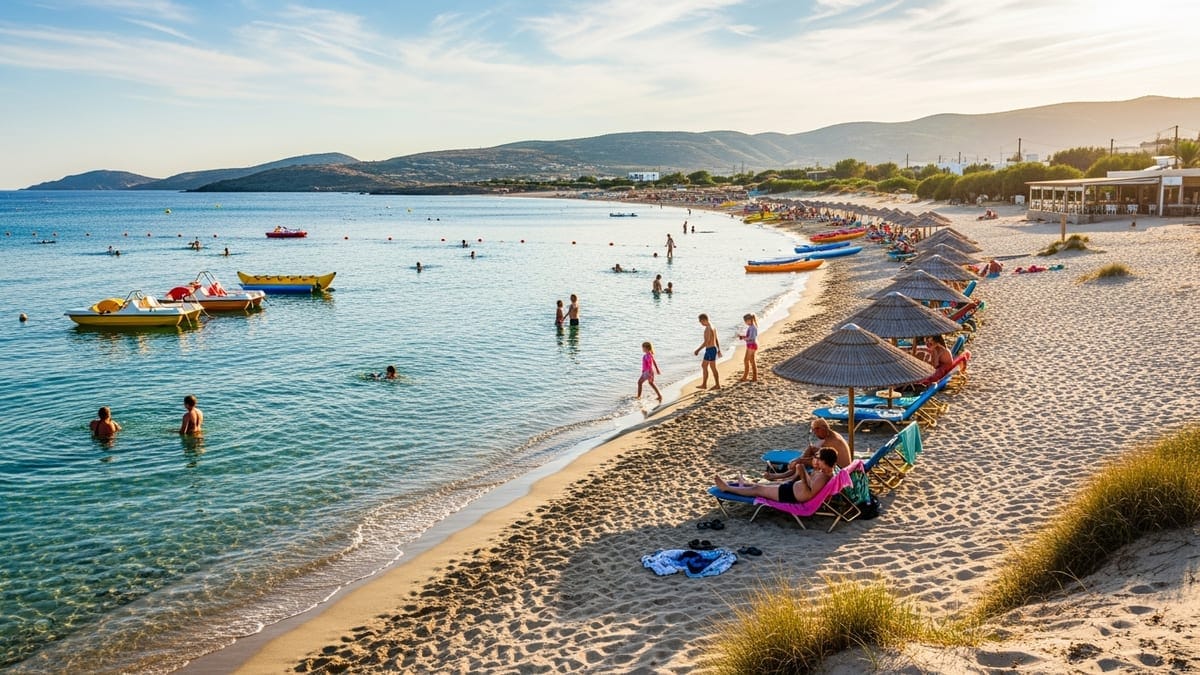
Kos is the third largest island in the Dodecanese and its coastline is hugely varied. The north shore faces the Turkish mainland and tends to be breezier, with long sandy beaches that attract windsurfers and kitesurfers.
The south and southwest are more sheltered, home to the famous Kefalos peninsula beaches, including Paradise Beach and Agios Stefanos.
Most of the island’s key beaches are within a 20 to 50 minute drive of Kos Town, and many are linked by regular bus routes in summer.
Facilities range from fully organised beaches with sunbeds, lifeguards and water sports to near wild stretches where you may share the sand with only a few other swimmers.
Understanding these differences will help you decide where to base yourself and which areas to explore on day trips.
Paradise Beach and the Kefalos Peninsula
On the southwest of Kos, the Kefalos peninsula concentrates some of the island’s most photographed beaches. Paradise Beach is the headline name, but it is part of a bay lined with sandy coves such as Bubble Beach, Magic (or Exotic) Beach, Sunny Beach, Banana Beach and Camel Beach.
Together they offer a mix of lively, family friendly shores and quieter spots that still feel semi wild.
Paradise Beach (Bubble Beach)
Paradise Beach sits on the south coast of Kos, roughly 30 to 40 minutes by road from Kos Town and a short drive from the village of Kefalos.
It is a broad, gently shelving bay of soft, pale sand with shallow, clear water that suits families, casual swimmers and non confident bathers.
The beach is fully organised, with sunlounger and umbrella rentals, beach bars, snack stands and a busy line up of water sports, from pedalos and banana boat rides to water skiing and an inflatable water park area in high season.
The beach’s alternative name, Bubble Beach, comes from a natural phenomenon just off the northern end of the bay. Here, volcanic gases from the nearby island of Nisyros seep up through the seabed, creating a stream of small bubbles that drift through the water.
The effect is most obvious when you wade or snorkel close to shore in this sector, where you may feel a distinct fizz around your legs, like a natural jacuzzi.
Although Paradise Beach is often busy in July and August, its width and shallow gradient mean there is usually space to spread out, particularly toward the less developed ends of the bay.
Families come for the safe swimming and facilities, while younger visitors are drawn by the water sports and sociable atmosphere. The water can be slightly cooler than elsewhere on Kos because of offshore currents, something to keep in mind if you are visiting early in the season.
Camel Beach
Just west of Paradise Beach, Camel Beach is a smaller, more sheltered cove reached via a steep access road from the Kefalos area. It offers fine sand, clear water and views across the bay, but with a more low key feel than its famous neighbour.
A modest number of sunbeds and umbrellas typically line the shore, and there is usually a simple taverna on the slope above the beach.
The cove’s orientation makes it slightly more protected from wind than some larger beaches, which suits swimmers and snorkellers.
Rock formations around the edges of the bay help create pockets of deeper, calmer water, and visibility is generally good, with schools of small fish close to shore.
Camel Beach is a strong option for visitors who want the scenery of the Kefalos coast without the full scale buzz of Paradise Beach.
Magic / Exotic Beach and Sunny Beach
Further around the same stretch of coast sit Magic Beach, also referred to as Exotic Beach or Polemi, and nearby Sunny Beach. These are more elongated sections of sand with a mix of organised and unorganised segments.
Magic Beach in particular has a reputation for feeling wilder and less built up, with much of the shoreline left free of permanent structures and a single taverna or simple beach bar servicing visitors.
Here, dunes and low scrub run down almost to the tide line, and the absence of major hotel complexes helps preserve a sense of space. The sea remains shallow for some distance, as on many Kos beaches, but there are fewer inflatables and motorised water sports than at Paradise Beach.
In high season these areas still receive steady day trip traffic, yet they appeal to travellers seeking quieter sunbathing and a backdrop that feels closer to nature.
Agios Stefanos and Kamari
On the outer edge of the Kefalos bay, Agios Stefanos and Kamari deliver some of the island’s most distinctive scenery. Agios Stefanos is especially striking for the tiny islet of Kastri just offshore, topped by a white and blue chapel.
The main beach combines golden sand and fine pebbles, with shallow, turquoise water ideal for swimming and paddle activities. At one end of the shore lie ruins of early Christian basilicas, adding an archaeological dimension to a day at the beach.
Kamari, closer to Kefalos village itself, is a longer, more developed seaside strip with a small port, tavernas and beach bars backing the main sand and pebble beach.
This is a convenient base for boat trips along the Kefalos coastline and over to nearby islets, as well as for visitors who want easy access to both the village and the best beaches in the area without hiring a car for every excursion.
Tigaki: Family Friendly Sand and Shallow Seas
Tigaki occupies a long stretch of the north coast, roughly 11 to 13 kilometres from Kos Town, and ranks among the island’s most popular beaches.
Here a wide band of white sand runs for up to 10 kilometres, bordered in places by low dunes, tamarisk trees and fields that still give parts of the coastline a semi rural feel.
Despite steady development, especially in the central resort area, Tigaki retains an easygoing atmosphere that draws repeat visitors year after year.
The Beach at Tigaki
The hallmark of Tigaki is its combination of fine sand and very shallow, clear water. The seabed shelves gradually, so even several metres offshore the water may remain only waist deep, an attribute that appeals strongly to families with young children and those who like to wade or play beach games in the surf.
The clarity of the Aegean is on full display here, with turquoise and light blue bands stretching out toward the horizon.
Much of Tigaki is formally organised, with rows of sunbeds, umbrellas, lifeguard presence in busy sectors and ready access to refreshments from beach bars and tavernas backing the shore. At the same time, the sheer length of the beach means there are quieter sections, particularly toward the fringes, where you can spread a towel and enjoy more space.
The main resort area immediately behind the sand offers a wide choice of accommodation categories, from simple studios to larger hotels with pools.
Activities and Windsports in Tigaki
The north coast of Kos is known for its summer breezes, and Tigaki is no exception. On calmer mornings the sea is often glassy, perfect for swimming, stand up paddleboarding or hiring a pedalo.
By afternoon, thermal winds usually pick up, creating good conditions for windsurfing and kitesurfing. Several water sports centres along the beach rent boards, sails and kites and offer lessons for beginners and intermediates.
On land, the flat terrain behind the beach has made the area a hotspot for casual cycling. Many hotels and local outlets rent bicycles, and a network of minor roads and tracks allows riders to explore inland to the wetlands near Alikes salt lake or along the coast toward Marmari.
Evening strolls along the waterline are a daily ritual for many holidaymakers, with sunset views over the sea toward the Turkish Bodrum peninsula and nearby islets.
Marmari: Dunes, Breezes and Relaxed Resorts
Just west of Tigaki, Marmari offers a slightly quieter alternative on the same north coast. It is typically described as a white sand, three to five kilometre stretch of beach with a mixture of organised and free sections, framed by low dunes and backed by a modestly developed resort area.
The beach remains broad even at high tide, leaving plenty of room for long walks and for visitors to spread out.
The Character of Marmari Beach
Marmari’s sand is fine and pale, and in many places small dunes soften the transition between beach and hinterland. The sea remains shallow for a generous distance offshore, creating a broad, turquoise nearshore band that is very inviting for swimmers and paddlers.
Sunbed and umbrella rentals are clustered in front of hotels and beach bars, while intervening sections can feel almost empty even in peak season.
Compared with some resort centres on Kos, Marmari typically feels less crowded, though it still provides the core services visitors expect, including tavernas, minimarkets and a range of accommodation.
Horse riding is a notable feature here, with several local stables offering guided rides along the sand, particularly in the cooler hours of early morning and late afternoon. The sunsets, framed by low headlands and offshore islands, are a highlight of any stay.
Wind and Watersports at Marmari
The same north coast breezes that benefit Tigaki also shape Marmari’s conditions. On calmer days the bay is perfect for swimming and stand up paddleboarding, while moderate wind days draw windsurfers and kitesurfers to dedicated centres along the shore.
The open nature of the bay provides a wide practice area with consistent wind direction in summer, appealing to both progressing learners and more advanced riders.
Because Marmari is less built up than some neighbouring resorts, the sea can feel more spacious even when conditions are good and a significant number of boards and kites are on the water.
For non participants, watching the activity from the comfort of a sunlounger, with the backdrop of sails flashing across the horizon, becomes part of the beachside theatre.
Beyond the Big Names: Other Notable Beaches on Kos
While Paradise Beach, Tigaki and Marmari grab most of the attention, Kos offers a wide choice of shores to explore. Some lie within easy reach of Kos Town, while others require a short drive into the island’s quieter corners.
Mixing these into your itinerary is one of the best ways to experience Kos beyond the main resort strips.
Mastichari
On the northwestern coast, Mastichari combines a relaxed village atmosphere with one of the island’s more distinctive beaches.
The shore here is typically described as white sand with emerald or turquoise water, backed in places by dunes and tamarisk trees. It stretches for around five kilometres, with organised sectors near the central village and quieter lengths extending away from the port.
Mastichari is particularly popular with windsurfers and kitesurfers due to the regular onshore breezes. Several centres rent equipment and offer lessons, and the open water provides scope for longer runs parallel to the coast.
At the same time, families appreciate the shallow entry into the sea and the presence of local tavernas just steps from the sand. The small port is also the departure point for frequent boats to the neighbouring island of Kalymnos, allowing for straightforward day trips.
Kardamena
On the south coast east of Kefalos, Kardamena is one of Kos’s liveliest holiday centres. Its main beach runs for around three kilometres along the village waterfront and beyond, with a near continuous strip of soft, light coloured sand and clear water.
The central section is heavily organised, lined with sunbeds, umbrellas and beach bars that stay active well into the evening in high summer.
For visitors who enjoy combining time on the sand with easy access to cafes, shops and nightlife, Kardamena offers a convenient all in one package.
Families tend to base themselves a short distance away in quieter hotel zones, using the beach during the day and heading back to more tranquil surroundings at night. As with many Kos beaches, water sports from pedalos to jet skis can be found in season.
Lambi and Mylos near Kos Town
For travellers staying in or near Kos Town without a car, Lambi provides the closest substantial beach experience. Located just to the north of the harbour, it consists of a roughly one kilometre ribbon of golden sand, interspersed with sections of pebbles.
The beach is well organised, with sunbed rentals, beach bars and easy access to town facilities. It is especially popular in high season with visitors who like to combine city amenities with time by the sea.
A little further along the same stretch of coastline lies the area often referred to as Mylos Beach, known for its beach bar scene and a youthful, music led atmosphere. Here the sand is pale and fine, and the water remains shallow close to shore.
This sector tends to attract a crowd looking for a more social beach experience, with DJ sets and events in peak season.
Psalidi and Agios Fokas
To the east of Kos Town, Psalidi and, further out, Agios Fokas offer an alternative coastal character. The beaches in this zone tend to be a mix of sand and small pebbles, with deeper water close to shore compared with the north coast sands.
Psalidi is particularly known for its large, well organised sections fronting resort hotels and for strong windsurfing conditions when the Meltemi wind blows.
Agios Fokas, closer to the island’s thermal springs, has a slightly more rugged, low key feel, with sections of darker sand and pebbles framed by rocky headlands.
Swimmers here often combine a dip in the Aegean with a visit to the nearby hot spring area, where naturally warm, mineral rich water collects in a rock ringed pool by the sea.
Therma (Hot Springs Beach)
On the southeastern coast beyond Agios Fokas lies Therma Beach, famous for its hot springs. Here, hot mineral water, rich in elements such as potassium, calcium, magnesium, sulfur and sodium, seeps from the rocks into a pool formed by a circle of boulders at the waterline.
Sea water floods the pool and moderates the temperature, which can range roughly between 30 and 50 degrees Celsius, depending on tides and recent weather.
Most visitors sit or wade in the warm pool before stepping out into the cooler sea for a swim. The wider beach itself is shingle and coarse sand with a somewhat dramatic, rocky backdrop.
While facilities are more limited compared with resort beaches, there are usually at least basic refreshments available in season. The approach road includes some steep sections and final access on foot, so suitable footwear is recommended.
Planning Your Kos Beach Holiday
With such variety along the coast of Kos, planning where to stay and how to structure your days is as important as choosing which island to visit in the first place.
Distances are manageable, but your base will shape which beaches you see most often and how frequently you rely on buses, taxis or a rental car.
Choosing the Right Base
If your priority is a classic resort experience with facilities on the doorstep and a wide choice of bars and restaurants, consider staying in Tigaki, Marmari, Kardamena or the main strip of Kefalos bay.
Each offers a long, walkable beach with varied accommodation options and easy access to tours and excursions.
For visitors who want a blend of village character and good beach access, Mastichari and Kamari near Kefalos are compelling choices.
Both retain more of a fishing village feel, with working harbours and tavernas that serve fresh fish landed close by. The atmosphere is typically quieter in the evenings than in the more nightlife focused resorts.
Those who prefer a town base, with museums, historic sites and more year round services, may find Kos Town itself appealing, using nearby beaches such as Lambi, Psalidi and Agios Fokas for daytime swims and arranging day trips by bus or car to the Kefalos and north coast beaches.
Transport and Access
During the main season from roughly late May to early October, buses connect Kos Town with key resort areas including Tigaki, Marmari, Mastichari, Kardamena and Kefalos.
Timetables are more frequent in July and August but still generally allow for day trips without the need to hire a car every day. Taxis are widely available, particularly in and around Kos Town and the larger resorts.
Renting a car or scooter, however, offers the greatest flexibility to reach quieter stretches such as Camel Beach, Magic Beach or some of the smaller coves on the Kefalos peninsula.
Roads are largely paved and in good condition, but some final access tracks to remote coves can be steep or rough, so cautious driving and checking local advice is wise. Cycling is also popular on gentler routes, particularly between Kos Town, Lambi, Tigaki and, to a lesser extent, Marmari.
When to Visit and What to Expect
Beach season on Kos typically runs from around May through October. In May and early June, air temperatures are warm but not oppressive, and the sea is warming up from winter.
This shoulder season appeals to walkers and those who prefer quieter beaches. July and August bring peak crowds, especially at Paradise Beach, Tigaki, Kardamena and major resort fronts, but also the most consistent sunshine and warmest sea temperatures.
September and early October often deliver some of the most pleasant overall conditions for a beach holiday on Kos, combining warm seas with slightly cooler air temperatures and fewer visitors.
North coast breezes are still common, supporting wind and kitesurfing, but heat is usually less intense than in mid summer. Many beach facilities remain fully operating until at least the first half of October, especially in the larger resorts.
The Takeaway
Kos is sometimes overshadowed by larger Greek islands, yet its beaches easily hold their own in the Aegean.
Paradise Beach offers a lively, family friendly hub with its fizzing Bubble Beach section, while Tigaki and Marmari serve up long runs of white sand and shallow, turquoise water backed by an easygoing resort scene.
Mastichari, Kardamena, Lambi and the Kefalos coves add further layers, from windsurfing and kitesurfing hotspots to scenic village backed shores and hot spring baths.
For travellers willing to explore beyond their nearest sunbed, Kos rewards with remarkable variety packed into a relatively compact footprint.
Whether your ideal day involves water sports and beach bars, quiet swims in sheltered coves or soaking in natural hot springs after a coastal hike, this Dodecanese island has a stretch of shore to match.
Plan your base carefully, allow time to roam the coastline and you will quickly understand why many visitors return to Kos’s beaches year after year.
FAQ
Q1. Which beach on Kos is best for families with young children?
Paradise Beach, Tigaki and Marmari are all strong family choices thanks to their soft sand, shallow entry into the sea and full services. Paradise Beach adds water sports and an inflatable park in high season, while Tigaki and Marmari offer long stretches where children can play safely in shallow water.
Q2. Where can I experience the Bubble Beach effect on Kos?
The Bubble Beach phenomenon is part of Paradise Beach on the south coast. At the northern end of the bay, volcanic gases rise from the seabed, creating visible bubbles in the water. Wading or snorkelling in this sector reveals a gentle fizzing sensation around your legs.
Q3. Is Marmari less crowded than Tigaki?
In general, Marmari tends to feel quieter and less built up than central Tigaki, even in high summer. Both beaches are long and sandy, but Tigaki has a more extensive resort strip directly behind the sand, while Marmari retains a slightly more low key, spacious atmosphere.
Q4. Which beach is best for windsurfing and kitesurfing on Kos?
The north coast beaches of Mastichari, Tigaki and Marmari are especially popular with windsurfers and kitesurfers thanks to regular summer breezes and wide open bays. Psalidi, east of Kos Town, is another established windsurfing spot, with several centres offering rentals and lessons.
Q5. Do I need a car to visit Paradise Beach and the Kefalos coves?
A car or scooter provides the most flexibility for exploring Paradise Beach and neighbouring coves such as Camel Beach and Magic Beach, but buses from Kos Town and major resorts also serve Kefalos and main beaches in season. If you rely on public transport, check current timetables locally and allow extra time for transfers.
Q6. Are there quiet, less developed beaches on Kos?
Yes. While many of the main resort beaches are fully organised, stretches of Magic or Exotic Beach, parts of Camel Beach, and some sections beyond the central areas of Mastichari and Marmari remain relatively undeveloped. Exploring slightly away from main access points usually reveals quieter sections of sand.
Q7. Can I combine a stay in Kos Town with easy beach access?
Staying in or near Kos Town gives you quick access to Lambi Beach to the north and Psalidi and Agios Fokas to the east, all reachable in a short bus ride, walk or cycle. From town you can also arrange day trips to Paradise Beach, Tigaki, Marmari and the Kefalos area using public transport, taxis or organised excursions.
Q8. What is special about Therma Beach?
Therma Beach is known for its natural hot springs, where mineral rich water flows into a rock lined pool beside the sea. Visitors soak in the warm water, then cool off with a swim in the Aegean. The beach itself is pebbly and the setting is more rugged than the main resort strands, offering a different type of coastal experience.
Q9. When is the best time of year for a beach holiday on Kos?
For consistently hot weather and the warmest sea, July and August are prime months, although they are also the busiest. Late May, June, September and early October offer a good balance of pleasant temperatures, warm water and fewer crowds, making them attractive periods for many travellers.
Q10. How many different beaches can I realistically visit in one week on Kos?
With a week on the island and access to a car or scooter, many visitors comfortably sample five to eight beaches, combining days in their local area with half day trips to others. Even relying on buses and taxis, it is feasible to experience at least three or four distinct beach areas, such as Paradise Beach, Tigaki, Marmari and one or two closer to Kos Town.