

Kos is one of those Greek islands where the food quickly becomes as memorable as the beaches.
The island’s mix of fertile land, fishing traditions and Dodecanese heritage has created a kitchen that feels both distinctly local and comfortably familiar to lovers of Greek cuisine.
From wine-soaked cheeses and cinnamon-scented drinks to slow-cooked village stews and harborside seafood, eating well is not difficult on Kos. The challenge is choosing where and what to try first.
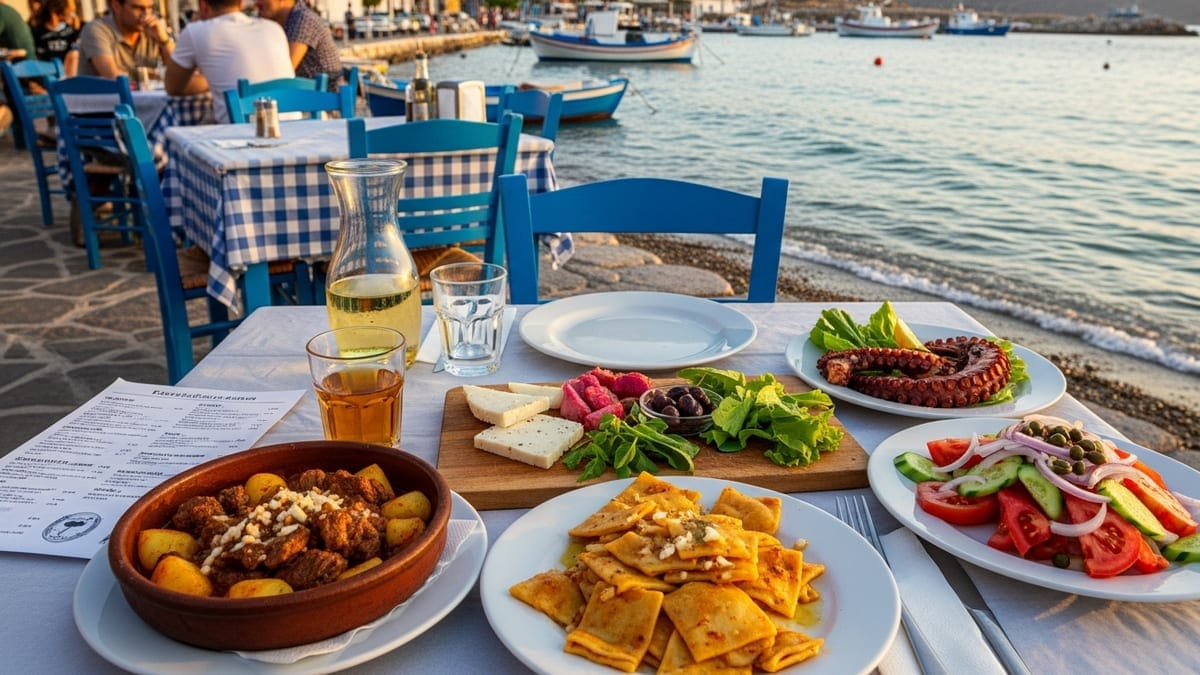
The Flavors of Kos: What Makes the Island’s Cuisine Unique
At its heart, the food of Kos is rooted in the broader Greek and Aegean traditions, but with a number of local twists.
Olive oil is used generously and confidently, vegetables come from the island’s remarkably fertile interior, and the sea defines much of what appears on tavern tables.
Yet Kos stands apart for its use of local cheeses, ancient cereal recipes, and dishes tied to village festivals and religious holidays.
The island’s signature product is krasotyri, also known as possa or wine cheese. Made primarily from goat’s milk, this cheese is matured in red wine, which gives it a faint rosy tint, a peppery aroma and a complex, slightly tangy flavor.
It appears on meze plates, grated over pasta and folded into pies, and it is a taste that many visitors seek out to take home as an edible souvenir.
Other dairy specialties include fresh mizithra and local variations of feta-style cheeses, often used in pies and pastries.
Kos also has a strong tradition of wheat-based dishes. Bulgur (pligouri) cooked with pork, festive pastas like pitaridia boiled in meat broth, and local breads flavored with herbs or cheese speak to an agrarian past that still shapes the island’s table today.
Ottoman and Middle Eastern influences are easy to spot, from stuffed vine leaves to syrupy sweets and spiced meat stews, giving Kos cuisine an appealing depth beyond the typical postcard image of Greek salad and grilled fish.
Seasonality remains important. Summer tavern menus emphasize tomatoes, aubergines, courgettes, peppers and fresh fish, while in the cooler months locals lean into hearty stews, oven bakes and dishes based on pulses and grains.
Even if you visit in the high season of July or August, it is worth asking which dishes are tied to particular village feasts or religious celebrations; some tavern owners will prepare them by special order if you show enough interest.
Must-Try Traditional Dishes of Kos
If you want to get beyond the usual Greek taverna standards, Kos rewards curiosity. One of the island’s most emblematic dishes is patatato, a rustic stew of potatoes and slow-cooked lamb or goat, simmered with tomato and aromatic herbs until the meat nearly falls apart.
It is associated with village festivals and religious holidays, particularly in the mountain villages, but many taverns now feature a version of it throughout the season. When done well, the sauce is rich but not heavy, and the potatoes absorb every bit of flavor.
Pitaridia is another name you should look out for on menus. This is a handmade pasta, often cut into rough squares or lasagna-like strips, traditionally boiled in a meat broth and served with minced meat, local cheese and a drizzle of fragrant animal fat or butter.
It is a celebratory dish often served at weddings in village settings, and in taverns you may find it reinterpreted with lighter sauces yet still unmistakably local in character.
Cheese pies are a big part of the island’s food culture, and labropita or labropites are among the most beloved. Traditionally associated with Easter, they are large or small pies filled with fresh, unsalted mizithra-style cheese and eggs.
Depending on where you are, they may lean sweet or savory, sometimes dusted with sugar and cinnamon, other times served as a salty snack with a glass of wine or a beer.
Katimeria, smaller fried pies filled with sweet mizithra and drizzled with honey, are another indulgent specialty that shows up at breakfast buffets and bakery counters across the island.
Seafood takes on its own local identity through dishes like stuffed tomatoes with octopus, a combination that speaks to both the island’s love of the sea and its creative approach to vegetables.
You will also encounter octopus balls, known locally as chtapodokeftedes, which transform leftover tentacles into aromatic fritters flavored with herbs and spices.
While grilled octopus remains the most common preparation, these dishes are worth seeking out when you spot them on a daily specials board.
Seafood by the Sea: Where to Eat on the Coast
For many visitors, the quintessential Kos meal involves a table by the water, a carafe of chilled local wine, and a succession of plates filled with what the fishermen brought in that morning.
The island’s coastal villages are strongholds of this kind of simple, ingredient-driven cuisine.
Mastichari and Kefalos are particularly known for their fish taverns, where menus often read like inventories of the day’s catch rather than fixed lists.
In and around Kos Town’s harbor, lines of taverns specialize in grilled whole fish such as sea bream and red mullet, as well as fried calamari, marinated anchovies (gavros) and tender grilled octopus.
While tourist traffic has grown, many family-run places still base their offerings on long-standing relationships with local fishermen. A good rule of thumb is to ask what is fresh and whether it is priced by weight.
Ordering fish by the kilo remains standard practice, and staff are typically happy to bring you into the kitchen to look at what is on ice that day.
In Mastichari, taverns fronting the small port make a point of featuring fishermen’s specials. You are likely to find plates of simply grilled barracuda, sardines or gopa, served with nothing more than lemon, olive oil and a scattering of herbs.
The atmosphere here is informal and family friendly, with late lunches that stretch into sunset dinners as ferries come and go. Kefalos, at the island’s southwestern tip, offers similar pleasures, albeit in a more spread-out setting.
Some taverns sit right on the sand, so close to the water you may need to brush off sea spray between courses.
On any part of the island, a seafood feast should begin with a few meze plates. Grilled octopus, small fried fish, fava purée drizzled with oil, and a village salad loaded with sun-ripened tomatoes and capers all make excellent starters before the main fish arrives.
Pair these with ouzo, tsipouro or a glass of local white wine, and you will understand why long, lazy lunches are as much a Kos tradition as any historic monument.
Village Taverns and Mountain Views: Where to Eat Inland
To taste some of the most soulful food on Kos, you need to leave the coast and climb into the hills. Mountain and inland villages such as Zia, Asfendiou and Pyli have long been weekend destinations for locals looking for cooler air, sunset views and solid, traditional cooking.
Many taverns here are family businesses that have been passing recipes down for generations, adapting only slightly to modern tastes.
Zia is the best-known of these villages, famous for its sunset panoramas across the island and towards Kalymnos and the Turkish coast.
Its main street is lined with taverns that fill every evening in high season, yet amid the bustle you can still find places cooking slow-braised goat, oven-baked lamb kleftiko, stuffed vegetables and those hearty stews such as patatato.
The cooler mountain air and pine-scented surroundings somehow make these robust dishes feel exactly right, even in summer.
Asfendiou and Pyli, less crowded than Zia, reward those who are willing to explore side streets and small squares. Here, taverns might have smaller menus, but what they do offer is often prepared with exceptional care.
Pork with pligouri, zucchini flowers stuffed with rice, hand-rolled dolmades and home-baked bread are typical of the fare you can expect.
In many of these villages, the house wine is produced by the owners themselves or by neighbors, and you may be able to sample their homemade liqueurs or the local cinnamon drink, kanelada.
Inland taverns also provide a glimpse into the social fabric of Kos. Weekends and feast days see extended families gathering for long meals, with plates constantly arriving at and leaving the table. If you are respectful and show genuine interest, it is not uncommon to find a complimentary dessert or digestif appearing unannounced.
This gesture, known as kerasma, is a cherished part of Greek hospitality, and on Kos it often involves house-made spoon sweets, honey-drenched pastries or a small glass of something warming from the bottle kept specifically for friends.
Street Food, Bakeries and Casual Bites
Not every meal on Kos needs a sea view or a tablecloth. The island’s street food and bakery scene provides satisfying, budget-friendly options between swims or sightseeing stops.
Classic Greek fast foods such as gyros and souvlaki are easy to find in Kos Town and the island’s main resorts, and they are generally fresher and better than many visitors expect.
A pita stuffed with roasted pork or chicken, chips, tomato, onion and tzatziki makes for a quick, flavorful lunch, while skewers served plain with bread and lemon are a popular late-night snack.
Bakeries are essential stops at any time of day. Along with loaves of local bread, you will find a rotating selection of pies, pastries and sweet treats.
Spanakopita (spinach and feta pie) and tiropita (cheese pie) are reliable staples, joined by seasonal specialties and local variations that use mizithra, herbs and even wine cheese in their fillings.
Bougatsa, a phyllo pastry filled with custard and dusted with sugar and cinnamon, is a beloved breakfast item when paired with a strong Greek coffee or a frothy frappé.
For something distinctly local and refreshing, ask about kanelada, a cinnamon-based soft drink made from a syrup flavored with spices such as clove and often served diluted with cold water.
It is both thirst-quenching in the afternoon heat and evocative of old family recipes. Ice cream parlors and patisseries across Kos Town and the larger resorts offer more modern temptations, from gelato made with local fruit to elaborate cakes and pastries that blend Greek and continental influences.
Beach bars and casual seafront cafes often bridge the gap between snack and full meal. Shared plates of fried courgette slices, saganaki cheese, grilled sausages and salads can easily add up to a feast, and the relaxed, barefoot atmosphere encourages lingering.
If you want a light eating day without sacrificing flavor, grazing on such meze, fruit and pastries is an easy way to do it.
Wine, Drinks and Local Products to Try
Kos has been associated with wine since antiquity, and while it may not be as famous today as some other Greek islands, its winemaking traditions are quietly resurgent.
Several local wineries cultivate indigenous and international grape varieties, producing crisp whites and light reds that match the island’s cuisine.
Many taverns list at least one local house wine, either in bottles or by the carafe, and trying these with your meal is a direct way to connect to the island’s terroir.
Beyond wine, the island’s most distinctive product is again its wine cheese. Krasotyri, dipped in red wine during maturation, can be enjoyed on its own with bread and olives, grated over pasta or layered into pies.
Posa, a related style, sometimes ages in grape must or wrapped in vine leaves, acquiring an even deeper color and flavor. Buying a small piece from a deli or market is simple, and many producers vacuum-seal their cheeses for travelers to take home.
Honey is another important local product, with beekeepers working hives in thyme-covered hillsides and citrus groves.
Thyme honey is highly prized for its floral aroma and intense flavor, and it appears in both sweet and savory dishes, from drizzled yogurt and loukoumades to glazes for roast meats.
Olive oil, sometimes from family groves, is sold in small farm shops and markets as well as used liberally in home kitchens and taverns. Sampling a piece of bread dipped in fresh, peppery oil is almost a ritual in itself.
Do not overlook preserved sweets and condiments. Spoon sweets made from fruit or even tomato, jams infused with local herbs, and jars of capers or sun-dried tomatoes are widely available in village shops and tourist boutiques. These items travel well, making them ideal souvenirs.
Tasting them on the island, perhaps as part of a taverna’s complimentary dessert plate, will help you decide what to seek out when you go shopping on your final days.
How to Choose a Great Taverna on Kos
With so many taverns and restaurants scattered across the island, it can be difficult to distinguish the truly memorable from the merely adequate. A few simple guidelines will increase your chances of sitting down at a table where the food and atmosphere live up to the view.
First, do not be afraid to wander a little away from the busiest promenades. Often, one or two streets back from the waterfront you will find smaller, family-run places that rely more on repeat custom than on passing foot traffic.
Look for menus that are not excessively long and that highlight daily specials or local dishes. A short list written on a chalkboard is often a positive sign, suggesting that the kitchen cooks what is fresh and in season.
Ask about the origin of fish and seafood, and do not hesitate to request a recommendation for traditional island dishes such as patatato, pitaridia or krasotyri.
A staff member who responds with enthusiasm and detail, rather than just pointing to generic grilled meat or pasta, usually indicates a house that takes pride in its cooking.
The presence of local families is another helpful indicator, especially in the shoulder seasons of late spring and early autumn when tourist numbers are lower. If you see multi-generational groups sharing large platters of food and lingering over coffee and conversation, you are likely in good hands.
In mountain villages, try to book evenings for sunset, as these hours show off both the cooking and the landscape at their best.
Finally, remember that on Kos as in much of Greece, a meal is as much about time and company as it is about what is on the plate. Service can be relaxed rather than hurried, and tables are rarely turned quickly.
Embrace this rhythm by ordering a spread of meze to start, pacing your wine and allowing room for that often unexpected dessert or digestif. You will leave not only full, but with a deeper sense of what hospitality means on this island.
The Takeaway
Kos rewards travelers who are willing to approach its food with curiosity and patience. Beneath the familiar surface of tzatziki and grilled fish lies a distinctive culinary culture shaped by wine-soaked cheeses, village pastas, festival stews and fragrant pastries.
Eating across the island, from harborfront fish taverns to inland village squares and casual bakeries, offers a kind of informal tasting menu of its history and landscape.
Whether you choose to dive into octopus-filled tomatoes by the sea, savor a plate of patatato in a mountain taverna, or simply sip a glass of kanelada in a shaded cafe, you will be participating in rituals that locals cherish year-round.
Kos may not shout about its food scene as loudly as some Greek islands, but for travelers who make the time to explore its taverns and markets, the flavors of this Dodecanese outpost often become the defining memory of their stay.
FAQ
Q1. What are the absolute must-try local dishes on Kos for first-time visitors?
Patatato (lamb or goat and potato stew), pitaridia (local pasta cooked in meat broth), wine cheese such as krasotyri or possa, and sweet cheese pies like katimeria or labropites are the key specialties to look for, alongside fresh grilled seafood and classic Greek meze.
Q2. Where should I go for the best seafood on Kos?
The fishing villages of Mastichari and Kefalos are particularly good for fresh, simply prepared seafood, while the harbor area in Kos Town offers many taverns serving grilled fish, octopus, calamari and marinated anchovies based on the daily catch.
Q3. Are there good vegetarian options in traditional taverns on Kos?
Yes, most taverns offer a wide range of vegetarian dishes including stuffed vegetables, spanakopita, zucchini flowers with rice, gemista, salads, fava, briam and a variety of cheese-based pies, so vegetarians can eat very well across the island.
Q4. What time do locals usually eat dinner, and do I need a reservation?
Locals tend to dine later, often from around 8.30 or 9 p.m., especially in summer, and reservations are recommended for popular taverns in places like Zia at sunset or in busy resort areas during peak season.
Q5. Is it customary to tip in taverns and restaurants on Kos?
Tipping is not strictly obligatory but is appreciated; rounding up the bill or leaving around 5 to 10 percent is common if you are happy with the service, and leaving small change after a coffee or snack is also customary.
Q6. Can I find local wines and drinks specific to Kos?
Many taverns serve local wines by the glass or carafe from island wineries, and you should also look for kanelada, the cinnamon-based soft drink, and sample the island’s distinctive wine cheeses that showcase the link between local wine and dairy traditions.
Q7. Are there budget-friendly places to eat without sacrificing quality?
Street-side souvlaki shops, bakeries and smaller family-run taverns just off the main tourist strips often provide very good value, serving generous portions of traditional dishes, gyros, pies and home-cooked specials at modest prices.
Q8. What should I look for when choosing a taverna for authentic local food?
Short menus with daily specials, staff who can describe local dishes with enthusiasm, a visible mix of locals and visitors, and a focus on seasonal ingredients and fresh fish are all positive signs that a taverna takes its food seriously.
Q9. Can I buy local products like cheese, honey and olive oil to take home?
Yes, delicatessens, village shops and some supermarkets sell vacuum-packed wine cheese, jars of thyme honey, local olive oil, spoon sweets and herbs that are suitable for travel and make excellent souvenirs or gifts.
Q10. Are there options for people with dietary restrictions such as gluten-free or lactose-free?
While traditional taverns may not always label dishes, many naturally gluten-free options exist in the form of grilled meats, fish, salads and vegetable dishes, and you can request simple preparations; for lactose-free needs, explain clearly and focus on olive oil-based dishes rather than those with cheese or cream.