

Kos Town, the lively capital of the Greek island of Kos, blends ancient history, seaside ease, and a cosmopolitan buzz within a walkable, palm-lined harbor. It is a place where you can stroll from a medieval castle to Roman ruins in minutes, pause for coffee under a legendary plane tree associated with Hippocrates, and end the day swimming from a town beach or dining by the waterfront.
This guide gathers the essential things to see and do in Kos Town, along with practical tips so you can arrive informed and make the most of your time.
Getting Your Bearings in Kos Town
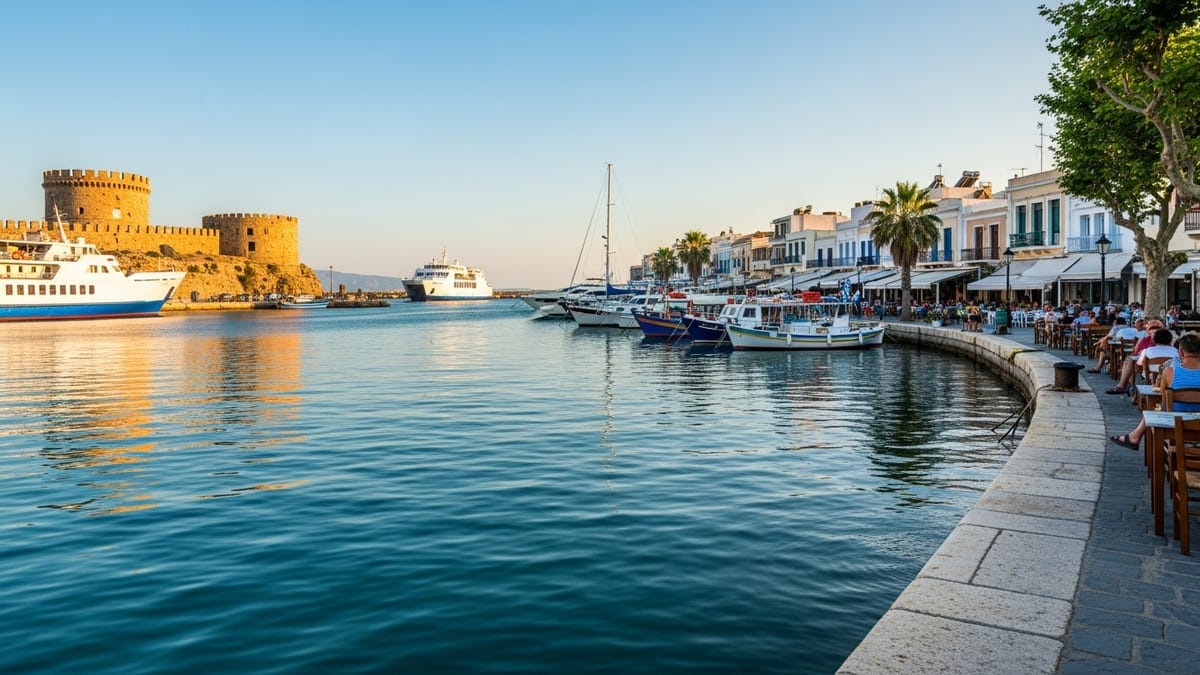
Kos Town sits on the northeastern tip of the island, facing the Turkish coast. The town clusters around its natural harbor, with Neratzia Castle guarding the entrance and ferries, excursion boats, and fishing vessels lining the quays.
From the waterfront, streets lead back into a compact center of Italian-era public buildings, Ottoman mosques, archaeological zones, and contemporary shops and cafes. Most first-time visitors quickly discover that the town is best explored on foot or by bicycle, since many of the highlights lie within a relatively small radius.
The modern town overlays layers of history. Powerful earthquakes, including a significant one in 1933 and another in 2017, reshaped the layout and brought buried ruins to light, which is why you encounter excavated sites in the middle of otherwise ordinary blocks.
Between these ruins are tidy squares, shady streets, and residential neighborhoods that show the island’s Italian and Ottoman past in architectural details such as arcades, arches, and tiled roofs. It is a place where urban life and archaeology coexist rather than being rigidly separated.
Practically, Kos Town operates on a relaxed, typical Greek-island rhythm. Shops and smaller businesses often close for a midday break in high summer, while evenings can be lively well into the night, especially along the waterfront and in the lanes of the old town.
For travelers, it is helpful to orient yourself around a few key points: the harbor, Eleftherias Square with its market and museum, the castle, and the main coastal roads leading to Lambi and Psalidi beaches. Once you know where these are, you can navigate confidently without a map.
Top Sights: History, Castles, and Ruins
History is Kos Town’s greatest strength, and many of its standout sights are the result of centuries of strategic importance in the eastern Aegean. One of the first landmarks you see on arrival is Neratzia Castle, built largely by the Knights of St John in the 14th and 15th centuries to defend the harbor.
You cross a stone bridge from the town side to reach its bastions, inner courtyards, and impressive walls. Some sections have been affected by earthquake damage and ongoing restoration, so access can change, but the setting remains atmospheric and the views over the harbor and to Turkey are among the best in town.
Just south of the castle lies the Ancient Agora, once the commercial and political hub of classical Kos. Today it is an open archaeological park where you can wander past foundations of shops and houses, a small shrine to Aphrodite, the remains of a temple to Hercules, and an early Christian basilica. Low walls, columns, and scattered stones hint at an urban life that thrived here long before the current town. Even if you are not a dedicated archaeology enthusiast, walking through the Agora gives a sense of the island’s long continuity of settlement.
Another fascinating historical stop inside the modern city grid is the Roman Odeon. This small amphitheater, with restored marble seating and a partially reconstructed cavea, dates to the 2nd century. You can climb the steps, sit where spectators once watched performances, and explore the vaulted spaces below the seating. Together with the remains of Roman villas such as Casa Romana, which preserves courtyards and mosaics, the Odeon offers an intimate look at how the Roman elite lived and entertained themselves on Kos.
For many visitors, the broader story of the island is completed with a visit to the Archaeological Museum on Eleftherias Square. Housed in a sober 1930s building, the museum displays sculpture, mosaics, inscriptions, and everyday objects from excavations across Kos.
Highlights include statues from the Hellenistic and Roman periods and a celebrated mosaic showing the arrival of the healing god Asclepius on the island. Recent renovations followed the 2017 earthquake, and the collection is now presented in a clear, modern way that makes it easier to connect the artifacts to the ruins you see outside.
Following in the Footsteps of Hippocrates
Kos has an enduring association with Hippocrates, the ancient physician often described as the father of medicine. In Kos Town, this legacy is most visible at the Plane Tree of Hippocrates, a sprawling, centuries-old plane tree near the castle and harbor. Tradition holds that Hippocrates taught his students beneath a tree on this spot. The current tree is much younger than the original but still impressive, with branches supported by metal scaffolding and a small square around it. Even amid the crowds and souvenir stalls, standing in its shade adds texture to any visit, linking myth and history.
Nearby, you may notice Ottoman fountains and mosques that speak to later chapters of the town’s story. The Defterdar Mosque on Eleftherias Square and the Gazi Hasan Pasha Mosque both recall the period of Ottoman rule, while the remaining minaret of the former Bab Gedid Mosque is all that survives of a structure demolished after the 1933 earthquake. Together with the Italian-built market hall and administrative buildings, these layers underscore how Kos was shaped by different powers, each leaving religious and civic monuments that share the same streets where locals and visitors now sip coffee.
To delve deeper into the Hippocratic heritage, many travelers pair time in town with an excursion to the Asklepieion, a terraced sanctuary and healing center a short distance inland from Kos Town. While it lies outside the town proper, it is closely linked to its identity.
You reach the site by road or along a popular cycling route, then climb among ruins of temples, treatment facilities, and stoas ringed by pine trees. From the upper terrace, the view stretches to Turkey and the surrounding sea. Visiting here adds context to the Hippocrates references throughout town, showing how medicine and religion intertwined in the island’s classical past.
Life Around the Harbor, Beaches, and Promenades
The harbor is Kos Town’s social and visual heart. A broad palm-lined avenue curves around the waterfront, with cafes, bars, and tavernas facing the sea and excursion boats moored just across the street. During the day, you can watch ferries docking and small kaikia loading passengers for day trips to nearby islets or along the coast. In the evening, especially in summer, the same strip becomes a place for leisurely promenade, sunset drinks, and people watching, as visitors and locals merge into a gentle bustle.
What sets Kos Town apart from many island capitals is the proximity of usable beaches. To the northwest, the built-up strip of Lambi begins close to town and stretches for several kilometers. Parts of it function almost like an extension of the urban area, with sunbeds, beach bars, and water sports interspersed with quieter stretches if you walk far enough. Walking or cycling from the harbor towards Lambi lets you combine a sightseeing morning with a relaxed afternoon swim without relying on buses or taxis.
On the opposite side of town, southeast along the coast, the road to Psalidi offers more beaches and coastal walks. Some sections front hotels and resorts, while others are more open and windswept, with views across to the Anatolian mainland. In high season, you may still find small boats taking passengers from the old port to nearby beaches, a traditional and scenic way to escape the busiest sections of shoreline. Even if you prefer to stay in town, paddling in the shallow water near the harbor breakwater can be a simple pleasure after a day on your feet.
Because the town is flat and compact, cycling is particularly popular. Dedicated cycle paths run along parts of the waterfront and out towards Lambi and Psalidi, and many hotels and rental shops offer basic bikes at modest daily rates. This makes it easy to mix cultural sightseeing with time by the sea, and to reach viewpoints or quieter sections of coast without a car. During the hottest hours of the day, though, it is wise to dial back expectations and enjoy the shade of a cafe or the breeze of the waterfront until temperatures ease.
Where to Eat, Drink, and Shop
Kos Town’s food scene reflects its role as both local center and tourist hub. Around the harbor and castle you will find a dense concentration of tavernas serving familiar Greek dishes, grilled fish, and meze, many with outdoor seating and sea views. While some menus aim squarely at international tastes, it is still possible to find simple, well-executed local food, especially if you look one or two streets back from the water. Seasonal vegetables, grilled octopus, fresh sardines, and slow-cooked lamb dishes appear frequently alongside classics like moussaka and souvlaki.
Venture into the lanes of the old town and you encounter smaller eateries, cafes, and pastry shops that cater more to residents. Stopping here for a Greek coffee or a slice of syrup-soaked cake offers a welcome pause between sights. Kos also has a modest but growing interest in local drink production. Many menus now feature wines from island vineyards, and some bars specialize in regional varieties. Trying a glass of dry white or a lighter red from Kos or neighboring islands alongside your meal is an easy way to sample the Dodecanese’s winemaking traditions.
For shopping, the main focus is on the narrow streets radiating from the harbor and Eleftherias Square. These lanes hold a mix of tourist-oriented boutiques, leather sandal workshops, jewelry stores, and souvenir shops selling everything from evil eye charms to olive wood utensils. The municipal market building on the square brings together stalls with herbs, spices, local honey, and sweets, making it a good place to pick up edible gifts that travel well. As in much of Greece, cash is still useful for smaller purchases, although card acceptance has improved in recent years.
Evening is often the best time to browse and buy. By then, the heat has eased, shops have reopened after any midday closure, and the atmosphere in the streets turns almost festive. It is also when small artisan stalls sometimes appear in and around central squares, selling handmade soaps, ceramics, and artwork. Prices vary widely, so it pays to compare before committing, but the density of options within a short walk makes this easy. If you prefer a quieter experience, aim for late morning before lunch, when coach tours have not yet fully arrived and the streets feel more relaxed.
Practical Essentials: Getting There, Getting Around, and When to Go
Reaching Kos Town is straightforward. Kos Island International Airport lies about 24 kilometers southwest of the capital, near the middle of the island. From there, a public KTEL bus service links the airport to Kos Town as well as to other major resorts such as Mastichari, Kardamena, and Kefalos.
The bus stop sits a short walk from the terminal and tickets are bought from the driver, making it a budget-friendly option if your schedule matches the timetables. Taxis queue outside the terminal and, while prices vary, you should anticipate a significant fare to the town center, especially if traveling at night or with multiple passengers.
The island’s ferry port is directly in Kos Town, which means that if you arrive by sea you step almost immediately into the main urban area. Conventional ferries and faster services connect Kos to Piraeus near Athens and to neighboring Dodecanese islands such as Rhodes, Kalymnos, and Patmos. Schedules shift with the seasons, with more frequent sailings in summer, so it is wise to check up-to-date information close to your travel dates. Once in town, most hotels in or near the center are easily reached on foot or by a short taxi ride from the quay.
Within Kos Town, walking is the simplest way to move between sights. The main archaeological areas, museum, harbor, and commercial streets all fall within a loose rectangle that can be traversed in 15 to 20 minutes. Buses from the main station on the edge of town connect to beaches and villages elsewhere on the island, including Tigaki, Kardamena, and Kefalos, which makes Kos Town a practical base for exploring more widely without a car. For those who want maximum flexibility, car, scooter, and bicycle rentals are widely available, though driving and parking in town itself can be congested at peak season.
Climate and crowd levels vary across the year. High summer from late June through August brings hot, bright days, warm nights, and the fullest range of services, along with the highest visitor numbers and prices. Many travelers find the shoulder seasons of late April to early June and September to October more comfortable, with gentler temperatures and fewer crowds but still long, light days and warm sea temperatures. In winter, the town remains inhabited and some cafes and shops stay open, but many tourist services scale back or close, ferry schedules thin out, and some archaeological sites may have shorter hours.
Culture, Safety, and Responsible Travel
Kos Town is generally welcoming and straightforward for visitors. English is widely spoken in businesses that deal with tourists, and staff are accustomed to international guests. That said, a few basic Greek phrases are always appreciated and can help break the ice in less touristy corners. Dress codes are relaxed in most places, though it is polite to cover shoulders and knees when entering churches or certain religious sites. At beaches and pools, typical European resort norms apply, and swimwear is expected only in these settings and not in the middle of town.
In terms of safety, Kos Town sees the kind of petty crime that accompanies any busy tourist destination, but violent incidents are rare. Normal precautions such as keeping an eye on belongings in crowded streets, nightlife areas, and buses are usually sufficient. At night, the central streets and waterfront remain busy during high season, but quieter residential lanes can feel very still; walking in company where possible is a sensible habit. As always, local conditions can evolve, so it is wise to check any current advisories before you travel and to heed instructions from local authorities during your stay.
The climate demands respect, especially in July and August when temperatures can climb sharply. Sunburn and dehydration are common risks, particularly for those unused to Mediterranean summers. Lightweight clothing, hats, sunscreen, and regular water breaks make a significant difference when walking around ruins or cycling along the coast. Many archaeological sites and open spaces offer little shade, so timing your visits for the morning or late afternoon, and reserving the midday hours for museum visits or leisurely lunches in the shade, will help you enjoy the town more comfortably.
Travelers increasingly look to minimize their impact, and Kos Town offers several ways to do so. Choosing locally owned accommodations, eating at family-run tavernas, and buying crafts or foodstuffs that are genuinely made on the island help keep more tourism revenue in the community. Using bicycles or walking instead of renting a car for every errand reduces congestion and emissions in the narrow streets. Respecting archaeological sites by staying on marked paths, not climbing on ruins, and following posted guidelines preserves fragile remains for future visitors and for the people who live among them.
The Takeaway
Kos Town rewards visitors who look beyond the surface of a busy island hub. Yes, it offers the expected pleasures of harborside dinners, easy beach access, and a nightlife scene tailored to holidaymakers. But it also holds one of the larger ancient agoras in the Aegean, a medieval castle that still frames the harbor, a layered story of Ottoman and Italian rule reflected in its mosques and public buildings, and a living connection to the Hippocratic tradition that has shaped Western medicine.
By pacing your days to balance ruins and museums with swims and sunset strolls, you can experience the full character of the town without rushing. Plan ahead for how you will arrive and get around, pay attention to the seasons when choosing your travel dates, and allow space in your schedule for unplanned discoveries in side streets and quiet squares. Whether you use Kos Town as a base to explore the wider island or treat it as a short cultural stop on a longer island-hopping trip, it offers a satisfying mix of accessibility and depth.
FAQ
Q1. How long should I spend in Kos Town?
For most travelers, two to three full days is enough to see the main sights in Kos Town, including the castle, Ancient Agora, Archaeological Museum, Roman Odeon, and harbor area, while still leaving time for beach visits and relaxed meals.
Q2. Is Kos Town a good base for exploring the rest of the island?
Yes. Kos Town has the main bus station, the island’s primary ferry port, and a wide range of rental options, which makes it an efficient base for day trips to beaches like Tigaki or Kefalos and inland villages such as Zia and Pyli.
Q3. Do I need a car in Kos Town?
You do not need a car to explore Kos Town itself, as most attractions are within walking distance. A car becomes useful if you want to access more remote beaches or mountain areas on your own schedule, but buses and organized excursions can cover many popular routes.
Q4. When is the best time of year to visit Kos Town?
The most comfortable periods are late April to early June and September to October, when temperatures are warm but not extreme and crowds are lighter. July and August offer peak energy and the broadest range of services but come with higher heat and busier streets.
Q5. Are the historical sites suitable for children?
Many families enjoy visiting the castle, Ancient Agora, and Roman Odeon with children, as these sites have open spaces to explore. However, surfaces can be uneven and there is limited shade, so sturdy shoes, sun protection, and breaks are important.
Q6. Can I swim near Kos Town without taking a bus?
Yes. Beaches begin within walking or cycling distance of the harbor in both the Lambi and Psalidi directions. While they may not be as dramatic as some farther-flung coves, they are convenient for a quick swim before or after sightseeing.
Q7. Is Kos Town expensive compared to other Greek islands?
Prices in Kos Town vary by season and location, but in general they are comparable to other popular Dodecanese islands. Waterfront dining and high-season accommodation command higher rates, while options a few streets inland or in shoulder months tend to be more moderate.
Q8. What should I wear when visiting religious and historical sites?
Comfortable, breathable clothing and walking shoes are recommended for archaeological sites. In churches and mosques that are open to visitors, covering shoulders and wearing knee-length garments is considered respectful, even when there is no strict enforcement.
Q9. Is Kos Town suitable for travelers without a strong interest in history?
Yes. While history is a major draw, Kos Town also offers easy access to beaches, a lively harbor, shopping streets, and a range of cafes and bars. You can engage with as much or as little of the archaeological and museum content as you prefer.
Q10. How busy is Kos Town at night?
In high season, evenings in Kos Town are lively, especially along the harbor and in the old town lanes, with restaurants, bars, and ice cream shops staying open late. Outside peak months, the atmosphere is calmer but there are still enough venues open to provide a pleasant night out.