

Choosing between Kos, Rhodes and Crete is a classic Greek island dilemma. All three promise big blue horizons, tavernas on the sand and whitewashed villages, but the feel of each island is very different.
Your decision will come down to what kind of holiday you want: buzzy or laid back, beach focused or culture heavy, compact and easy or sprawling and adventurous.
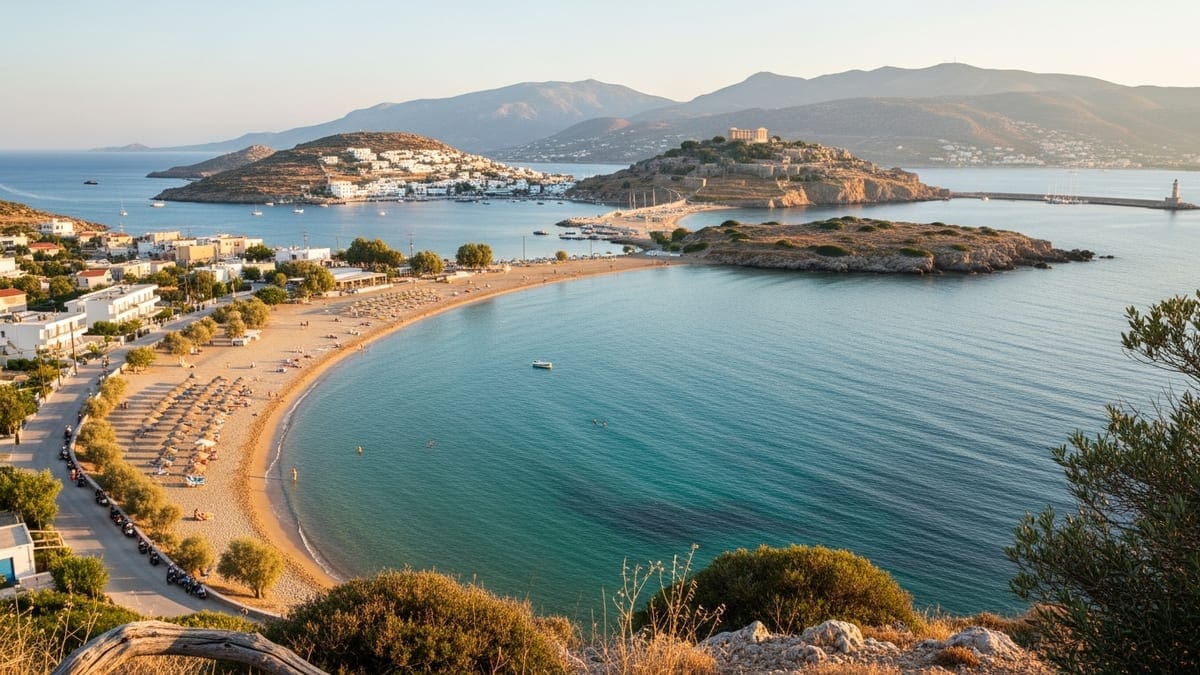
First Impressions: Size, Atmosphere and Overall Vibe
Kos, Rhodes and Crete differ dramatically in scale. Kos is the smallest of the three, with a population of around 37,000 and a coastline that is easy to cover in a week by car or scooter.
It feels intimate and manageable, with resort areas wrapped around a largely flat, easy to navigate island.
Much of the tourism here still concentrates around a handful of beach towns such as Kos Town, Kardamena, Tigaki and Kefalos, which gives the island a sociable, holiday-village feel.
Rhodes is significantly larger and more populous, with more than 100,000 residents. It offers a broader spread of resorts and landscapes, from the medieval Old Town to family-friendly east-coast beaches and quieter inland villages.
The atmosphere is more varied than on Kos: sections of the island are polished and international, others feel defiantly local with sleepy squares and long-established tavernas. You can be in the thick of nightlife one evening and in a pine-scented valley the next morning.
Crete is by far the heavyweight. With more than half a million residents, several sizable cities and four distinct regional units, it feels almost like a miniature country rather than a single island.
Distances are greater, the mountains higher and the choice wider in almost every category: beaches, gorges, wineries, ancient sites and places to stay. It suits travellers who enjoy road trips and exploring multiple bases rather than staying put in one resort.
In terms of first impressions, Kos tends to feel relaxed and overtly beachy, Rhodes feels like a fusion of resort island and historical city break, and Crete feels big, wild and richly layered.
If you are easily overwhelmed by choice, Kos or a single region of Crete may work better than trying to tackle all of Crete at once.
Beaches and Swimming: Sand, Variety and Crowds
All three islands offer classic Aegean waters but with different personalities. Kos is particularly famous for its long ribbons of sand and shallow seas.
Beaches such as Tigaki, Marmari and Kardamena are wide, soft and gently shelving, which is ideal for families and less confident swimmers.
Around Kefalos and Kamari Bay on the southwest coast, coves sit beneath low cliffs and the water is some of the clearest in the Dodecanese.
Thermal activity adds a twist: at Therma Beach and Paradise (often called Bubble Beach), warm volcanic springs bubble into the sea, creating a natural sea spa experience.
Rhodes has a more varied coast that wraps around a larger island. The east coast is where you find many of the classic beaches: Lindos’ twin bays beneath the acropolis, Tsambika with its golden sand, and family-oriented Faliraki with full facilities and water sports.
Smaller coves such as Anthony Quinn Bay deliver rocky drama and great snorkelling. The west coast is wilder, pebbly and windier, popular with windsurfers but less ideal for young children. The trade-off is that it often remains cooler and less crowded even in high summer.
Crete offers the greatest diversity by far. The north coast hosts well-developed sandy beaches near cities such as Chania, Rethymno and Heraklion, while the far west and south hide some of Greece’s most photographed stretches of sand.
Balos Lagoon and Elafonissi, both on the western side of Crete, are famous for turquoise shallows and, in Elafonissi’s case, pink-tinged sand. Falassarna combines long sand with spectacular sunsets.
On the south coast, places like Paleochora, Sougia and the beaches near Plakias feel more remote, framed by mountains that tumble down to the Libyan Sea.
If you want an island where every beach day is easy, flat and sandy, Kos has the advantage.
If your fantasy is a different style of shoreline every day, Crete wins. For a middle ground with a strong aesthetic payoff from historical backdrops, Rhodes is hard to beat.
History, Culture and Sights Beyond the Beach
While all three islands are steeped in antiquity, Rhodes and Crete stand out for sheer depth and variety of cultural sites. Rhodes Town’s medieval Old Town is one of the best preserved fortified settlements in Europe.
Within its walls you will find the Palace of the Grand Master, the Street of the Knights and a maze of alleys that still feel lived-in, not just museum-like. Lindos, with its acropolis perched above a whitewashed village, blends ancient ruins and traditional architecture in a compact, walkable area.
Inland sites such as the ancient city of Kamiros add to the sense of Rhodes as an outdoor history book.
Crete, by contrast, offers a timeline that stretches from Minoan palaces to Venetian fortifications and Ottoman mosques.
Knossos near Heraklion is the headline site, often visited in combination with the city’s excellent archaeological museum. Other Minoan remains at Phaistos, Malia and Zakros draw those with a serious interest in Bronze Age history.
Venetian-era harbours in Chania and Rethymno provide atmospheric old towns with lighthouse promenades and pastel mansions.
Further east, the region of Lasithi features Spinalonga, a fortified island that later became a leper colony and remains one of the island’s most emotive sites.
Kos has a more compact but still engaging cultural offer. The island is closely associated with Hippocrates, the ancient “father of medicine,” and visitors can explore the Asklepion, a terraced healing sanctuary on a hillside above Kos Town.
In the town itself, the medieval Castle of Neratzia and various Roman remains punctuate the seafront and back streets.
Italian-era architecture from the early 20th century gives the centre a different look from many Greek islands, with arcaded buildings and formal squares that hint at this more recent chapter in its history.
For travellers who want history to be a central feature of the trip, Rhodes and Crete are the stronger choices.
Kos can easily fill a couple of days with cultural sightseeing, but its primary appeal remains beach life and low-key resort atmosphere rather than dense layers of monuments.
Nightlife, Dining and General Atmosphere After Dark
Nightlife is one of the areas where the three islands diverge most clearly. Kos has long been associated with lively nights, particularly in Kos Town and Kardamena.
Streets lined with bars and clubs, cocktail deals and music into the early hours still characterise the busiest corners in high season.
That said, in recent years the island has consciously diversified, with modernised seafront bars, renovated hotels and a slightly more upscale edge appearing alongside the traditional party scene.
Away from the main hubs, beach villages such as Tigaki and Kefalos offer a gentler rhythm of tavernas and low-key bars.
Rhodes offers a broader spread of evening options. Rhodes Town has a compact bar district and clubs but also sophisticated restaurants and rooftop terraces within sight of medieval walls and the harbour.
Faliraki remains the island’s best-known nightlife hotspot, though it has evolved somewhat from its most raucous years. Lindos blends romance and buzz with its rooftop bars and terraces looking over the bay, popular with couples and groups seeking a stylish night out rather than a pure clubbing focus.
Inland villages and smaller seaside resorts lean towards family dinners and relaxed evenings.
Crete’s after-dark scene is fragmented by its size. Heraklion and Chania both have busy bar districts and a young local crowd thanks to universities and year-round populations. Rethymno mixes student bars with harbourside cocktail spots.
Resort areas such as Malia and Hersonissos on the north coast draw party-oriented travellers, especially in summer. Elsewhere on the island, nights are more about long dinners in tavernas, a carafe of local wine and perhaps live Cretan music rather than big clubs.
In terms of dining, all three islands deliver fresh seafood, Greek classics and increasingly creative modern Mediterranean cuisine.
Crete is particularly known for its distinct culinary tradition: local cheeses, mountain herbs, olive oil and dishes such as slow-cooked lamb with wild greens. Rhodes and Kos offer more of a classic Aegean menu, but both have seen an uptick in contemporary restaurants, especially in Rhodes Town, Lindos and Kos Town.
If nightlife is a central priority, Kos and parts of Rhodes have a clear edge. If you prefer food-focused evenings, Crete is often the most rewarding.
Practicalities: Getting There, Getting Around and Trip Length
All three islands are well connected by air in the main tourist season. Rhodes and Crete, with their larger airports and populations, see more frequent year-round domestic flights and a strong summer schedule of direct services from across Europe.
Kos is also connected to major European cities in season, and additional routes are gradually being added as demand rises, including new links from regional airports in northern Europe.
From Athens, domestic flights to each island are widely available, especially between late spring and early autumn. If you prefer sea travel, ferries link Piraeus with all three, though journey times and frequencies vary.
Rhodes and Kos can be combined with other Dodecanese islands on multi-stop itineraries, while Crete connects with both the mainland and smaller islands via different ports.
For US-based travellers, routing via Athens, a European hub such as London or Frankfurt, or via a seasonal charter flight is common.
Once on the islands, getting around is easiest by rental car on Rhodes and especially on Crete. Rhodes’ main sights and resort areas trace a ring around the coast with a simple main-road network, and buses along key routes can suffice if you plan to stay mainly in one area.
Kos is flat and compact enough that scooters, bicycles and buses are realistic alternatives to a car, particularly if you choose a base with good connections.
Crete’s mountainous interior, scattered highlights and longer distances make a car almost essential if you want to see more than a single resort region.
In terms of trip length, Kos works well for a one week holiday, with enough variation to fill your days without requiring long drives.
Rhodes can fill 7 to 10 days comfortably, especially if you split your stay between Rhodes Town and a beach base such as Lindos or the east coast.
Crete rewards longer trips: two weeks allows time to experience at least two regions, for example Chania and Heraklion or Rethymno and the south coast. Shorter visits are still possible, but you will need to focus on one area rather than trying to “do” the whole island.
Costs, Seasons and Crowds
Price differences between the three islands are more about specific resort choices and travel dates than the island itself, but there are some general patterns. In broad terms, Kos and many parts of Crete still offer slightly more budget-friendly accommodation compared with the most popular corners of Rhodes.
Simple studios, family-run pensions and mid-range hotels remain abundant. At the top end, all three islands now feature luxury resorts and villas with prices to match, particularly in beach zones close to major towns or on especially photogenic stretches of coast.
Rhodes, with its UNESCO-listed Old Town and household-name resorts such as Lindos and Faliraki, can command higher prices in peak season, especially for character properties inside the walls or sea-view rooms on the east coast.
Crete runs the full spectrum, but the sheer volume of options often keeps competition sharp for mid-range travellers.
Kos historically catered to package tourists and younger crowds and still offers good value in package deals and all-inclusive stays, particularly in shoulder seasons outside late July and August.
Seasonality is similar across the three: the main season runs from late April or May through October, with July and August the busiest and hottest months.
Shoulder seasons in May, June, September and early October are ideal for those who want warm seas without extreme heat or crowds.
In recent years, all three islands have experienced occasional bouts of extreme weather in shoulder months, but overall patterns still favour long, dry summers and mild autumns.
For travellers sensitive to crowds, Kos’ smaller scale means certain beaches and towns feel full quickly in high season, but it is still easier to find quiet stretches just outside main resorts.
On Rhodes, popular spots such as Lindos can be busy with day trippers and cruise passengers, particularly in the middle of the day.
Crete’s size allows you to escape to quieter corners even in August if you are willing to drive to less developed beaches or inland villages.
Who Each Island Suits Best
While any of the three islands can host almost any kind of traveller, they each have natural strengths.
Kos is especially attractive for first-time visitors to Greece who want a straightforward beach holiday, as well as younger travellers and groups seeking sociable resorts and nightlife without the intensity of the very largest party destinations.
Families appreciate the shallow, sandy beaches and short driving distances, which make day trips simple and reduce the need for long journeys with children.
Rhodes sits in the sweet spot between resort ease and cultural depth. It works beautifully for couples who want romantic scenery mixed with serious history, families seeking resort comforts next to calm, organised beaches, and solo travellers who appreciate a lively town environment with plenty of things to do.
Its Old Town can easily anchor a city-break-style long weekend in spring or autumn, while the beaches and bays make it a solid choice for classic week-long sun escapes.
Crete is the best pick for travellers who enjoy variety and exploration. Road-trippers, hikers, food lovers and those returning to Greece for a second or third visit often gravitate here.
The island suits travellers who are comfortable driving mountain roads and changing bases at least once, shifting from a harbour town like Chania to a south-coast village or a rural inland stay.
Families who want space, villas with private pools and a more independent-feeling holiday also find plenty of options, particularly around quieter stretches of the north coast.
If you are planning a multi-generational or mixed-interest trip, Crete and Rhodes tend to offer the broadest appeal within a single itinerary.
Kos functions best when your group broadly shares the same priorities, whether that is beach time, watersports, nightlife or simple relaxation.
The Takeaway
Choosing between Kos, Rhodes and Crete is less about which island is objectively “better” and more about matching your destination to your travel style.
Kos offers easygoing beach life, shallow waters and a compact scale that keeps logistics simple. It is a fine choice for a classic, good-value sun holiday with some light sightseeing and a sociable, resort-focused atmosphere.
Rhodes layers that beach holiday with impressive history and a more varied landscape.
Its medieval Old Town, whitewashed Lindos and family-friendly coast make it particularly appealing if you want your days to mix culture and sea, and your evenings to range from tavernas in cobbled streets to seafront bars and occasional late nights.
Crete, the giant of the three, is for travellers who like to roam. With world-class beaches, mountain villages, deep-rooted food culture and some of the most important archaeological sites in Greece, it rewards longer stays and a willingness to explore beyond a single resort strip.
It is not the easiest island to “do” in a week, but it might be the one that keeps you coming back to discover a new corner each time.
If you have a week, want mainly beaches and convenience, and prefer not to drive far, Kos is likely your best fit. If you have 7 to 10 days and want a balanced mix of history, scenery and comfort, Rhodes stands out.
If you have the time and curiosity for a more wide-ranging journey, Crete is the island that can turn one holiday into several different experiences in a single trip.
FAQ
Q1. Which island is best for a first-time visitor to Greece?
For a first trip focused on beaches and an easy introduction to Greek island life, Kos or Rhodes are ideal. Kos is compact and straightforward, while Rhodes adds a major historic city and more varied scenery without being overwhelming.
Q2. Which island has the best beaches overall?
Crete offers the greatest variety, with famous beaches such as Balos, Elafonissi and Falassarna alongside countless smaller coves. Kos has some of the easiest, sandiest family beaches, and Rhodes combines attractive bays with historical settings, especially around Lindos and the east coast.
Q3. Where should I go if nightlife is my priority?
Kos is known for its lively nights in Kos Town and Kardamena, with dense clusters of bars and clubs. Rhodes also has a strong nightlife scene in Rhodes Town and Faliraki, with a broader range of more sophisticated options. Crete offers nightlife in specific hubs, but much of the island focuses more on tavernas than clubs.
Q4. Which island is most suitable for families with young children?
All three islands cater to families, but Kos and Rhodes have an edge in terms of short driving distances and organised, shallow beaches with facilities. Kos’ flat terrain and long sandy stretches such as Tigaki and Marmari are particularly convenient for families with small children.
Q5. If I love history and archaeology, which island should I choose?
Crete and Rhodes are stronger choices for history enthusiasts. Crete offers major Minoan sites such as Knossos and Phaistos, plus rich museums and Venetian harbours, while Rhodes features the medieval Old Town, Lindos acropolis and ancient sites like Kamiros. Kos has notable sites, but on a smaller scale.
Q6. Is it realistic to visit more than one of these islands in a single trip?
Combining Kos and Rhodes is quite manageable thanks to ferry connections within the Dodecanese. Adding Crete is more ambitious because of its size and the travel time involved. If you have two weeks or more, a Rhodes plus Crete itinerary can work, but for shorter trips it is usually better to focus on one island.
Q7. Which island is best outside peak summer months?
All three islands are attractive in May, June, September and early October, when the weather is warm but less intense. Crete, with its larger local population and cities, feels more “alive” outside the core summer season, as more restaurants and shops stay open year round compared with smaller, purely seasonal resorts.
Q8. How long should I stay on each island?
Kos is well suited to a 5 to 7 day stay, allowing time for beaches and the main cultural sites. Rhodes rewards 7 to 10 days, especially if you split time between Rhodes Town and another base. Crete can easily fill 10 to 14 days or more, particularly if you want to explore multiple regions or include hiking and road trips.
Q9. Which island offers the best value for money?
Value depends largely on your choice of resort and time of year, but Kos and many parts of Crete often provide slightly better mid-range and budget options than the most in-demand corners of Rhodes in peak season. Booking outside late July and August and avoiding the most famous resorts usually improves value on all three islands.
Q10. If I do not want to rent a car, which island works best?
Kos is the most manageable without a car thanks to its smaller size, flat terrain and relatively short distances between main beaches and towns. Rhodes can also work using buses and organised excursions if you base yourself in Rhodes Town or a major resort. On Crete, not having a car will significantly limit how much of the island you can see beyond your immediate area.