

More news on this day
Europe’s traditional Easter hotspots are experiencing an exceptional surge in demand, with fresh booking data pointing to Krakow joining Athens, Budapest, Dublin and long-established Mediterranean favorites in a powerful year-on-year rebound led by Western and Southern Europe.
Get the latest news straight to your inbox!
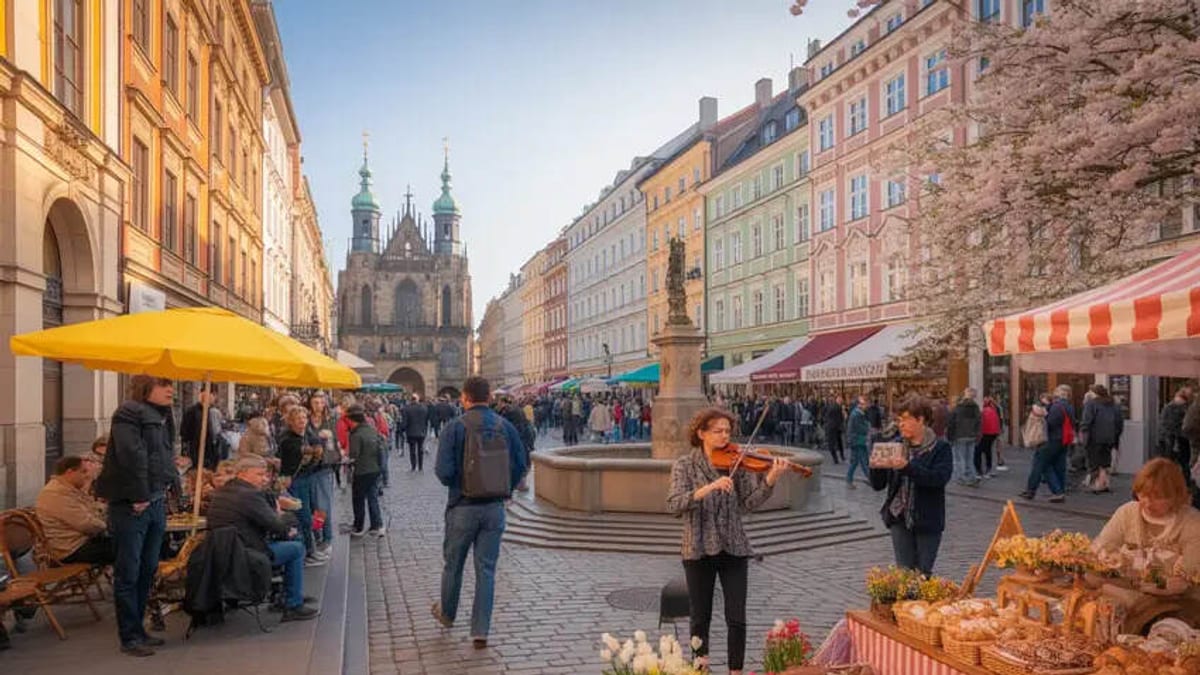
Image by Latest International / Global Travel News, Breaking World Travel News
Western Europe Sets the Pace for Easter Recovery
Recent tourism and aviation analyses indicate that Western Europe has emerged as one of the strongest global winners from the latest Easter booking cycle, with Spain, France and Italy among the chief beneficiaries. Industry reports on holiday patterns describe Western Europe as a stand-out region for British and other European travelers in early 2026, as they pivot away from the Middle East toward familiar short-haul destinations during the spring holidays.
Spain’s resort regions are seeing particularly strong forward bookings around the Easter period, with local coverage highlighting double-digit increases in demand for coastal hubs and city breaks alike. These findings align with wider European tourism monitoring, which points to robust intra-European flight searches and solid hotel performance around school and religious holidays, even when wider economic sentiment is mixed.
France and Italy, meanwhile, are consolidating gains from the broader recovery in European city travel. Publicly available indicators of urban tourism show both countries benefiting from travelers who are willing to book earlier and spend more on culture-rich, walkable destinations during the shoulder season. Easter, which in 2026 again falls firmly within the European spring break window, is emerging as a pivotal period for city-focused tourism revenue.
Ireland is also sharing in the rebound. Domestic travel commentary notes that Irish holiday bookings have climbed in early 2026 compared with the previous year, as consumers seek escapes from unsettled winter weather. While many of these trips are outbound sun holidays, industry figures suggest a parallel uptick in inbound interest for Dublin as a compact, event-driven Easter city break.
Central and Southern Europe’s Cities Surge
Alongside the traditional Western European powerhouses, Central and Southern European capitals are seeing a marked jump in interest around Easter. Athens continues to trade on its combination of early-season warmth and deep cultural appeal, with airline capacity and tourism projections indicating that Greece is set for another year of increased international arrivals. National tourism data for summer 2025 already showed Greece recording close to 6 percent year-on-year growth in total international air arrivals, and this momentum is now feeding into the spring holiday market.
Budapest, long viewed as a value-oriented alternative to Western capitals, is benefitting from these dynamics as well. Analysts of European tourism trends report that travelers from Germany, the United Kingdom and other high-spend markets are increasingly mixing well-known Mediterranean destinations with Central European city stays during the long Easter weekend. Competitive airfares on regional carriers and the expansion of low-cost routes into Central Europe have further cemented Budapest’s role as a convenient short-break hub.
The Mediterranean’s enduring pull is also evident in data from Spain’s regional destinations, where travel trade outlets describe Easter 2025 and 2026 as among the busiest in recent years. A combination of favorable spring weather, cultural festivals and expanded air connectivity, particularly to secondary airports, has pushed hotel occupancy and flight bookings sharply higher over the holiday period.
Italy’s major cities are similarly positioned to capture this trend. Short-term rental statistics and broader accommodation reports for 2025 highlighted record or near-record online bookings, with Italy counted among Europe’s leaders in digital reservations. This underlying strength, together with Rome, Florence, Venice and Naples offering a dense calendar of Easter religious and cultural events, puts Italian cities on track for another strong holiday season.
Poland and Krakow Join the Easter Hotspot Map
The most notable addition to this established Easter circuit is Poland, with Krakow emerging as a key beneficiary of shifting travel patterns. While Poland has long attracted regional visitors for cultural and religious tourism, recent booking and air-search analyses show that Central and Eastern Europe are beginning to capture a greater share of intra-European holiday demand, particularly as travelers diversify beyond the most saturated Western capitals.
Krakow’s appeal rests on several converging factors. Air connectivity has steadily improved, with more low-cost and regional routes linking the city to Western Europe, Ireland and the Nordic markets. At the same time, European travel barometers suggest that cost-conscious holidaymakers are seeking destinations where accommodation and dining remain comparatively affordable, even as headline inflation and higher borrowing costs weigh on some households.
Broader European tourism research for 2025 notes that total intra-European flight searches around key holiday periods rose strongly compared with the previous year, helped by the timing shift of Easter and changing school calendars. Observers interpret this as evidence that travelers are prioritizing short- and medium-haul city breaks over long-haul trips, a trend that works in Krakow’s favor as a compact, heritage-rich destination reachable within a few hours from most major European hubs.
Poland’s inclusion alongside Greece, Hungary, Spain, France, Ireland and Italy in recent travel-industry roundups of high-performing Easter markets reflects this momentum. Market commentary indicates that Krakow is beginning to be listed alongside Athens, Budapest and Dublin in consumer-facing travel features and booking-platform recommendations for spring city breaks, underscoring its rapid rise in visibility.
Booking Data Points to Unprecedented Year-on-Year Gains
Available data from tourism observatories and commercial travel reports suggest that Easter has become one of the busiest global travel periods after Christmas and Chinese New Year, with Europe capturing a large share of the surge. International analyses of seasonal booking patterns for 2025 described Easter as a rapidly strengthening peak, contributing to double-digit increases in holiday-period hotel revenue and passenger volumes in many markets.
Within Europe, a combination of airline schedule filings, online travel agency performance and sector-wide barometers points to especially sharp year-on-year gains in Easter bookings for Western and Southern Europe. Some city and regional studies report that intra-European flight searches around the holiday climbed by more than a third compared with the previous year, even after adjusting for the calendar shift in Easter dates, while coastal and island regions in Spain and Greece recorded particularly strong forward-booking pipelines.
Industry-wide surveys conducted in 2025 also indicate that European travelers are increasingly planning spring holidays more systematically, often locking in Easter trips months in advance to avoid summer heatwaves and peak-season price spikes. This behavioral shift is helping to distribute demand more evenly throughout the year and is boosting March and April performance in cities such as Dublin, Athens, Budapest and Krakow, which offer milder weather and lower crowd levels than high summer.
Parallel monitoring of short-term rental platforms confirms that 2025 was a record year for online bookings across Europe, with Italy prominently cited among the leaders. Analysts note that this structural change toward digital booking channels makes it easier to identify emerging hotspots like Krakow in near real time, as spikes in search interest and reservation volumes are quickly reflected in platform data.
Travelers Pivot to Culture, Proximity and Perceived Stability
Beyond pure numbers, the latest Easter booking patterns across Europe highlight a clear shift in traveler priorities. Reports on European holiday behavior emphasize a move toward destinations perceived as culturally rich, easily accessible and relatively stable. Coverage of British and European booking trends for Easter 2026 indicates that many travelers are favoring Western Europe, the Mediterranean and nearby Atlantic islands over longer-haul options, partly due to safety concerns and geopolitical tensions in neighboring regions.
At the same time, climate considerations are beginning to influence seasonal choices. Analyses of recent European heatwaves point to growing awareness among travelers of extreme summer temperatures in parts of the Mediterranean. As a result, more visitors are opting for shoulder-season trips in March and April, a shift that benefits Easter city breaks in Athens, Rome, Barcelona, Dublin, Budapest and Krakow.
Economic factors continue to play a role. Holiday barometer surveys for 2025 show that while a majority of Europeans still intend to travel, many are adjusting by seeking better value, choosing closer destinations and shortening stays. Central and Eastern European cities, including Krakow and Budapest, are thus gaining ground as budget-friendly yet culturally immersive alternatives to some of Western Europe’s most expensive capitals.
Collectively, these trends explain why Poland now appears alongside Greece, Hungary, Spain, France, Ireland, Italy and others in assessments of Europe’s fastest-growing Easter travel markets. As booking platforms, airlines and tourism boards prepare for the upcoming holiday period, Krakow’s presence alongside Athens, Budapest and Dublin in consumer travel coverage suggests that this once-underrated city has firmly joined the front rank of Europe’s Easter hotspots.