

More news on this day
Europe’s Easter travel market is entering one of its strongest seasons in years, with new data pointing to double-digit growth in holiday bookings and propelling cities such as Krakow, Athens, Budapest and Dublin alongside long-established Mediterranean favorites in Spain, France, Italy, Greece and Ireland.
Get the latest news straight to your inbox!
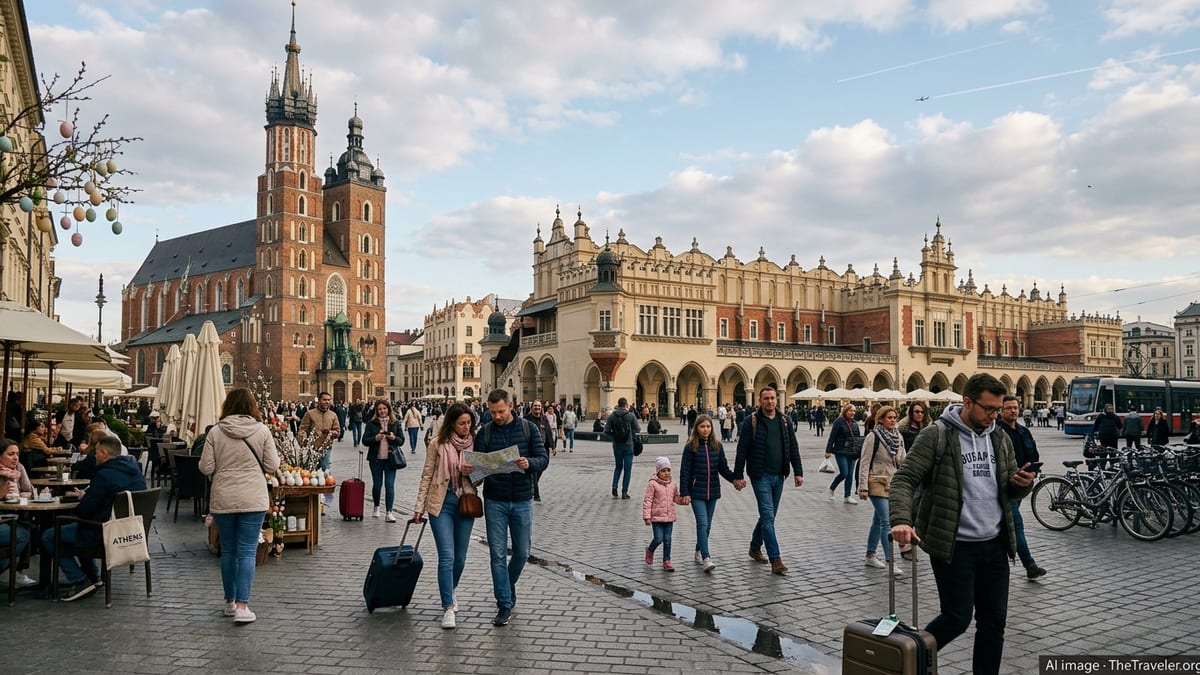
Easter 2026 Shapes Up As A Breakout Season For City Breaks
Industry trend reports released in early 2026 indicate that demand for European Easter getaways is running well ahead of last year, with several sources pointing to double-digit growth in hotel and package bookings compared with Easter 2025. Travel analysis focusing on pre-Easter reservation patterns shows travellers are locking in their plans earlier, favouring short-haul city breaks and culturally rich destinations that combine value with easy access.
While Spain, France and Italy continue to dominate overall volumes, the standout story this year is how a wider group of countries, including Poland, Greece, Hungary and Ireland, is capturing a growing share of the seasonal surge. These markets are benefiting from stronger air connectivity, competitive pricing and the continued appeal of historic city centres that can be explored over a long weekend.
Reports on European tourism performance through 2025 already highlighted resilient consumer appetite despite economic headwinds, with Southern and Central Eastern Europe both recording robust arrival numbers. That momentum now appears to be carrying directly into the key Easter period in 2026, turning the holiday into a bellwether for the continent’s broader travel rebound.
Krakow Joins Europe’s Easter Travel Heavyweights
Poland is emerging as one of the most notable winners of the latest Easter booking cycle, with Krakow in particular gaining ground as a city-break favourite. Travel pricing indexes and city-break cost comparisons have consistently ranked Krakow among Europe’s best-value urban escapes, a reputation that is feeding directly into stronger holiday demand as travellers hunt for more affordable alternatives to Western European capitals.
Recent travel coverage focusing on budget-friendly Easter breaks has singled out Krakow alongside coastal Portuguese and Spanish cities, spotlighting the city’s comparatively low accommodation and dining costs, compact historic centre and rich cultural calendar. This visibility is helping shift Poland from a niche choice into the mainstream for short seasonal trips, especially among younger travellers and value-conscious families.
Operational pressures at Krakow’s airport, where passenger-handling procedures have recently led to longer queues at peak times, further underline the growth in arrivals. Travel advisories circulating among frequent flyers and online communities describe waits that can extend well beyond previous norms at busy periods, a by-product of the sharp uplift in traffic concentrated around holiday weekends such as Easter.
Athens, Budapest And Dublin Capitalise On Value And Connectivity
Beyond Poland, several mid-sized European capitals are recording particularly strong Easter demand. Athens, Budapest and Dublin stand out in airline and tour-operator reports as beneficiaries of increased route networks, competitive fares and a perception of offering good value compared with Western Europe’s most expensive hubs.
Data from tourism and aviation monitoring bodies in 2025 indicated that Central Eastern European destinations such as Hungary posted some of the fastest year-on-year increases in international arrivals, helped by new direct services and growing interest from long-haul markets. Budapest’s combination of thermal baths, riverfront scenery and relatively low hotel prices makes it a natural contender for an Easter long weekend, and those trends appear to be continuing into 2026.
In the Mediterranean, Athens is riding a broader upswing in Greek tourism, supported by extended shoulder seasons and rising off-peak demand. Air travel trackers for Easter 2025 already highlighted strong traffic to Greek islands and major cities; this year, Athens is again positioned as a gateway for travellers pairing city sightseeing with nearby coastal escapes. Dublin, meanwhile, benefits from increased transatlantic capacity and a loyal repeat-visitor base from the United Kingdom and North America, keeping Ireland firmly in the mix for short spring holidays.
Southern Europe Maintains Its Grip On Easter Demand
Despite the rise of Krakow and other Central Eastern European cities, Southern Europe remains the anchor of the Easter travel market. Surveys of traveller intentions for the 2025–26 seasons, carried out by major tourism associations and research firms, consistently show Spain, Italy, France and Greece among the top choices for European holidaymakers. Spain in particular retains a leading share, with Italy and France close behind and Greece often rounding out the top tier.
Sector-specific reports from Spanish travel agencies during Easter 2025 pointed to around 15 percent more bookings than the previous year, with Mediterranean coasts and island destinations topping domestic preferences. Parallel analyses of international hotel bookings around Easter 2025 showed Spain and Portugal leading in volumes and pricing power, while Italy and France saw a notable rise in the share of foreign guests.
Forecast pieces ahead of Easter 2025 described expectations for more than one hundred million tourists across key European markets during the holiday weekend, driven by strong inflows from the United States, China, Australia and New Zealand. Early indications suggest that this year’s Easter period will again deliver very high volumes, consolidating Southern Europe’s status as the core engine of demand even as newer hotspots attract attention.
Capacity Squeeze, Strikes And Weather Add Complexity For Travellers
The rapid growth in Easter bookings also brings challenges, particularly in terms of transport capacity and potential disruption. Travel advisories compiled ahead of Easter 2025 warned of aviation and ground-transport strikes in countries including Italy, Greece, France and Spain, with travellers urged to monitor schedules closely. Similar alerts are being watched for 2026 as unions in several markets keep the option of industrial action open during peak periods.
Airport congestion is another recurring theme, with travel guidance noting sharp spikes in passenger flows at major hubs such as London, Paris, Rome and Berlin during the Easter window. Secondary airports that serve popular short-break destinations, including those in Poland and other Central Eastern European countries, are also experiencing strain as they accommodate higher traffic volumes with more limited infrastructure.
Weather remains a further wildcard. Recent European windstorm activity in late winter and early spring has led to bouts of disruption in parts of the continent, particularly in northern and western regions. While most Easter travel proceeds without major interruption, the combination of packed schedules, high load factors and unsettled conditions means that even minor operational issues can quickly ripple through the system for travellers heading to or from booming destinations such as Krakow, Athens, Budapest and Dublin.