

More news on this day
Malaysia Airlines is set to turn the Kuala Lumpur–Doha corridor into one of Asia’s busiest long-haul air bridges, adding a third daily flight from June 30, 2026 and deepening its alliance with Qatar Airways in a move that will reshape how travelers connect between Australia, Europe, Africa and the Americas.
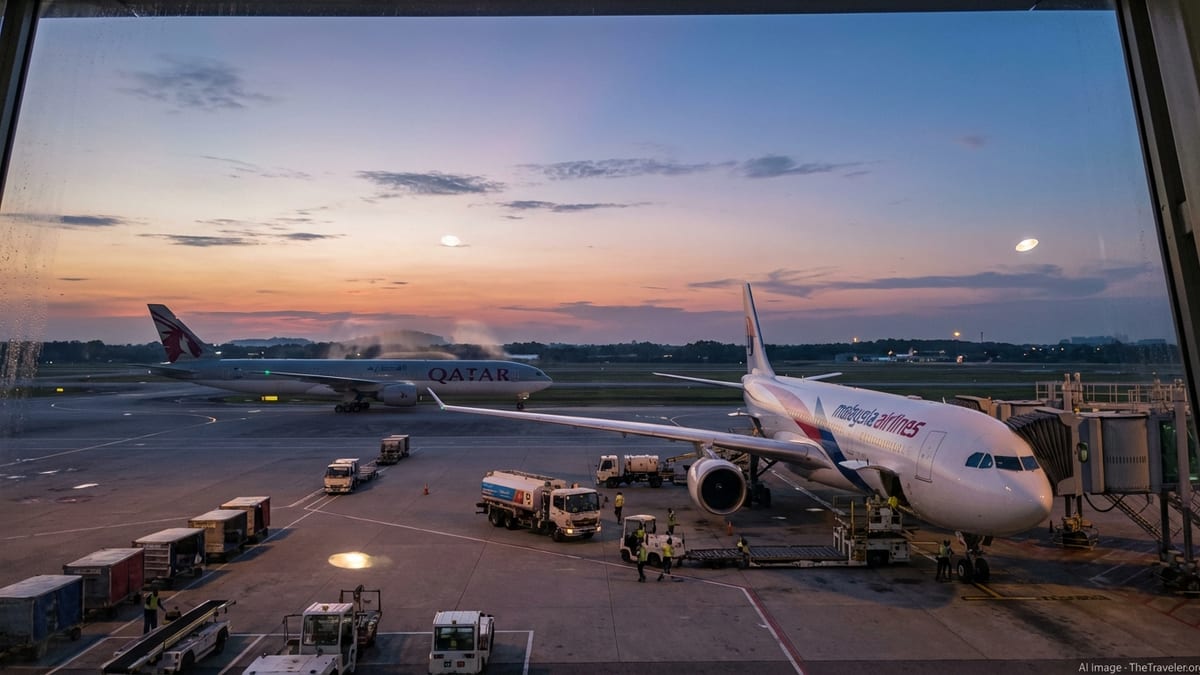
A Third Daily Flight Turns Kuala Lumpur–Doha Into a True Air Bridge
From June 30, 2026, Malaysia Airlines will lift its Kuala Lumpur–Doha operation from two to three daily non-stop services, taking weekly frequencies on the route to 21. All flights are scheduled to be operated by Airbus A330-300 aircraft, reinforcing the carrier’s medium- to long-haul workhorse on one of its most strategically important corridors. For passengers, the additional rotation means more choice of departure times in both directions and shorter overall journey times on global itineraries that hinge on a smooth transit through Doha or Kuala Lumpur.
The move builds on a rapid evolution of the Kuala Lumpur–Doha pairing since Malaysia Airlines first launched direct services in 2022. What began as a daily link has steadily been scaled up alongside Qatar Airways’ own expansion into the Malaysian capital, with the Gulf carrier due to raise its own Doha–Kuala Lumpur frequencies to 17 per week during the 2025–26 winter season. Taken together, the two oneworld partners are transforming what was once a niche link into a dense trunk route between Southeast Asia and the Gulf.
The new third daily Malaysia Airlines service, numbered MH168/MH169, is timed to complement existing departures. Kuala Lumpur–Doha flights will leave in the evening and late at night, while return services from Doha depart in the early hours, taking advantage of Doha’s overnight hub wave. The result is a spread of options that better align with long-haul banks to and from Europe, Africa, the Middle East and the Americas, giving travelers from Australia and across Asia more seamless connect times on both sides of the journey.
Crucially, the frequency increase is not just about more seats. For a network carrier like Malaysia Airlines, the Kuala Lumpur–Doha air bridge functions as a pressure valve for pent-up demand on westbound travel. By adding another daily flight, the airline gains flexibility to fine-tune capacity, improve schedule resilience when disruption strikes and maintain competitive fares in a market where rivals are also ramping up services through Middle Eastern hubs.
Strategic Alliance With Qatar Airways Underpins Global Reach
The backbone of the Kuala Lumpur–Doha air bridge is the strategic partnership between Malaysia Airlines and Qatar Airways, first significantly deepened in 2022 when the Southeast Asian carrier launched its non-stop Doha flights under a broad codeshare and joint-business framework. Under that deal the airlines began linking their networks across 90-plus destinations, providing reciprocal codeshares and shared frequent-flyer benefits for passengers transiting through both hubs.
Since then, the partnership has evolved from a simple codeshare into a cornerstone of Malaysia Airlines’ long-haul strategy. Doha, home to Qatar Airways’ global hub at Hamad International Airport, gives Malaysia Airlines near instant access to more than 120 onward destinations, including dense coverage across Europe and the Middle East plus deeper links into Africa and the Americas than it can serve with its own fleet. Travelers booking on Malaysia Airlines flights can reach secondary European cities and African gateways with a single ticket, through-checked baggage and alliance-level lounge access on both carriers.
Qatar Airways, for its part, has steadily grown its own presence in Kuala Lumpur, with additional frequencies in the winter 2025–26 season and a daily service already in place. Its partnership with Malaysia Airlines allows the Gulf carrier to spread deeper into Southeast Asia and Australasia, tapping Malaysia Airlines’ domestic and regional network to funnel traffic from secondary cities such as Penang, Kota Kinabalu and Kuching, as well as key markets like Singapore and Ho Chi Minh City, into its Doha hub.
For global travelers, particularly those stitching together complex itineraries, the dual-hub, dual-carrier model translates into more itinerary permutations at competitive prices. It also introduces redundancy: if a disruption hits one carrier or one flight, alternate options often exist on the partner airline on the same corridor, a comfort for business travelers and long-haul holidaymakers alike.
Australia Feeds the Air Bridge as Long-Haul Patterns Shift
Australia is emerging as one of the most important feeders into the expanded Kuala Lumpur–Doha air bridge. In the past two years Malaysia Airlines has rebuilt and grown its Australian footprint, including the resumption of services to Brisbane alongside existing flights to Sydney, Melbourne, Adelaide and Perth. As the airline resets its long-haul network post-pandemic, Australian routes are once again at the heart of its east–west connectivity strategy.
The timing is no accident. Australian outbound travel has rebounded robustly, and competition on routes to Europe and beyond is intensifying. New alliances such as Virgin Australia’s integrated tie-up with Qatar Airways, plus additional services by European and US carriers, are driving a surge in capacity between Australia and the Middle East. Malaysia Airlines’ strengthened Doha link gives it a way to stay in that competitive frame without needing to operate its own ultra long-haul flights to Europe or North America.
For Australian travelers, this network architecture translates into a choice of one-stop options to Europe, Africa and the Americas: either via Kuala Lumpur alone on Malaysia Airlines’ own long-haul flights, via Doha on the Malaysia Airlines–Qatar Airways partnership, or a hybrid that uses both hubs. A passenger from Brisbane, for example, could connect in Kuala Lumpur to Doha and then onward to Casablanca, Milan or Chicago, all on aligned partner airlines and within a single booking.
This flexibility may influence fare dynamics. With capacity increasing via both Kuala Lumpur and Doha, airlines are under pressure to keep prices sharp on core markets such as London, Paris, Rome and key US gateways. Traveler behavior is likely to adjust in response, with more Australians willing to consider slightly longer itineraries via dual hubs in exchange for better value fares, improved on-board comfort or loyalty program advantages.
New Codeshares Extend the Bridge Into Europe and Africa
The reinforcement of the Kuala Lumpur–Doha spine is being accompanied by a series of targeted network moves that broaden Malaysia Airlines’ reach into Europe and Africa. In December 2025, the carrier expanded its codeshare with Qatar Airways to cover additional Italian destinations, placing its MH code on Qatar-operated services from Doha to Milan Malpensa and Venice. This allows Malaysia Airlines to market Italian cities that are unlikely to see its own metal in the near term, while still presenting passengers with a seamless travel experience.
Elsewhere in Europe, Malaysia Airlines is bolstering its direct presence with the revival of its own Kuala Lumpur–Paris Charles de Gaulle service from March 2025, joining long-standing flights to London Heathrow. The Doha partnership complements rather than replaces these routes: point-to-point demand to Paris and London can be met with non-stop Malaysia Airlines flights, while secondary and seasonal European destinations are efficiently covered through Qatar Airways connections at Doha.
A significant development on the Africa front came in late 2025, when Malaysia Aviation Group signed a codeshare agreement with Royal Air Maroc. Under the deal, Malaysia Airlines adds its MH code to Royal Air Maroc flights between Casablanca and Doha, as well as key European points such as London and Paris. In return, the Moroccan flag carrier places its AT code on Malaysia Airlines flights linking Kuala Lumpur with Doha and selected European gateways. For travelers, this opens new one-stop and two-stop combinations between Southeast Asia, North and West Africa, and beyond.
These layered partnerships show how the Kuala Lumpur–Doha bridge is being used as a central plank in a wider web of connectivity stretching into Africa’s growing aviation markets. As additional African partners integrate their schedules with Qatar Airways through Doha, the number of cities accessible from Kuala Lumpur, Sydney or Auckland via a single coordinated hub system continues to grow, giving travelers more options that previously required fragmented itineraries.
What This Means for Travelers to Europe, Africa and the Americas
For passengers eyeing trips from Australia, New Zealand, Southeast Asia or Malaysia to Europe, Africa and the Americas in 2026 and beyond, the shift is tangible. The strengthened Kuala Lumpur–Doha air bridge means more one-stop and one-and-a-half-stop options, with tighter connection windows and an expanded choice of intermediate cities. Instead of being funneled almost exclusively through a handful of European and Gulf mega hubs, travelers can now piece together itineraries that combine Kuala Lumpur’s regional reach with Doha’s long-haul depth.
On Europe-bound journeys, one key benefit is schedule variety. Morning arrivals into European hubs via Doha can dovetail with mid-morning or early afternoon short-haul connections to regional cities, reducing long layovers that often plagued older routings via a single Asian or Gulf hub. For those heading to North and South America, Doha’s growing network of transatlantic and Latin American services plugs gaps that Southeast Asian carriers have traditionally struggled to fill directly.
Africa stands to gain significantly from the partnership-driven model. Through Doha and codeshares like the one with Royal Air Maroc, Malaysia Airlines customers can reach a larger spread of African gateways, from Casablanca and Lagos to Nairobi and beyond, typically with coordinated minimum connection times and through-checked baggage. This offers an alternative to legacy routings via Europe, potentially shortening total travel times and aligning better with overnight schedules that business travelers prefer.
For leisure travelers, particularly those building multi-stop itineraries, the enhanced connectivity allows greater creativity. A traveler could, for example, fly from Melbourne to Kuala Lumpur, continue to Doha, spend a brief stopover there, then connect onward to an African safari gateway or a European city break, all underpinned by alliance reciprocity on lounges, frequent-flyer miles and irregular operations handling.
How Global Travelers Should Prepare for the New Connectivity
With more flights and more possible routings comes more choice, but also more complexity. Travelers planning to take advantage of the expanded Kuala Lumpur–Doha air bridge should start by looking closely at connection windows. Many of the new schedules into and out of Doha are designed around late-night and early-morning hub banks. Booking itineraries that sit within these waves can drastically reduce total journey time compared with off-peak connections that may incur several extra hours on the ground.
Frequent-flyer strategy will also matter more. Both Malaysia Airlines and Qatar Airways are oneworld members, and their deepened partnership expands the opportunities to accrue and redeem miles across an extended network. Travelers with significant balances in either airline’s loyalty program may find better value by consolidating long-haul and regional travel through the Kuala Lumpur–Doha corridor, rather than spreading trips across unrelated alliances. Checking fare classes for mileage earning rates and upgrade eligibility before booking will become increasingly important.
Given that Malaysia Airlines’ Doha services are operated by Airbus A330-300s with relatively dense cabin layouts compared with some competing widebodies, seat selection and cabin choice will merit closer attention on longer legs. Passengers sensitive to jet lag may wish to prioritize overnight sectors in lie-flat business cabins or opt for flights that allow a daylight arrival at their final destination, even if that entails a slightly longer connection at Doha or Kuala Lumpur.
Travelers should also be alert to evolving visa and transit rules. While most passengers remain airside during brief connections at Doha and Kuala Lumpur, those planning stopovers or open-jaw itineraries need to ensure they meet entry requirements, particularly as governments adjust policies in response to shifting travel flows. Checking documentation requirements well ahead of departure is advisable as air bridges like Kuala Lumpur–Doha become busier and more central to global travel patterns.
Operational Realities: Capacity, Aircraft and Hub Experience
Behind the scenes, turning Kuala Lumpur–Doha into a high-frequency air bridge relies on both airlines’ ability to sustain capacity and deliver a reliable hub experience. Malaysia Airlines’ decision to standardize the route on the Airbus A330-300 allows it to optimize crew training, maintenance and scheduling, but also places a premium on availability of that fleet type during peak seasons or periods of unexpected disruption. Travelers may see occasional aircraft swaps or schedule tweaks as the airline balances this route with other regional and long-haul commitments.
On the ground, Hamad International Airport in Doha and Kuala Lumpur International Airport are competing to position themselves as preferred transfer points for Asia–Europe–Africa itineraries. Both hubs have invested in upgraded lounges, smoother security and immigration processing for transit passengers, and expanded retail and dining options. For many travelers, especially those on itineraries involving multiple overnight flights, the quality of the transfer experience is now almost as important as the in-flight product.
The densification of the corridor also carries implications for punctuality and resilience. With more daily rotations, irregular operations such as weather disruptions, air traffic control restrictions or technical delays can ripple more quickly through the schedule. That said, the presence of multiple daily flights and overlapping services by Qatar Airways creates built-in buffers; passengers whose flights are heavily delayed or canceled may have a higher chance of being reprotected on later same-day services.
For environmentally conscious travelers, the expansion raises questions about emissions and efficiency. While more flights inevitably mean more capacity and potential emissions, consolidating long-haul demand through efficient hubs and modern widebody fleets can be more sustainable than scattering thin routes across smaller aircraft. Airlines are also under growing pressure to offer transparent options for carbon offsetting and, where possible, adopt more fuel-efficient flight planning on these heavily trafficked corridors.
Looking Ahead as the Air Bridge Matures
As Malaysia Airlines’ third daily Kuala Lumpur–Doha service comes online in mid-2026, the corridor is poised to evolve from a fast-growing route into a mature air bridge that underpins the long-haul strategies of both partner airlines. Further refinements are likely, from schedule adjustments that better sync with transatlantic and African departure banks to deeper integration of digital tools that help travelers manage complex itineraries across two carriers and two hubs.
The success of the air bridge will depend in part on how well airlines and airports communicate its benefits to travelers. Many passengers still default to traditional routings via long-established European or Gulf hubs, unaware that newer combinations through Kuala Lumpur and Doha may offer comparable journey times with improved fares or loyalty advantages. As awareness grows, the route could see further demand, prompting additional capacity tweaks or seasonal boosts.
For global travelers, the key takeaway is that the map of long-haul travel between Australia, Southeast Asia, Europe, Africa and the Americas is changing. The Kuala Lumpur–Doha pairing now sits alongside older giants such as Singapore–Dubai or Bangkok–Doha as a major conduit for east–west movement. Those planning trips in 2026 and beyond who are willing to explore new routings, compare alliance benefits and pay attention to schedules stand to gain the most from this emerging air bridge.
In the meantime, June 30, 2026 will mark a symbolic milestone: the day Kuala Lumpur–Doha effectively graduates into a three-times-daily artery, cementing Malaysia Airlines’ ambition to reassert Kuala Lumpur’s role as a key Southeast Asian gateway to an increasingly interconnected world.