

More news on this day
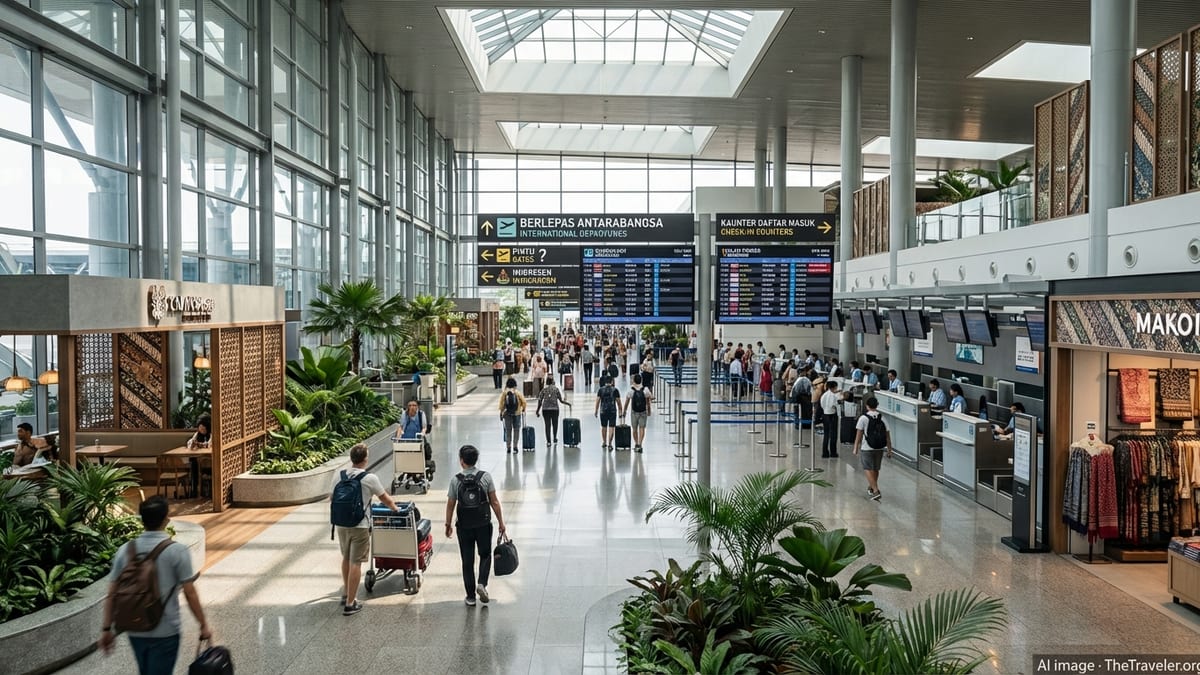
As Malaysia races toward Visit Malaysia 2026, Kuala Lumpur International Airport is being reshaped from a mere transit point into a fully fledged travel gateway, where each arrival, connection and departure is treated as the opening chapter of a wider Malaysian holiday.
A gateway strategy for Visit Malaysia 2026
Malaysia’s authorities and airport operator Malaysia Airports Holdings are aligning infrastructure spending, airline incentives and tourism campaigns to ensure that Kuala Lumpur International Airport, known as KLIA, functions as a true gateway rather than a standalone aviation node. The target is clear: convert more of the airport’s tens of millions of passengers into visitors who stay to discover the country’s islands, rainforests and cities instead of simply passing through.
Passenger numbers across Malaysia’s airport network climbed strongly through 2025, with KLIA handling more than five million passengers in November alone as new routes and frequencies came online. This momentum is being framed as the launchpad for Visit Malaysia 2026, the government’s flagship tourism year that aims to reclaim and surpass pre‑pandemic visitor levels while positioning the country as Southeast Asia’s best connected destination.
Budget allocations have been directed toward both air connectivity and the on‑the‑ground experience at KLIA. A federal matching‑grant scheme worth tens of millions of ringgit is encouraging airlines to open international and charter services into Malaysia, while separate funding is paying for upgrades to the airport’s landscape, facilities and inter‑terminal transfer systems. The combined effect is intended to make the airport not just efficient, but emotionally resonant as the first touchpoint with Malaysia.
From terminal to travel narrative
Airport planners and tourism officials are increasingly talking about the “travel narrative” that begins the moment a visitor steps off the aircraft. At KLIA, that story now encompasses upgraded terminal spaces, streamlined transfers and curated cultural experiences designed to cue a sense of place long before travellers reach downtown Kuala Lumpur or the country’s resort regions.
KLIA’s commercial reset, which has seen hundreds of new retail and dining outlets open across both terminals, is part of this narrative‑driven approach. Rather than focusing solely on global brands, the tenant mix now leans into Malaysian identity, with duty‑free zones integrated alongside local artisanal boutiques and food concepts that highlight regional cuisines. Many of these outlets are located along key passenger flows between immigration counters, security checkpoints and boarding gates, turning dwell time into an introduction to Malaysian culture.
Lounges and relaxation areas have also been refreshed with a view to experience rather than simple functionality. New and refurbished spaces offer quiet zones, spa services, movie corners and family‑friendly corners aimed at taking the stress out of layovers and late‑night departures. For operators, these facilities generate revenue; for the broader tourism strategy, they are intended to create a sense of comfort and goodwill that travellers carry into the rest of their journey through Malaysia.
KLIA Terminal 2: a low‑cost hub goes premium
KLIA’s Terminal 2, once primarily known as a utilitarian base for low‑cost carriers, has become a focal point of the effort to brand Kuala Lumpur as a holiday‑ready travel gateway. Renovations completed and underway through 2025 have widened narrow corridors, reconfigured boarding gates into more open spaces and introduced a raft of new amenities, including upgraded prayer rooms, a calm room for passengers with hidden disabilities and revamped movie lounges for long‑haul transit passengers.
Terminal management has sought to shed the perception that the facility is a basic low‑cost terminal, arguing that the refreshed design and services now mirror those traditionally associated with full‑service international airports. Self‑service bag‑drop technology and open‑belt kiosks are being rolled out to speed check‑in and reduce queues during peak holiday and festive periods, while staff support at customer‑experience counters has been expanded for families and travellers needing assistance.
The upgrades at Terminal 2 are also tightly linked to Malaysia’s ambitions in the low‑cost transfer market. With AirAsia and other budget carriers using the terminal as a regional base, a higher‑quality environment is seen as crucial to persuading travellers to choose KLIA for multi‑leg itineraries that span Southeast Asia, Australia, North Asia and the Indian subcontinent. The refurbished surroundings, airport executives say, must be good enough that a budget ticket still comes wrapped in a premium‑feeling experience.
Sixty‑minute connections and seamless transfers
Perhaps the most consequential operational change positioning Kuala Lumpur as a gateway city is the implementation of a formal 60‑minute minimum connecting time at KLIA Terminal 2. The policy, which standardises processes so that passengers and their baggage can transfer between flights in as little as one hour, is already reshaping traffic flows, particularly for regional itineraries stitched together by low‑cost carriers.
Airport data from mid‑2025 showed connecting passenger volumes under the new 60‑minute profile multiplying many times over within a few months of structured implementation. Behind the numbers lie a series of infrastructure and process upgrades: baggage systems tuned for rapid transfers, closer coordination between airlines and ground handlers, and redesigned passenger routes that shorten walking distances while maintaining security and immigration requirements.
Authorities are also advancing an airside inter‑terminal transfer facility to make movement between KLIA’s terminals more straightforward. Once fully realised, this is expected to allow through‑ticketed passengers to connect between full‑service and low‑cost airlines without having to clear landside checkpoints, broadening the range of possible itineraries that use Kuala Lumpur as a central node. For travellers, the promise is that a holiday in Malaysia can be combined with onward journeys across the region, all anchored around a single, predictable transit experience.
Green makeover and sense‑of‑place design
While operations teams focus on transfers and connectivity, landscape architects and designers are reshaping how KLIA looks and feels. A multi‑million ringgit green makeover, scheduled to wrap up ahead of Visit Malaysia 2026, is introducing new plantings, vertical gardens and landscape features in both Terminals 1 and 2 and along key approach roads. The goal is to soften hard infrastructure with greenery while reinforcing Malaysia’s image as a biodiverse, tropical destination.
The landscaping is being developed around a “Harmony in Diversity” concept that mirrors Malaysia’s multicultural identity. Entrance statements and design motifs draw on the country’s array of languages, traditional crafts and architectural styles, creating visual cues that instantly signal to passengers that they are in Malaysia rather than in a generic international airport. These elements are particularly prominent in arrival halls, where first impressions are formed as passengers collect their baggage and meet ground transport.
Inside the terminal buildings, cultural showcases and rotating exhibitions underscore this sense of place. Installations featuring batik, songket and other traditional textiles have appeared in public concourses, while curated retail concepts celebrate local craftsmanship and contemporary Malaysian brands. The result is a layered experience in which passengers are gradually immersed in the country’s stories as they move from aircraft door to kerbside, or from gate to gate.
Retail, dining and lounges as first holiday moments
The retail and dining overhaul at KLIA has been framed by airport officials as more than a commercial exercise. With nearly eight hundred outlets either operating or planned across the two terminals, the airport is being repositioned as a shopping and culinary destination in its own right, particularly for transit passengers and early arrivers who have several hours to spare.
New duty‑free malls have been designed to feel less like linear corridors and more like plazas, with sightlines that encourage exploration and integrated seating where families can relax. The selection of brands intentionally mixes international names with homegrown labels in fashion, beauty and lifestyle, offering travellers the chance to discover Malaysian products they are unlikely to encounter elsewhere. Souvenir and lifestyle stores built around national themes have reported strong sales as travellers seek out authentic mementos.
Dining has undergone a similar reset, with operators emphasising both local favourites and international comfort food. Airport planners describe this as a way of easing travellers into Malaysia’s culinary landscape while still catering to diverse tastes and dietary needs. Combined with upgraded airline and independent lounges offering improved food, wellness services and quiet spaces, these facilities are increasingly viewed as the earliest holiday moments for many visitors, setting expectations for what awaits beyond the airport perimeter.
Airline expansion turns connectivity into journeys
None of these changes would amount to a gateway without strong airline networks, and here Kuala Lumpur is seeing a wave of renewed interest. Flag carrier Malaysia Airlines has been adding capacity on key regional routes, including additional weekly services from Indian cities that feed both the Australian market and domestic Malaysian destinations. Low‑cost carriers, led by AirAsia and its affiliates, continue to thicken their webs of flights out of KLIA, connecting secondary cities in Australia, China and Southeast Asia to the Malaysian capital.
International airlines are also returning to or expanding at KLIA after pandemic‑era retrenchments. Carriers from China and other North Asian markets have launched fresh services into the airport’s terminals, while European airlines are reviving long‑haul routes that plug Kuala Lumpur directly into major hubs. Industry executives describe Kuala Lumpur’s position as the most connected airport in the Asia‑Pacific region, particularly for short‑haul travel, as a strong platform on which to build longer‑distance links.
For tourism officials, every new route is an opportunity to turn a line on a route map into a real‑world itinerary that begins and ends at KLIA. Marketing efforts around Visit Malaysia 2026 highlight Kuala Lumpur as both a city break and a launchpad, encouraging travellers to tack on excursions to Borneo, beach destinations such as Langkawi and Tioman, or highland retreats in Pahang and Sabah. The airport’s improving connection times and passenger experience are presented as reassurances that multi‑segment holidays can be undertaken with minimal friction.
Positioning Kuala Lumpur as Southeast Asia’s holiday hub
As competition intensifies among regional hubs like Singapore, Bangkok and Jakarta, Kuala Lumpur is betting that a blend of connectivity, affordability and experience design will give KLIA a distinctive edge. The airport’s strong performance in rankings of global megahubs, driven by dense networks of short‑haul flights, is being used as a foundation for narrative: that Kuala Lumpur is not just a place to change planes, but a place to begin a journey through Southeast Asia anchored in Malaysia.
Officials point out that Kuala Lumpur offers travellers a combination of modern infrastructure, relatively short transfer times, and access to a wide spectrum of destinations, from jungle interiors to island resorts. By investing in the airport’s physical environment, operational efficiency and cultural storytelling, they aim to ensure that the first and last hours of a trip through Malaysia feel coherent with the experiences in between.
In practical terms, that means a visitor stepping off a long‑haul flight should encounter landscapes, languages, foods and design cues that introduce the country before they even reach immigration. A family transiting between regional flights should find play areas, quiet rooms and support services that make connections less stressful. And a departing traveller, browsing last‑minute souvenirs and watching greenery beyond the runway, should feel that the story of their Malaysian holiday is still being written right up to boarding.
For Kuala Lumpur, turning KLIA into a holiday‑ready hub is as much about perception as infrastructure. If the strategy succeeds, the airport will stand not just as a logistical centre for air travel, but as the place where millions of Malaysia journeys begin and end each year.