

More news on this day
AirAsia is set to restore nonstop flights between Kuala Lumpur and Wuhan, announcing four weekly services from May 22, 2026, in a move that further deepens fast-recovering air links between Malaysia and China.
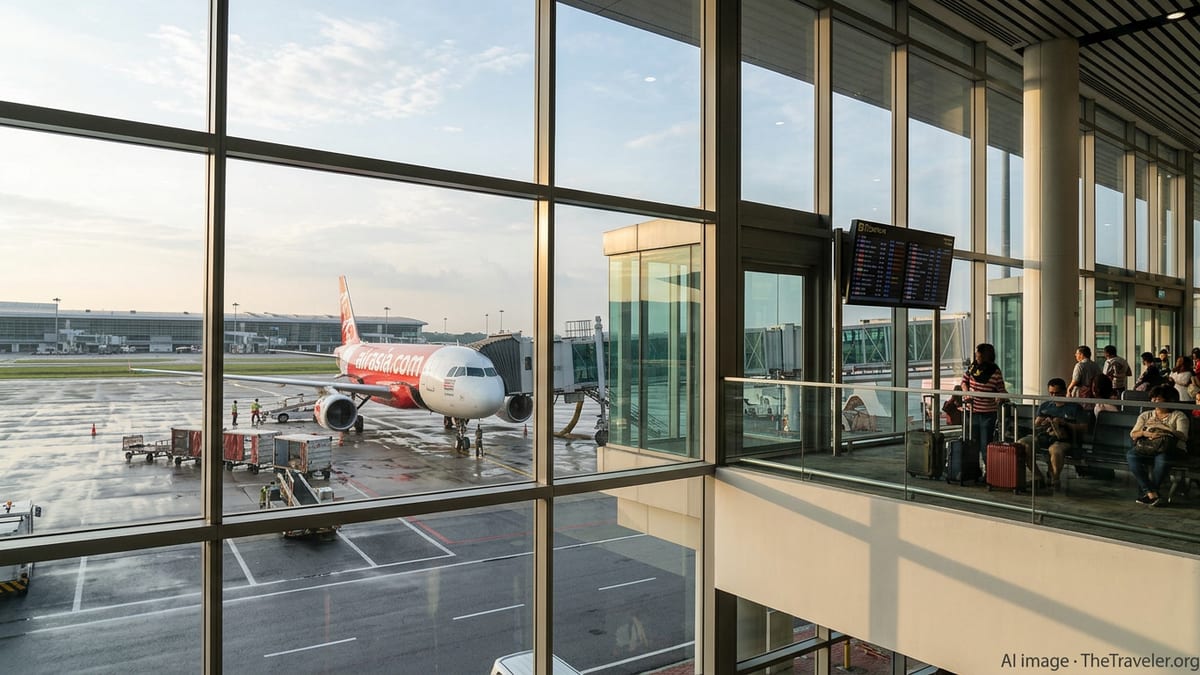
Four Weekly Flights Restart From May 22
According to the airline’s latest schedule filings and recent network updates, AirAsia will resume the Kuala Lumpur–Wuhan route with four flights per week, restoring a direct connection that had been absent from its network since the pandemic years. Flights are expected to operate under the AirAsia Malaysia (AK) code, using single-aisle aircraft configured for high-density, low-cost operations.
The new schedule is timed to support both outbound Malaysian travellers and inbound visitors from central China, with departure and arrival times designed for convenient same-day connections over Kuala Lumpur to other points in Southeast Asia and beyond. The reintroduction of Wuhan follows a series of route resumptions and launches that have steadily rebuilt AirAsia’s Chinese network over the past two years.
AirAsia executives have framed the move as a key step in reaffirming the carrier’s leadership on Malaysia–China low-cost corridors. The airline expects strong two-way demand driven by leisure travellers, visiting friends and relatives, and students moving between Malaysia’s universities and Wuhan’s major education hubs.
To stimulate early bookings, the carrier has paired the announcement with limited-time promotional fares for travel from late May into the northern summer season. Capacity on the route will initially be capped at four weekly rotations, but AirAsia has indicated that additional frequencies could be considered if demand trends remain robust.
Strategic Push Into Central China
Wuhan holds particular strategic value for AirAsia as one of central China’s most important commercial and transport centres. The city anchors a large catchment area across Hubei province and neighbouring regions, feeding both outbound tourism flows and a growing middle-class market for Southeast Asian holidays.
Before the pandemic, Kuala Lumpur–Wuhan flights had delivered consistently high load factors for the airline, with traffic comprising a mix of group tours, independent travellers and students. The latest restart aims to rebuild that base, tapping into pent-up demand as Chinese outbound travel continues normalising and as Malaysia positions itself as a value-driven alternative to more expensive regional destinations.
Industry analysts note that reinstating Wuhan also diversifies Malaysia’s China connectivity beyond coastal mega-hubs such as Beijing, Shanghai and Guangzhou. By strengthening links with inland centres, AirAsia can capture new flows of passengers who may previously have routed through other Chinese gateways before continuing to Southeast Asia.
The route also aligns with broader efforts to balance AirAsia’s Chinese portfolio, spreading risk across multiple cities while leveraging Kuala Lumpur as a central transit point. This network strategy is expected to become increasingly important as competition intensifies on major trunk routes into coastal China.
Boost for Malaysia–China Tourism and Education Links
The resumption comes as Malaysia and China step up cooperation ahead of Visit Malaysia 2026, a tourism campaign aimed at lifting international arrivals and spending. Malaysian officials have highlighted growing capacity from Chinese carriers and regional airlines, and AirAsia’s Kuala Lumpur–Wuhan link is expected to play a visible role in that recovery story.
For tourism players, the four-times-weekly service should provide a steady pipeline of visitors from a large, relatively under-tapped source market. Tour operators are already eyeing new packages built around Kuala Lumpur, Penang, Langkawi and Borneo, with Wuhan-origin itineraries likely to feature multi-city combinations that showcase Malaysia’s mix of urban experiences and nature-based attractions.
The route is also significant for the education sector. Both countries host substantial communities of international students, and Wuhan’s status as a major university city gives the connection added importance. The reinstated flights are expected to ease travel for students and families moving between campuses in Wuhan and Malaysian institutions in Kuala Lumpur and other cities.
Business and trade links stand to benefit as well, with more frequent face-to-face engagement supporting investment and supply-chain activity between central China and Malaysia. AirAsia’s low-cost model offers small and medium enterprises a relatively affordable way to maintain on-the-ground connections across the region.
Network Realignment as AirAsia Shifts Capacity
The return of the Kuala Lumpur–Wuhan service forms part of a wider realignment of AirAsia’s route map across Asia. In recent months, the group has signalled an intention to concentrate capacity on high-demand leisure and visiting-friends-and-relatives markets, while trimming or exiting routes that no longer fit its strategic priorities.
Industry trackers have documented new or resumed services from Kuala Lumpur to a string of East Asian and Southeast Asian destinations, even as some secondary links, such as certain Australian routes, are wound down or reconfigured. Within this context, Wuhan’s return underlines the airline’s conviction that China remains a cornerstone of its international network.
By deploying four weekly flights rather than a daily schedule at launch, AirAsia is hedging against residual volatility in travel patterns while keeping open the option of scaling up. The frequency gives the airline a visible presence in the market without overcommitting capacity, allowing it to respond quickly as booking trends emerge through the northern summer.
For travellers, the changes mean a growing list of connection possibilities over Kuala Lumpur into China and the wider region. For AirAsia, the Kuala Lumpur–Wuhan link is another building block in a measured, demand-led rebuilding of its cross-border network.
Competitive Landscape on Malaysia–China Routes
The reinstated flights also add a new dimension to competition on Malaysia–China corridors, where a mix of Chinese, Malaysian and regional carriers are all expanding capacity. Full-service airlines continue to target premium and corporate travellers, while low-cost operators like AirAsia focus heavily on price-sensitive leisure segments.
As more seats return to the market, fare structures on some city pairs have shown signs of softening, with airlines relying on ancillary revenue from baggage, seat selection and onboard sales to protect yields. The four-weekly Kuala Lumpur–Wuhan operation will likely follow this model, offering base fares aimed at stimulating demand and layering on optional extras for passengers seeking added comfort or flexibility.
Travel agents in both countries report growing interest in secondary and inland Chinese destinations as travellers look beyond the usual coastal gateways. In that environment, AirAsia’s move into Wuhan may help it carve out a durable niche, particularly if it can leverage its broader Southeast Asian network to offer convenient same-ticket connections.
For now, the upcoming restart marks a clear signal that central China is once again firmly on the map for Malaysian travellers and that AirAsia intends to remain a major player in shaping how people move between the two countries.