

More news on this day
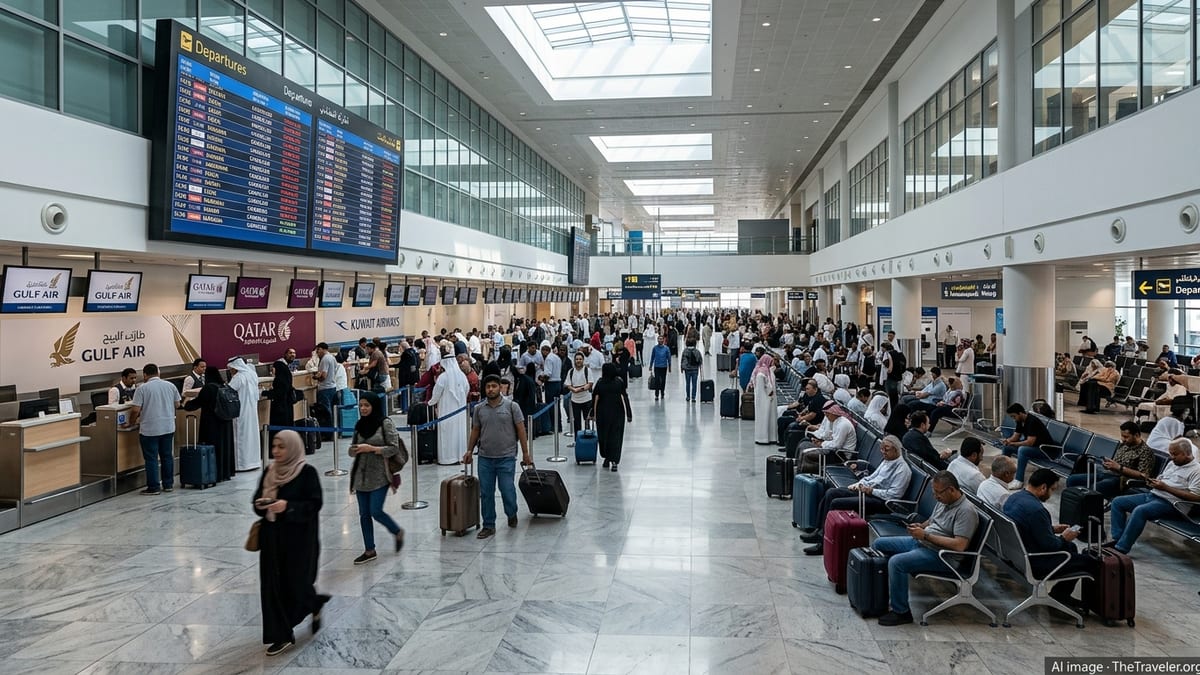
Travel across the northern Gulf faced fresh disruption as nine flights linked to Kuwait International Airport were cancelled, affecting services operated by Gulf Air, Qatar Airways and Kuwait Airways on busy regional routes between Kuwait City, Doha and Manama.
Get the latest news straight to your inbox!
Cancellations Add Fresh Strain to Already Disrupted Gulf Airspace
Publicly available flight-tracking data and regional media coverage indicate that Kuwait International Airport remains under strain following weeks of wider airspace disruption in the Gulf, with nine additional cancellations recorded on routes serving Kuwait, Doha and Manama. The latest round of disrupted services has directly affected passengers booked on Gulf Air, Qatar Airways and Kuwait Airways, three of the main carriers connecting Kuwait with Qatar and Bahrain.
The cancellations come against the backdrop of ongoing restrictions and operational challenges following the closure of Kuwaiti airspace in late February, reported in connection with regional security tensions. While some carriers have been gradually adjusting schedules and exploring alternative routings, the pattern of last-minute changes and day-by-day updates continues to unsettle travel plans for residents, expatriate workers and transit passengers.
For travelers, the impact is being felt not only in outright cancellations but also in delayed notifications and shifting eligibility rules for refunds and rebooking. Passengers transiting through Kuwait on multi-leg itineraries to Europe and Asia are among those most exposed, particularly when connecting flights via Doha or Manama are involved.
Key Routes to Doha and Manama Experience Disruption
Published timetables and live departure boards show that the latest cancellations are concentrated on high-frequency regional links between Kuwait City and the Qatari and Bahraini capitals. These short-haul sectors typically carry a mix of business travelers, Gulf residents, and long-haul passengers connecting through the hubs at Doha’s Hamad International Airport and Bahrain International Airport.
According to data compiled from airline schedule feeds, affected services include Kuwait–Doha rotations that feed into Qatar Airways’ long-haul network, as well as Kuwait–Manama flights operated by Gulf Air that serve as connectors to Europe and South Asia. Kuwait Airways’ own regional services have also been curtailed, resulting in fewer options for travelers who rely on the carrier for point-to-point and onward travel.
The concentration of disruption on these routes amplifies the knock-on effects for passengers whose journeys involve onward connections. Missed long-haul departures, longer layovers caused by rebooking onto the next available service, and the need to reroute via alternative hubs such as Dubai or Riyadh are all being reported in traveler accounts and social media postings.
Passenger Experience: Refunds, Rebookings and Uncertainty
Reports from passengers and online customer advisories highlight a patchwork of responses from the affected airlines. Kuwait Airways, which has already been managing a wave of cancellations since late February, has adjusted its refund and waiver policies several times in recent weeks, extending eligibility windows for fee-free changes and refunds on certain dates while still requiring individual requests and documentation.
Travelers booked on Qatar Airways and Gulf Air services involving Kuwait are also facing extended hold times on customer-service channels and limited availability on alternative flights in the immediate days after cancellations. Public information shared by passengers shows that, in some cases, flights remain marked as “confirmed” in booking systems until relatively shortly before departure, complicating decisions about whether to proactively change plans.
For many travelers, the challenge is not only financial but logistical. Those flying between South Asia and Europe via Kuwait, Doha or Manama are having to contend with visa requirements for overland alternatives, peak-season demand around religious and school holidays, and fluctuating fares on remaining routes. Some passengers have described having to secure last-minute seats via other Gulf hubs, often at significantly higher prices than their original tickets.
Operational Pressures on Gulf Air, Qatar Airways and Kuwait Airways
Operational data and aviation-sector commentary suggest that Gulf Air, Qatar Airways and Kuwait Airways are each dealing with a complex mix of network and safety considerations as they navigate the current environment. With Kuwait’s airspace and airport infrastructure affected by recent regional tensions, carriers must balance schedule reliability with route viability and airspace access across neighboring countries.
Qatar Airways and Gulf Air, which both rely on smooth regional connectivity to feed long-haul networks, have been adjusting aircraft rotations and, in some cases, consolidating frequencies on specific days. This can result in days where multiple flights operate close together, followed by gaps on other days, a pattern that contributes to clusters of cancellations such as the nine recorded around Kuwait’s latest service updates.
Kuwait Airways, for its part, has been operating within tighter constraints linked directly to the status of Kuwait International Airport and national airspace controls. Publicly available notices show a sequence of refunds and waivers being offered over defined date ranges, indicating a day-by-day reassessment of what services can be realistically maintained.
What Travelers Should Monitor in the Coming Days
For passengers planning journeys to or from Kuwait, Doha or Manama, the latest cancellations underscore the need for close monitoring of bookings in the days and even hours before departure. Travel agents and consumer advocates generally recommend checking both airline apps and airport departure boards, as well as signing up for real-time alerts where possible.
Given the evolving situation, publicly available guidance also points to the value of flexible tickets and clear awareness of each airline’s current waiver policies. Travelers may benefit from confirming whether they can rebook onto alternative Gulf hubs without additional charges, and whether hotels or ground transport are covered when cancellations strand them mid-journey.
While the nine cancellations at Kuwait International Airport represent a relatively small fraction of total scheduled movements, they highlight how fragile regional connectivity remains amid ongoing security and airspace uncertainties. Until a more stable operating environment emerges, passengers on Gulf Air, Qatar Airways and Kuwait Airways are likely to continue facing intermittent disruptions on the vital corridors linking Kuwait with Doha and Manama.