

More news on this day
Kuwait International Airport remains shut to civilian traffic after an Iranian drone strike hit fuel facilities and nearby infrastructure, triggering rolling airspace closures that have disrupted flight networks across Asia, Europe, and Africa.
Get the latest news straight to your inbox!
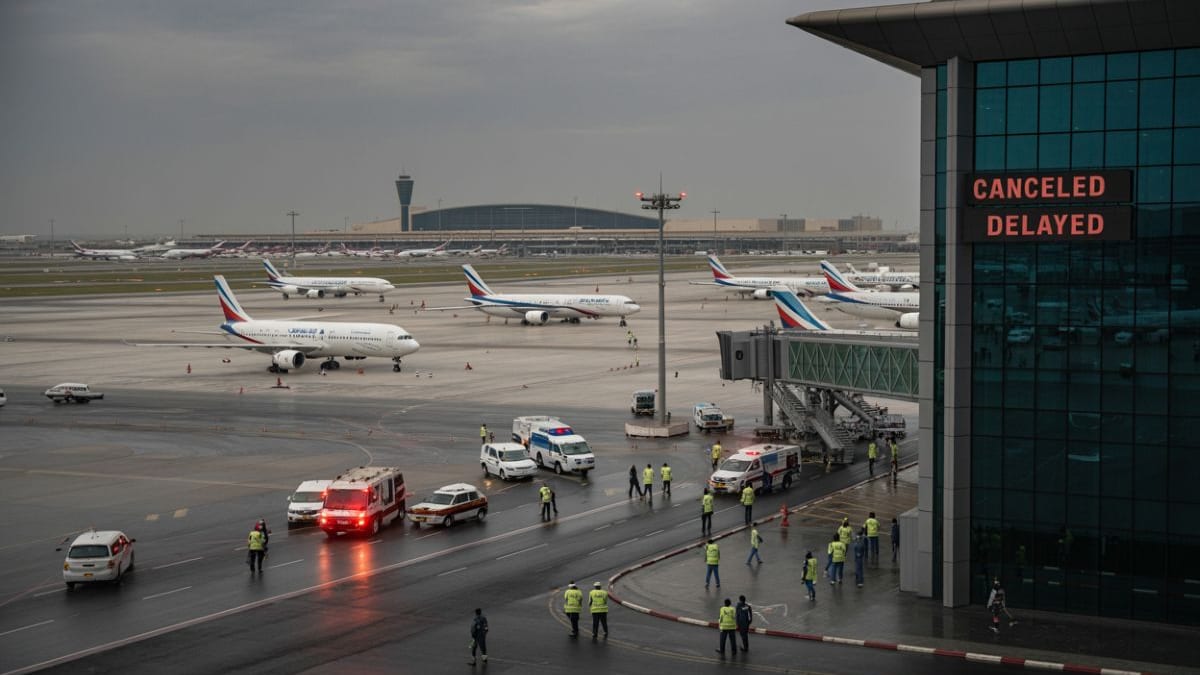
Image by Latest International / Global Travel News, Breaking World Travel News
Drone Strike Turns Key Gulf Hub Into A No-Fly Zone
The closure of Kuwait’s airspace followed a late February drone strike that hit Kuwait International Airport as part of wider Iranian attacks on Gulf countries linked to the ongoing regional conflict. Publicly available information indicates that a drone impacted fuel storage near the airport, igniting a fire and causing damage to facilities that support civilian operations.
While the structural damage at the passenger terminals has been described in local coverage as limited, the incident exposed how vulnerable core aviation fuel and logistics infrastructure can be in a conflict zone. Kuwait has responded with heightened security measures and a full suspension of regular passenger flights, effectively turning one of the Gulf’s long-standing transit points into a no-fly zone for commercial carriers.
Regional monitoring reports note that since hostilities escalated, Kuwait has faced a sustained campaign of missiles and drones, prompting repeated reviews of aviation risk and the decision to keep the skies closed to routine traffic. The shutdown is being framed domestically as a precautionary measure designed to avoid civilian casualties rather than a reflection of long-term physical damage to runways or terminals.
The airport’s closure comes as other Gulf hubs also contend with airspace alerts and occasional stoppages, underscoring how quickly a localized strike on a single facility can cascade into a broader aviation crisis.
Global Flight Networks Scramble To Adapt
The grounding of flights to and from Kuwait has sent shockwaves across airline networks, particularly on routes linking South and Southeast Asia with Europe and North America. Kuwait International Airport had served as an important regional connector, and its sudden withdrawal from global schedules has forced carriers to reshuffle aircraft, crews, and routes at short notice.
According to flight-tracking data and airline advisories, many services that once routed via Kuwait are now being rebooked through alternative Gulf hubs or rerouted through secondary airports in Saudi Arabia and other neighboring states. This has added pressure on already busy airports in the region and created new bottlenecks in visa processing, transfer logistics, and baggage handling.
Travel industry updates suggest that passengers are experiencing longer journey times, last-minute cancellations, and complex multi-leg itineraries that cross unfamiliar airports. The shock to schedules is being felt far beyond the Middle East, as disruptions radiate along key east–west corridors touching Europe, India, East Africa, and parts of East Asia.
Some carriers have opted to cut frequencies altogether on marginal routes rather than attempt lengthy detours around contested airspace, reducing capacity and driving up fares on certain long-haul sectors. Others are mounting ad hoc rescue or repatriation flights via safer corridors, with limited seat availability and rapidly changing departure times.
Three Continents Feel The Ripple Effects
Although the strike took place in Kuwait, the operational consequences are visible across at least three continents. In Asia, travelers in India, Pakistan, Bangladesh, and the Philippines who had booked competitive one-stop itineraries via Kuwait now face widespread rebooking, often through alternative Gulf or Turkish hubs. This has particularly affected migrant workers and budget-conscious travelers who rely on lower-cost connecting services.
In Europe, where Kuwait served as a niche connecting point to the Gulf and South Asia, flight disruption manifests in tighter capacity and more crowded major hubs. Airlines are consolidating passengers onto fewer departures while they assess ongoing risk from drone and missile activity across the wider region. Some European airports are reporting increased numbers of transit passengers arriving from hastily rerouted services.
African markets linked to the Gulf are also feeling the impact. Travelers from North and East Africa who used Kuwait as a bridge to Asian destinations are now being rerouted through other Middle Eastern gateways, sometimes adding many hours to total journey times. This has strained connections through cities already contending with their own security reviews and operational challenges.
For global aviation planners, the situation highlights how the closure of a single mid-size hub, when combined with unstable airspace across neighboring states, can distort traffic flows on a hemispheric scale, compelling airlines to redraw route maps in near real time.
Safety Reviews, Insurance Pressures And Operational Risk
Aviation safety specialists and risk consultancies are treating Kuwait’s airspace as high risk due to the demonstrated ability of drones and missiles to reach civilian infrastructure. Publicly available assessments describe a complex threat environment in which military and energy targets coexist alongside major airports and dense urban districts.
Insurers have responded by tightening terms for flights entering or overflying affected zones, raising war-risk premiums and, in some cases, limiting coverage for carriers that do not demonstrate robust risk mitigation. For airlines, this translates into higher operating costs and a strong financial incentive to avoid exposed corridors whenever possible.
Global travel advisories are also being updated frequently, advising travelers to monitor airline communications closely and to be prepared for abrupt changes to flight plans. While some neighboring hubs, such as Dubai and Doha, have intermittently suspended operations following nearby drone activity, they have generally resumed flights after short interruptions, unlike Kuwait’s ongoing full closure.
The evolving security picture means airlines must constantly adjust their risk calculus, weighing the commercial value of serving certain markets against the potential human and financial costs of operating in contested airspace.
What Travelers Need To Know Right Now
For passengers with existing bookings through Kuwait International Airport, published airline information indicates that regular commercial flights remain suspended and that tickets are being reprotected, refunded, or rerouted via other hubs. Travelers are being urged to check their booking status directly with their carrier or travel agent rather than assuming flights will operate as scheduled.
Those currently planning trips that would normally traverse Gulf airspace are advised to factor in possible last-minute diversions, extended layovers, and reduced route options. Even if a journey does not involve Kuwait directly, the knock-on effect of its closure and intermittent restrictions at other regional airports can still influence schedules and seat availability.
Industry analysts note that the situation is highly fluid, tied closely to developments in the broader conflict between Iran and its adversaries. Any easing of hostilities or formal agreement on airspace safety could pave the way for a phased reopening of Kuwait’s airport, but there is no clear timeline at present.
Until stability returns, travelers using affected corridors face a period of uncertainty in which flexibility, real-time information, and contingency planning will remain as essential as passports and boarding passes.