

More news on this day
Drone strikes and collateral damage at Kuwait International Airport have pushed Kuwait Airways into the growing list of Gulf carriers cancelling or rerouting flights, as regional airspace closures ripple outward from the escalating Iran conflict and leave travelers across the Middle East scrambling for options.
Get the latest news straight to your inbox!
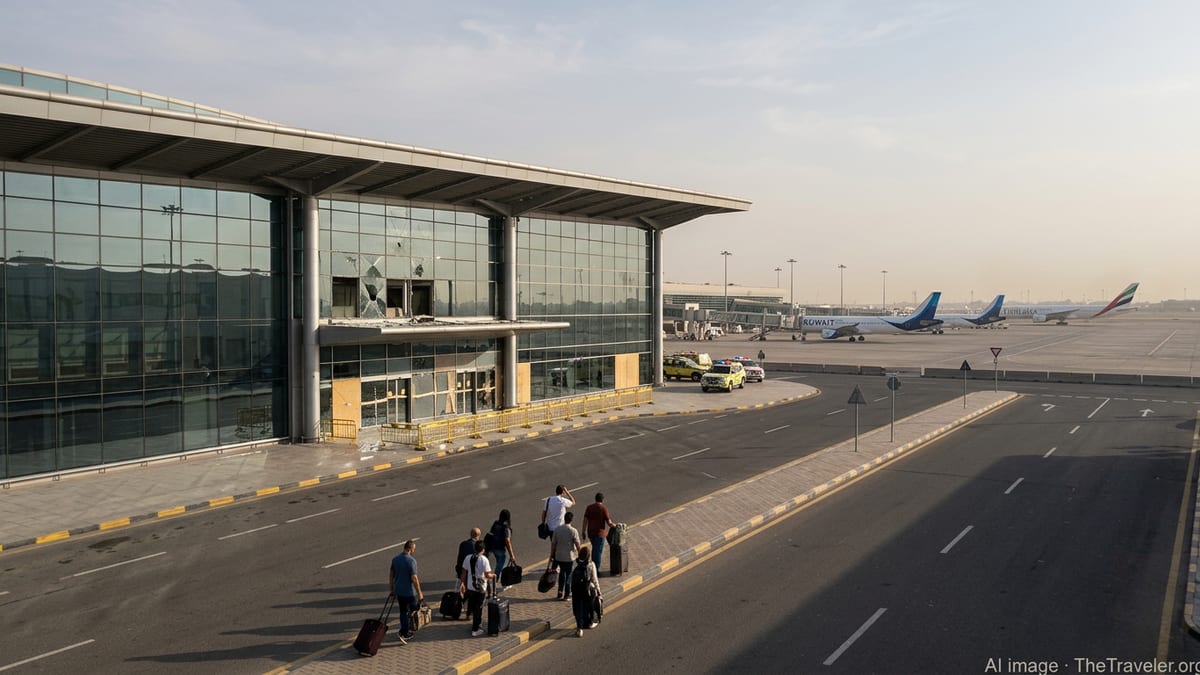
Airport Damage and Airspace Closures Bring Kuwait to a Standstill
Kuwait International Airport has been at the center of the latest aviation turmoil after Iranian drones struck key facilities in early March, causing structural damage to the main terminal and forcing a full closure to civilian air traffic. Initial attacks on February 28 were followed by additional drone activity around March 1 and March 12, according to regional reporting, compounding safety concerns and delaying repair work at the busy hub.
Authorities responded by keeping Kuwaiti airspace effectively closed to regular passenger operations, allowing only limited emergency, military, and tightly controlled repatriation flights. The move places Kuwait alongside several Gulf neighbors whose airports have suffered damage or operational restrictions since the conflict widened, creating a patchwork of closures that has upended normal route networks.
While officials have stressed that most of the damage at Kuwait International Airport is classified as material rather than catastrophic, aviation engineers must complete detailed inspections of runways, jet bridges, and terminal infrastructure before any wide reopening can safely begin. That process is ongoing and, as of March 13, no clear date has been offered for a full restoration of normal schedules.
Kuwait Airways Joins Gulf Carriers in Widespread Cancellations
Kuwait Airways, the national flag carrier, has suspended the bulk of its operations to and from Kuwait City since the first wave of strikes and subsequent airspace shutdown. The airline has confirmed that all cancelled flights from February 28 to at least March 20 are eligible for full refunds if no portion of the ticket has been used, and partial refunds for return segments where outbound legs were already flown.
The disruption places Kuwait Airways in the same bracket as other major Gulf carriers that have sharply reduced schedules in response to the evolving security picture. Emirates and Etihad initially halted most services after drone and missile strikes damaged parts of Dubai and Abu Dhabi airports, while Qatar Airways has cut frequencies, cancelled select routes, and focused on operating limited repatriation services where corridors are deemed safe.
Oman Air, Saudia, Jazeera Airways and other regional operators have also revised schedules, dropped routes, or shifted operations to secondary airports as they navigate temporary airspace closures over Kuwait, Bahrain, parts of the UAE and Qatar. For passengers, this has meant a confusing mix of last-minute cancellations, rolling delays, rebookings on alternative carriers and routings that are hours longer than usual due to detours around restricted zones.
Real-time flight tracking and airport departure boards on March 12 and March 13 show Kuwait Airways flights such as KU564 between Amman and Kuwait City listed as cancelled, underscoring that even short-haul regional links remain heavily disrupted.
How Travelers Are Being Rebooked, Rerouted and Refunded
With Kuwait Airways’ hub effectively shut, travelers have been forced into a patchwork of workarounds involving other Gulf and regional carriers. Some passengers are rebooking through airports that have resumed partial operations, such as Muscat or Riyadh, while others are being routed via Europe or South Asia to skirt the affected airspace entirely. Airlines across the region report longer flight times of up to six additional hours on some routes because of diversions.
Several Gulf carriers, including Emirates, Qatar Airways and Etihad, have published temporary travel waivers allowing free date changes or refunds on affected itineraries, particularly for flights touching closed or damaged airports. Kuwait Airways has been slower to communicate, drawing criticism from customers who struggled to obtain clear guidance in the first days of the shutdown. However, updated policies now emphasize full or partial ticket refunds on cancelled services and promise additional flexibility as the situation evolves.
In parallel, some airlines are coordinating with foreign governments to operate repatriation flights, primarily aimed at returning stranded nationals. British Airways, for example, has been running special services from select Gulf airports, while EgyptAir and other regional carriers have begun gradually restoring limited connections to the United Arab Emirates under tight security protocols.
Travel agents in Kuwait and neighboring countries report that demand for alternative routings out of the Gulf has surged, with popular long-haul destinations like London, Istanbul and major South Asian hubs seeing elevated fares and scarce seat availability, especially in the next one to two weeks.
On the Ground in Kuwait: Stranded Passengers and Temporary Workarounds
Inside Kuwait, the sudden suspension of flights has left thousands of residents, migrant workers and visitors stranded both in the country and abroad. Social media posts from passengers describe crowded airline offices, long phone hold times and difficulty accessing timely updates from official channels in the first days after the strikes. Some travelers with urgent medical, work or family commitments have opted to travel overland to Saudi Arabia to catch onward flights from alternative airports.
Local low-cost carrier Jazeera Airways has attempted to bridge part of the gap by redirecting some flights to Qaisumah in Saudi Arabia, close enough to reach Kuwait by road. The arrangement, coordinated in part with foreign embassies, has been used to facilitate the movement of stranded nationals, particularly from India and other South Asian countries, though capacity remains limited relative to normal demand at Kuwait International Airport.
Hotel demand in Kuwait City has increased as travelers wait out the uncertainty, with some properties reporting elevated occupancy driven not by tourism but by passengers unable to depart. Meanwhile, airport staff and emergency crews continue working at the closed terminal complex, conducting safety checks, securing damaged areas and preparing for an eventual phased reopening once security conditions and infrastructure assessments allow.
Residents and expatriates are being advised to monitor statements from Kuwait’s civil aviation authorities and individual airlines rather than relying on rumors or unofficial social media channels, as schedules and permissions can change at short notice.
What Travelers Should Do Now if They Are Affected
For anyone holding a ticket to or from Kuwait in the coming days, the single most important step is to treat all itineraries as provisional. Passengers should check their booking status directly with the operating airline on the day of travel and again before leaving for the airport, even if their flight still appears confirmed on third-party websites or historical schedules.
Kuwait Airways customers whose flights have been cancelled between February 28 and March 20 should request a refund or explore rebooking options as early as possible, particularly if they need onward connections from Europe, Asia or North America where capacity is tightening. Travelers booked on other Gulf carriers should review current waiver policies, which may allow date changes, rerouting via alternative hubs or full refunds for journeys touching Kuwait, Dubai, Abu Dhabi or Doha.
Prospective visitors planning new trips to or through the Gulf region in the next several weeks are being urged to build additional flexibility into their itineraries. This includes allowing longer connection times, avoiding tight same-day transfers between separate tickets, and considering travel insurance that specifically covers war-related disruptions, airspace closures and extended delays.
Finally, experts note that while partial resumptions are likely as repairs progress and diplomatic efforts seek to contain the conflict, the situation remains fluid. Kuwait International Airport will probably reopen in phases, with limited domestic, regional and then long-haul operations coming back online over time. Until those plans are formally announced, travelers should assume that normal pre-conflict schedules across Kuwait Airways, Emirates, Etihad, Qatar Airways, Oman Air, Saudia and other affected carriers will not fully stabilize in the immediate future.