

More news on this day
Kuwait International Airport remains closed to passenger traffic after a series of Iranian drone and missile attacks damaged airport infrastructure and prompted a nationwide airspace shutdown, intensifying travel disruption across a region already unsettled by the wider 2026 Iran war.
Get the latest news straight to your inbox!
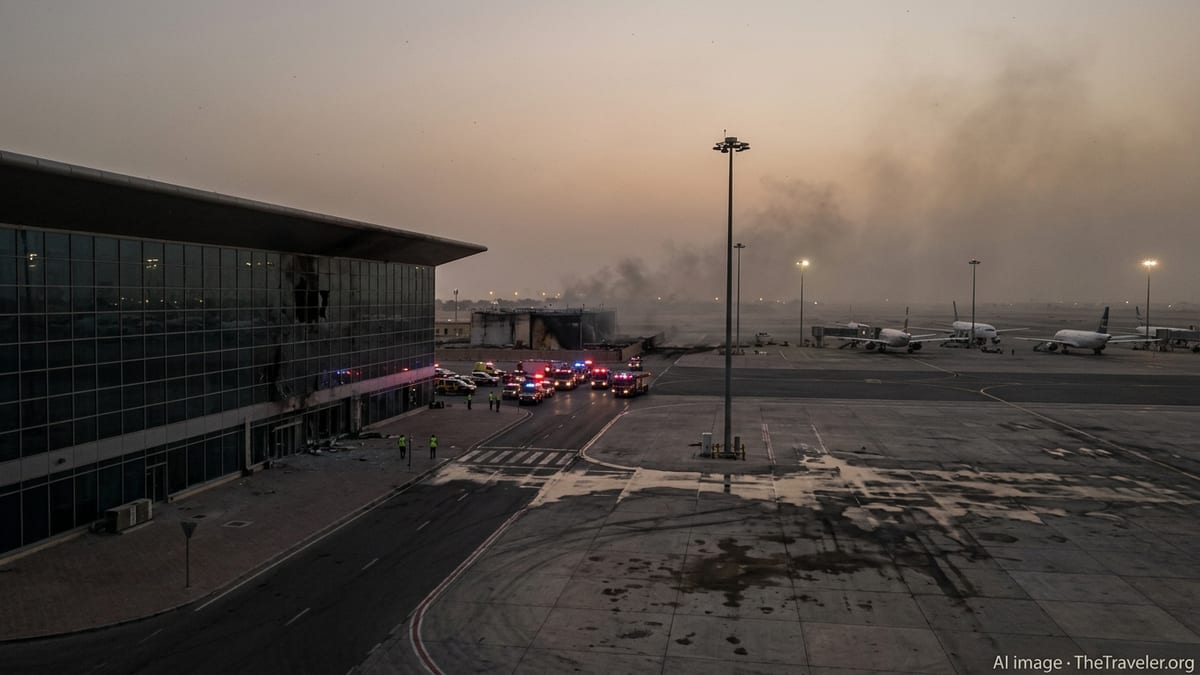
What Happened at Kuwait International Airport
According to publicly available reporting on the 2026 Iranian strikes on Kuwait, Iranian drones and missiles have repeatedly targeted strategic facilities in the country since late February. Kuwait International Airport was among the locations hit, with an incident on February 28 involving a drone strike on airport facilities and a further drone attack on March 24 reported to have ignited a fuel tank and caused a fire within the airport perimeter. Initial assessments described structural damage and disruption to navigation and radar equipment, but no direct civilian fatalities at the terminal itself.
In parallel, strikes on nearby military sites, including Ali Al Salem Air Base and Camp Buehring, underscored the vulnerability of both military and dual-use infrastructure in Kuwait. Imagery and regional security analyses describe shrapnel damage, fires and emergency responses at several installations. The intensity and proximity of these attacks to Kuwait City contributed to a decision to treat the airspace as an active conflict zone rather than an isolated incident area.
Kuwait’s civil aviation authorities responded by suspending all civil flight operations at Kuwait International Airport and closing national airspace to scheduled traffic. Sector advisories and aviation risk bulletins circulated to airlines and corporate travel departments describe the closure as an open-ended safety measure tied to the broader regional security situation, rather than a short, weather-style disruption.
Satellite analysis and commercial risk assessments indicate that repair work is under way on affected fuel and radar facilities, but there has been no definitive public timeline for a full reopening. With intermittent drone and missile activity continuing in the wider Gulf, aviation planners currently treat the risk to Kuwait’s main gateway as elevated and ongoing.
Current Status of Flights and Airspace
Travel security briefings and airport-focused reports state that Kuwait’s airspace has been closed to routine commercial traffic since February 28, halting passenger and most cargo movements to and from Kuwait International Airport. Airlines that previously relied on Kuwait as a hub or stopover have removed Kuwait City flights from near-term schedules or flagged them as cancelled until further notice.
Advisories compiled for multinational companies and nongovernmental organizations characterize operations at Kuwait International Airport as fully suspended, aside from restricted state, military or emergency movements that are not available to regular travelers. Notices to air missions for the region indicate that overflight routes which would ordinarily cross Kuwaiti airspace are being rerouted to avoid the area, adding congestion to neighboring flight corridors in Saudi Arabia and over the Gulf.
Local carriers have adopted temporary workarounds. Reporting on Kuwait International Airport infrastructure notes that Jazeera Airways and other operators have shifted select flights and repatriation operations to airports in northern and eastern Saudi Arabia, including facilities reachable from Kuwait by several hours’ drive across the border. These services are limited, subject to change at short notice and primarily focused on essential travel rather than routine tourism.
Regional social media posts and local press coverage reflect widespread uncertainty among residents and expatriates stranded abroad, with many reporting multiple rebookings, extended layovers in third countries and difficulties securing clear information from call centers overwhelmed by inquiries. Where flights were initially postponed for a few days, many have since been formally cancelled as it became evident the closure would last longer than first expected.
How Travelers Are Being Re-Routed
In practice, most travelers with existing tickets involving Kuwait International Airport are being rerouted through alternative hubs. Major Gulf carriers and partner airlines are shifting itineraries to airports in Doha, Dubai, Abu Dhabi, Riyadh and Jeddah, depending on available capacity and the evolving risk picture at each location. For some passengers, this means entirely new routings that avoid Kuwaiti airspace and extend total journey times by several hours.
Published travel-security advisories indicate that some Kuwait-based residents returning from overseas are being advised to land in neighboring Gulf states or eastern Saudi Arabia and then complete the final leg by road, subject to border and visa rules. Corporate travel managers report that small numbers of charter flights are also being arranged to secondary regional airports perceived as less exposed to direct attack, although capacity on these services is tight and seats are often reserved for essential personnel.
Given the dynamic security environment, operators are applying conservative risk thresholds. Flights that might pass near areas of recent missile or drone activity are under particular scrutiny, and schedules are being redrawn as military operations shift. Travelers are being warned through general advisories that routings confirmed a week in advance may still change within 24 hours of departure if new incidents occur.
Insurance and assistance companies are also playing a growing role in rerouting. Policy summaries and client updates emphasize that travelers should contact their insurer or assistance provider before undertaking complex multi-country journeys to ensure coverage for trip disruption, emergency accommodation and potential medical evacuation from alternative gateways.
Practical Guidance for Passengers Affected Right Now
For passengers whose trips touch Kuwait in the coming days and weeks, aviation and government travel advisories consistently recommend direct communication with airlines or booking agents as the primary source of practical information. Many carriers are issuing fee waivers for date changes, refunds or rerouting on different routes, but the exact options vary widely by ticket type, point of purchase and the airline’s current operational footprint in the Gulf.
Travel risk specialists recommend building significant flexibility into any itinerary that still involves the wider region. That includes allowing long connection windows at alternative hubs, preparing for potential overnight stays and keeping essential items, medication and documentation in carry-on baggage in case luggage is misrouted during forced rebookings. Passengers with nonrefundable accommodation or tour bookings in Kuwait City are being urged to review contract terms and consider contacting providers to negotiate credits rather than full cancellations.
For those already in Kuwait, local media and community information channels suggest monitoring official civil defense alerts, staying aware of shelter guidance in the event of further strikes and avoiding nonessential movement around strategic infrastructure. While the current attacks have focused on military and energy targets, debris and shrapnel have been reported in civilian areas during previous interceptions, underlining the need for basic situational awareness.
Travelers with onward international connections originally booked through Kuwait are advised to keep digital and physical copies of all updated tickets and disruption notices. These documents are often required to support insurance claims, expense reports or future visa applications that ask for explanations of unexpected itinerary changes.
Regional Outlook and When Operations Might Resume
Specialist conflict-monitoring firms describe the situation as fluid, emphasizing that Kuwait’s airport shutdown is part of a larger pattern of cross-border strikes, interceptions and heightened alert levels across several Gulf states. The same streams of Iranian drones and missiles that hit Kuwait International Airport have reportedly threatened or disrupted airports and critical infrastructure in neighboring countries, lengthening the list of variables airlines must manage before normal schedules can return.
Analysts note that any decision to reopen Kuwait’s airspace to commercial traffic is likely to depend on a sustained reduction in incoming threats, demonstrable improvements in local air-defense coverage over key installations, and confirmation that damaged airport systems are fully repaired and tested. Until those conditions are met, planners expect a cautious approach in which limited, controlled movements may resume first, followed by a phased reintroduction of regular passenger flights.
Forecasts in current risk bulletins refrain from firm reopening dates, instead offering scenario-based timelines ranging from several weeks to potentially longer if regional hostilities escalate again. Airlines are planning seasonally on the assumption that disruption could extend into the next scheduling period, adjusting fleet deployment and crew rotations accordingly.
For travelers, the practical takeaway is that Kuwait should not be treated as a reliable transit point in the near term. Anyone planning journeys into or through the Gulf is encouraged to build plans around alternative airports, monitor airline advisories and government travel guidance closely, and be prepared to adjust at short notice as the situation on the ground evolves.