

More news on this day
Kuwait International Airport remains shut to regular passenger traffic following a series of drone strikes that damaged key aviation infrastructure, intensifying regional air travel disruption as tensions escalate across the Middle East.
Get the latest news straight to your inbox!
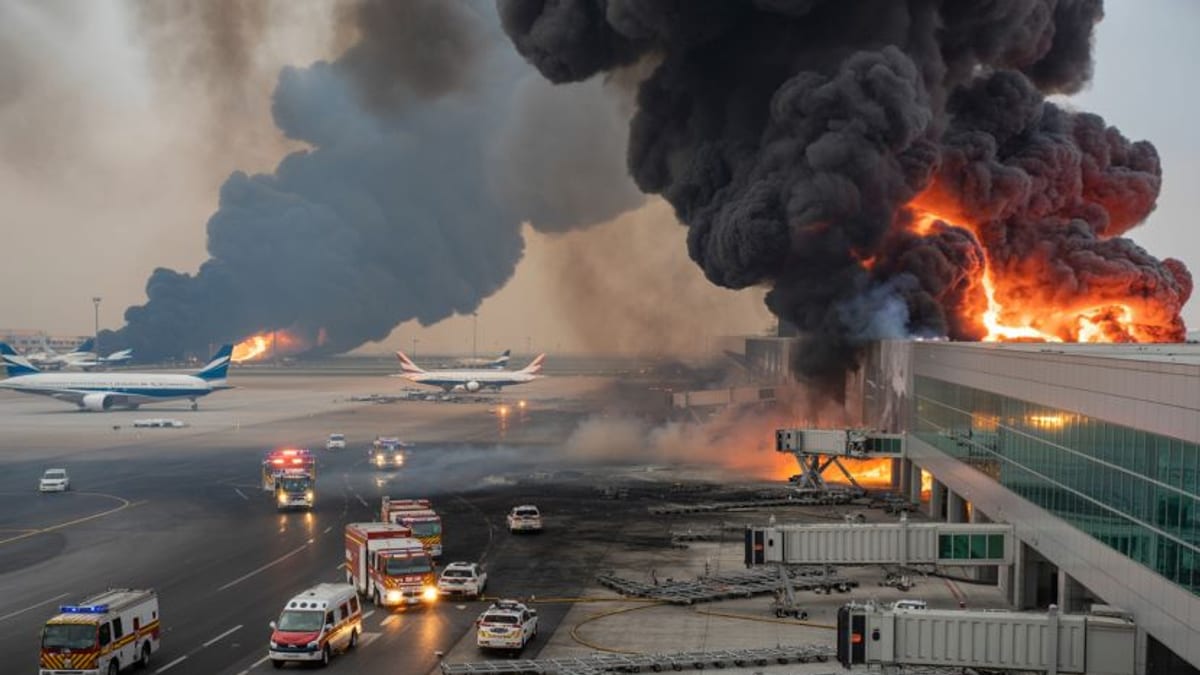
Image by Global Travel Alerts, Advisories, International Travel Alerts
What Happened at Kuwait International Airport
According to multiple regional and international news reports, Kuwait International Airport was hit on February 28 by an Iranian-linked drone strike that targeted airport facilities and nearby military infrastructure. Human rights observers and regional media indicate that at least one drone impacted an area near fuel storage, injuring several foreign workers and triggering a fire that was later contained by emergency teams.
Subsequent analysis published by defense and risk consultancies describes the attack as part of a broader campaign of Iranian missile and drone activity across the Gulf, including Kuwait, Saudi Arabia, Qatar, Bahrain and the United Arab Emirates. The airport incident coincided with or was closely followed by strikes on military bases and ports in Kuwait, underscoring how civilian aviation hubs have been drawn into a fast-moving regional confrontation.
Travel-industry briefings and specialized security advisories state that damage at Kuwait International Airport includes impact to Terminal 1 facilities and airfield systems. Separate coverage notes that radar equipment associated with Kuwaiti and allied military installations has also been struck, complicating both air defense operations and the safe management of civilian airspace in the vicinity of Kuwait City.
Publicly available information from regional media and aviation-focused outlets indicates that while fires and structural damage were brought under control, authorities moved quickly to halt regular passenger operations at the airport and introduce sweeping airspace restrictions as intercepts of additional drones and missiles continued in the following days.
Current Status: Airspace Closure and Flight Operations
Recent travel advisories and airline communications agree that Kuwait has effectively closed its airspace to routine commercial traffic in response to the drone attacks and ongoing missile and drone interceptions. Independent travel-risk bulletins updated in mid-March describe a “full airspace closure” for Kuwait, with only limited military, state or emergency movements permitted.
Coverage in regional media and global travel publications states that commercial operations at Kuwait International Airport are suspended until further notice. Some reports describe the airport as facing “heavy disruption” and “limited availability” even for special or humanitarian flights, reflecting the combination of physical damage, security concerns and the need to preserve airspace for air defense activity.
Social-media accounts from passengers, as well as community forums tracking the crisis, describe widespread cancellations and repeated rescheduling of flights in and out of Kuwait. Some travelers report being rebooked several days later via alternative regional hubs, while others have seen their itineraries shifted multiple times as the situation evolves.
Aviation analysis circulating among industry watchers notes that a formal timeline for full reopening has not been announced. Any resumption of limited services is expected to be gradual, contingent on confirmation that air defense operations no longer pose a hazard to civilian flights and that critical navigation, radar and safety systems are reliably functioning.
How Airlines Are Rerouting and What Passengers Face
Airlines serving Kuwait have turned to a patchwork of diversions and schedule changes to keep passengers moving. According to travel-industry coverage, some Gulf carriers and Kuwaiti operators have shifted selected services to airports in neighboring Saudi Arabia, using regional gateways that remain open to connect travelers onward by air or road.
Operational notices from risk consultancies cite examples of repatriation or relief flights operating through alternative Saudi airports, where travelers can then continue to other international hubs. Separate reporting indicates that some Kuwait-based carriers have temporarily deployed aircraft and crews outside the country to maintain limited networks while Kuwait’s airspace remains restricted.
For individual passengers, this has translated into longer journeys, overnight layovers and last-minute changes in routing. Many travelers attempting to reach Kuwait are being instructed to remain at their point of origin or to accept rerouting to neighboring states until conditions stabilize. Those already in the Gulf are sometimes being advised to use regional land borders where safe and permitted, though such options remain highly sensitive to security developments.
Consumer-focused travel reports also point to constrained seat availability, as displaced Kuwait-bound traffic competes for limited capacity through alternative hubs such as Dubai, Doha, Riyadh and Jeddah. Fares on some short-notice routes have risen, and travelers are being urged in public-facing guidance to maintain flexible plans and to monitor airline notifications closely.
Security Environment and Risks Around the Airport
The shutdown of Kuwait International Airport is unfolding against a backdrop of repeated missile and drone alerts across the country. Statements carried by Kuwaiti media in recent days describe air defense systems intercepting multiple hostile drones and missiles, with residents hearing explosions attributed to interception operations and controlled detonations.
Security and human-rights organizations tracking the conflict report that Iran-linked strikes have targeted both military and civilian-related infrastructure across the Gulf, including ports, energy facilities and airports. The attack on Kuwait International Airport is cited within this wider pattern, raising concerns among analysts about the vulnerability of aviation and critical infrastructure to low-flying drones and saturation attacks.
Specialized aviation and security briefings emphasize that even when an airport itself is not directly under attack, the presence of interceptors, debris and unexploded ordnance can create serious hazards for civilian aviation. As a result, authorities in Kuwait and neighboring states have in some cases opted for temporary airspace closures or strict flight-level and routing restrictions around conflict zones.
Travel guidance produced for corporate and government travelers highlights that the situation in and around Kuwait City remains fluid, with the possibility of additional attacks on infrastructure, further air defense activity and localized movement disruptions. Travelers are being advised, where travel is essential, to maintain low profiles, follow official safety instructions disseminated locally and register with relevant consular services.
What Travelers Must Do Right Now
For anyone with upcoming travel plans involving Kuwait International Airport, the most urgent step is to confirm the status of flights directly with airlines or booking providers before heading to any airport. Given the combination of a continuing airspace closure and infrastructure damage, many flights remain canceled or subject to last-minute change.
Travelers already ticketed to or from Kuwait are being encouraged in publicly available advisories to consider accepting rerouting through neighboring countries when offered. This may involve additional connections, ground transfers or overnight stays, but it is currently the primary way most passengers are reaching or departing the wider region.
Corporate travel managers and individual travelers alike are advised in current risk assessments to avoid booking new nonessential trips to Kuwait until clearer signals emerge about the duration of the shutdown and the security outlook. Insurance providers may classify Kuwait and parts of the surrounding region as elevated or high risk, so travelers should review policy wording for war, terrorism and disruption exclusions.
Finally, experts contributing to public travel guidance stress the importance of flexibility. Schedules across the Middle East remain vulnerable to knock-on effects as airlines, airports and air navigation authorities respond to evolving missile and drone threats. Even travelers whose journeys do not directly involve Kuwait may experience diversions, extended routings or delays while the regional aviation system absorbs the impact of the Kuwait airport shutdown.