

More news on this day
Kuwait has fully closed its airspace to civilian traffic following Iranian missile and drone strikes across the Gulf, disrupting regional flight corridors and leaving thousands of travelers facing cancellations, diversions and extended delays.
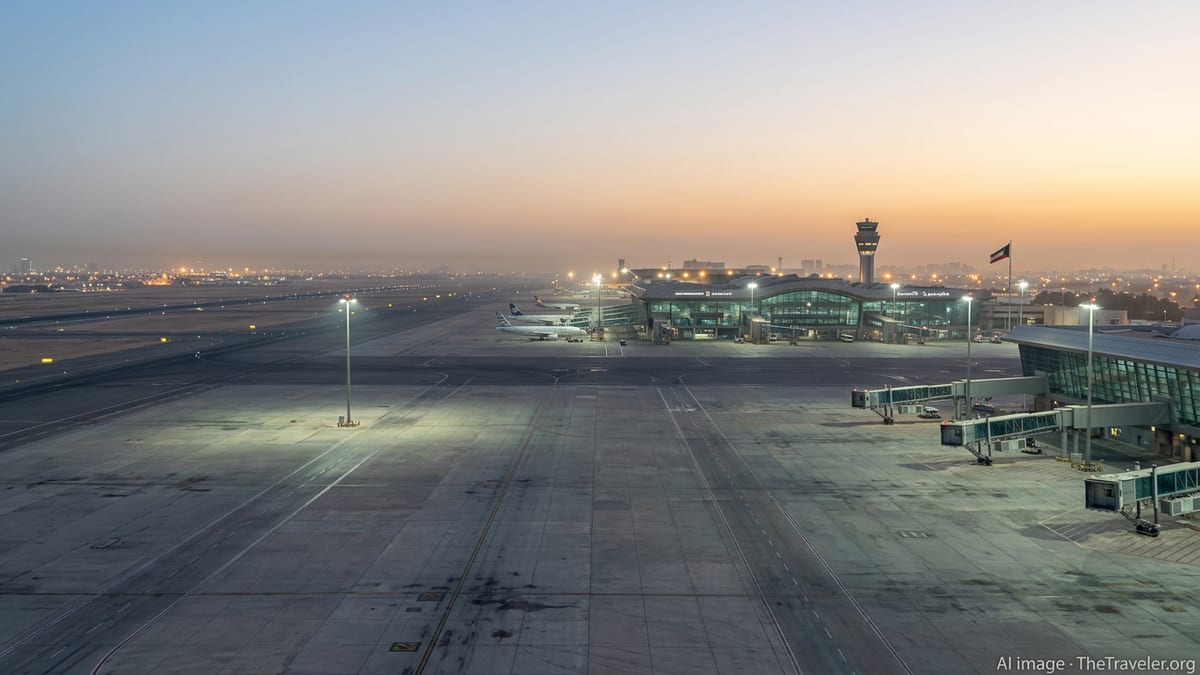
Why Kuwait Closed Its Skies and How Long It May Last
Kuwait ordered an immediate shutdown of its airspace on February 28 2026 after Iranian retaliatory strikes targeted military and infrastructure sites across the Gulf, including a drone attack that caused visible damage at Kuwait International Airport. The move followed similar closures in Iran, Iraq, Qatar, Bahrain and parts of the United Arab Emirates as regional air defense systems responded to waves of missiles and drones.
The country’s Directorate General of Civil Aviation announced that the suspension covers all civilian flights until further notice, citing aviation safety concerns while air defense operations remain active over Kuwaiti territory. Local reports described debris at the airport and minor injuries among ground staff, underscoring the risk to aircraft and personnel if commercial traffic were allowed to continue.
As of March 7 2026 there is no publicly confirmed timeline for a full reopening of Kuwaiti airspace. While some neighboring states, notably Qatar and the United Arab Emirates, have begun cautiously restoring limited traffic, Kuwait’s skies remain closed to regular commercial operations amid continued security assessments and ongoing regional hostilities.
Current Airport Operations and Airline Flight Status
Kuwait International Airport is effectively shut to passenger departures and arrivals, with only emergency, diplomatic and military movements permitted under strict control. Check in counters remain largely closed and most terminal activity has shifted to managing rebooking, refunds and welfare services for stranded passengers who were unable to depart before the shutdown took effect.
Kuwait Airways has suspended all scheduled flights to and from the country, telling passengers that services will resume only when regulators declare the airspace safe. The national carrier is prioritizing rebooking on later dates and, where possible, rerouting customers via alternative hubs once regional flight paths are clarified. Travelers are being advised not to go to the airport without a confirmed new itinerary.
Jazeera Airways, Kuwait’s main low cost airline, has also halted operations at Kuwait International Airport following the closure order. International carriers that normally serve Kuwait have removed the destination from their schedules for the coming days, with many flights rerouted over alternative Gulf or European hubs, or cancelled outright. Some airlines have signaled that Kuwait flights are suspended at least through the end of the current scheduling week, subject to further review.
Freight and cargo movements are likewise severely constrained. Logistics operators report that Kuwait-bound shipments are being held, diverted to ports in neighboring states, or shifted to sea freight where feasible. Time sensitive supply chains, particularly in pharmaceuticals and perishables, are under pressure until aviation access is restored.
Regional Ripple Effects on Global Flight Routes
Kuwait’s closure comes on top of widespread airspace restrictions across West Asia, where key corridors that link Europe with South and East Asia normally rely on overflight permissions from Iran, Iraq and Gulf states. Industry analysts estimate that several thousand flights have already been cancelled or diverted since the current escalation began, with Kuwait’s shutdown adding further strain to an already disrupted network.
Major European and Asian carriers have responded by rerouting long haul services around closed zones, adding significant flight time and fuel costs. Routes that would ordinarily pass near Kuwaiti airspace are now detouring north via Turkey and the Caucasus or south over Egypt and the Red Sea. This has knock on effects on aircraft rotations and crew schedules, contributing to rolling delays even on routes that do not directly touch the Gulf.
Within the region, Kuwait’s airport closure has broken an important link in multi stop itineraries used by migrant workers, business travelers and tourists. Passengers connecting between South or Southeast Asia and Europe, Africa or North America who would normally transit through Gulf hubs are facing longer journeys, sudden overnight stays and limited alternative options as seat availability tightens on remaining routes.
Travel experts caution that even once Kuwait begins to reopen, irregular operations are likely to continue for days or weeks as airlines rebuild schedules, reposition aircraft and work through a backlog of displaced passengers. Travelers should be prepared for last minute gate changes, altered routings and extended layovers across the region.
Guidance for Travelers With Upcoming Flights to or via Kuwait
Passengers holding tickets to Kuwait City or itineraries that include a Kuwait connection in the coming days are urged to treat the situation as highly fluid. The most important step is to monitor your booking directly through your airline’s app or customer portal and to enable notifications for schedule changes. Many carriers are issuing rolling updates several times a day as conditions change.
Most airlines that serve Kuwait are offering fee waivers for date changes, route changes or refunds for affected tickets. In many cases, passengers can shift travel to later dates or reroute via other hubs such as Riyadh, Istanbul or European gateways without additional fare, subject to seat availability. However, call centers and chat services are heavily congested, so using self service tools and contacting airlines during off peak hours can improve your chances of reaching an agent.
Travelers currently in Kuwait who planned to depart in the next few days should stay in close contact with their airline, employer or travel manager and avoid heading to the airport without a confirmed new flight. Hotels near Kuwait International and in central Kuwait City are reporting increased demand from stranded passengers, so securing accommodation early and confirming extension options is advisable.
Those who have not yet begun their journey but are due to transit the Gulf en route to another destination may wish to explore rerouting that bypasses the region entirely, even if Kuwait is not on the original ticket. Flying via southern Europe, Central Asia or direct transcontinental routes could reduce exposure to last minute cancellations while closures and partial reopenings continue.
Safety, Government Advisories and Practical Travel Planning
Governments including the United States, United Kingdom and several European Union states have issued updated advisories urging citizens to reconsider nonessential travel to parts of the Middle East, Kuwait among them, while the current conflict and airspace restrictions persist. Travelers are encouraged to register with their embassy or consulate if they are already in the country, so they can receive alerts and assistance if conditions deteriorate further.
Security experts stress that the primary risk to travelers at present stems from disrupted infrastructure, constrained mobility and potential spillover of military activity, rather than direct targeting of civilians. Nevertheless, the closure of Kuwait’s skies underscores how quickly the operational environment can change, particularly near major military facilities or diplomatic missions that might be involved in the wider confrontation.
Practically, anyone planning future trips that could involve Kuwait or neighboring hubs should build in additional flexibility. This may include purchasing tickets that allow changes, avoiding tight connections on separate tickets, and checking the small print on travel insurance policies to see what is covered in cases of war related disruption or government ordered closures of airspace.
As the situation evolves, the most reliable sources of information will be official notices from aviation authorities, airlines and foreign ministries. Until Kuwait’s civil aviation regulators formally reopen the skies and carriers publish stable schedules, travelers should assume that plans may need to shift at short notice and factor that uncertainty into any upcoming itineraries involving the Gulf.