

More news on this day
Kuwait Airways is reintroducing flights to Cairo, operating four times a week via Dammam, in a move that reshapes regional connectivity and offers travelers new options across the busy Gulf–Egypt corridor.
Get the latest news straight to your inbox!
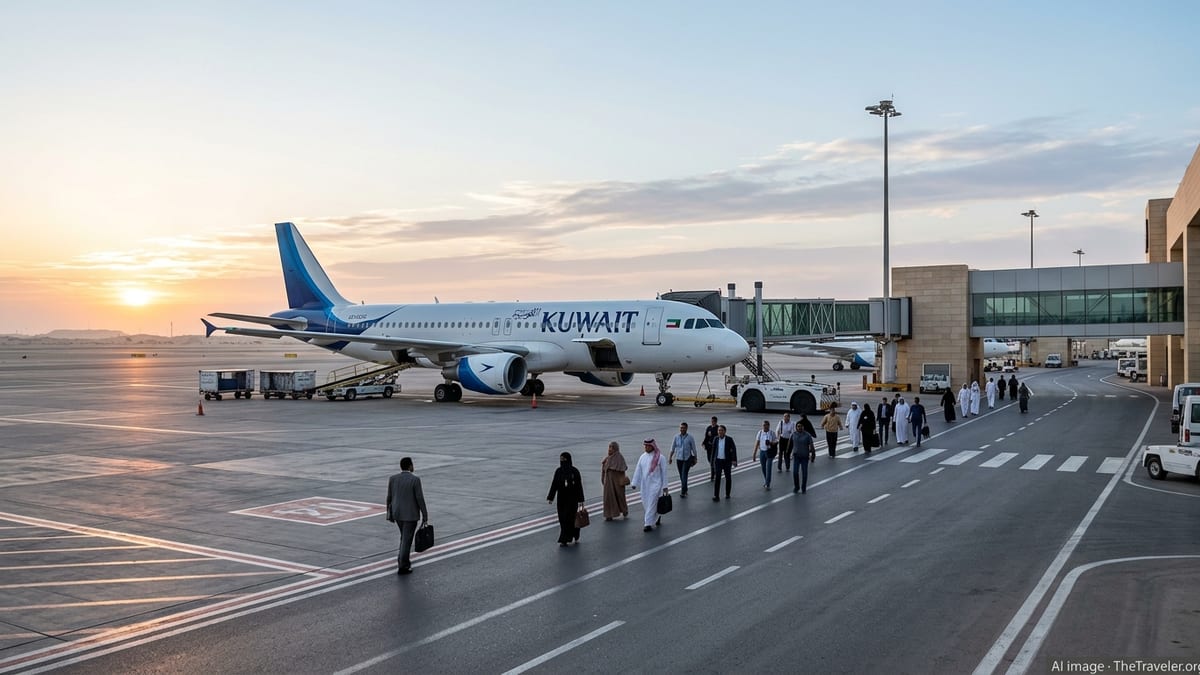
New Four-Times-Weekly Service via Dammam
According to publicly available schedule data and recent industry coverage, Kuwait Airways is restoring regular flights linking Kuwait City and Cairo, with services routed through Dammam in Saudi Arabia. The reinstated operation is structured as four weekly frequencies, positioning Dammam as an intermediate stop and transit point for passengers traveling between Kuwait and Egypt’s capital.
The routing reflects a broader regional pattern of airlines using Saudi gateways to maintain network links while aviation in the Gulf continues to rebalance after recent disruptions. The renewed Kuwait–Dammam–Cairo pattern is expected to appeal to both point-to-point travelers and those connecting onwards from each hub.
Initial schedule information indicates that the four weekly rotations are designed to cover high-demand days for labor traffic, family visits, and business travel, particularly between Egypt and the Gulf. Travelers monitoring flight tracking services and airline timetables are already seeing the new pattern reflected in upcoming departures.
Why Kuwait, Dammam and Cairo Matter in the Regional Network
Kuwait City, Dammam and Cairo are three of the busiest nodes in Middle East–North Africa travel, with large expatriate communities, strong business links, and significant religious and leisure traffic. Cairo remains one of the primary origin and destination markets for Egyptian nationals working across the Gulf, while Kuwait hosts a sizable Egyptian community that relies on frequent air links for family visits and seasonal travel.
Dammam, served by King Fahd International Airport, functions as the main international gateway for Saudi Arabia’s oil-rich Eastern Province. The airport’s role as a transfer and relief hub has grown whenever other regional airports experience constraints, and additional Kuwait Airways services through Dammam to Cairo further underline that position. For passengers, the new configuration effectively adds another pathway through the eastern Gulf to reach Egypt.
By structuring the route via Dammam rather than as a simple non-stop corridor, Kuwait Airways is also tapping into latent demand between Saudi Arabia’s Eastern Province and Egypt. Travelers based in Dammam or nearby cities gain another option to reach Cairo on a full-service carrier, in addition to flights already operated by other regional and Egyptian airlines.
What Travelers Should Expect From the Reintroduced Route
Early schedule filings and booking engine displays suggest that flight timings on the Kuwait–Dammam–Cairo legs are being calibrated to suit both resident travelers and regional connections. Passengers should expect departures that align with traditional peak waves for Gulf–Egypt flights, often in the late evening or early morning windows when airport congestion is lower and onward connectivity is easier.
Onboard, Kuwait Airways typically deploys narrow-body aircraft on short- to medium-haul regional routes such as these, with a two-class configuration including an economy cabin and a smaller business section. While exact aircraft assignments may vary, travelers can anticipate standard full-service inclusions such as checked baggage allowances in most fare categories, complimentary meals, and in-flight entertainment on many aircraft types.
Because the service operates only four times a week, flexibility will be more limited than on daily routes. Travelers planning peak-season trips around religious holidays, school breaks, or summer leave may need to book earlier than usual to secure preferred dates, especially on the Kuwait–Cairo segments that tend to see strong demand from expatriate workers and their families.
Impact on Tourism and Business Travel Between the Gulf and Egypt
The reintroduction of a structured Kuwait–Dammam–Cairo operation is expected to support both leisure and corporate travel flows. Egypt has long been a popular holiday and homecoming destination for residents of Kuwait and Saudi Arabia, while Cairo remains a major business and government center. Additional capacity on key days of the week helps smooth demand spikes and can ease pressure on other carriers serving the same corridor.
Tourism stakeholders in Egypt and the Gulf are likely to see benefits from more consistent seat availability as Kuwait Airways adds back frequencies. For Kuwait-based tour operators and travel agencies, the route offers another tool when packaging city breaks in Cairo, family visits to Egypt’s Nile Valley, or combined Gulf–Egypt itineraries that include stopovers in Kuwait or Dammam.
For business travelers, the ability to route via Dammam can simplify travel plans that involve meetings in both Saudi Arabia and Egypt on the same trip. With careful scheduling, passengers may be able to structure multi-stop journeys that begin in Kuwait, include work in the Eastern Province, and conclude in Cairo, all on a single ticket with coordinated timings.
Booking Tips, Flexibility and Operational Uncertainty
Recent months have highlighted how quickly operating conditions can shift across Middle Eastern airspace, and Kuwait Airways has been among the carriers adjusting schedules, rerouting flights, and using alternative gateways when needed. Publicly available information, including passenger reports and online notices, indicates that the airline has at times relied on Dammam as a temporary operating base for selected services when Kuwait operations were constrained.
Travelers considering the reinstated Cairo flights via Dammam are therefore advised to pay close attention to the most current schedules at the time of booking and again in the days leading up to departure. Published coverage and passenger experiences suggest that last-minute time changes, aircraft swaps, or reroutings remain possible in the region, particularly when geopolitical or airspace issues arise.
Flexible fares, generous change policies, and comprehensive travel insurance can help mitigate the impact of unexpected disruption. Passengers booking the Kuwait–Dammam–Cairo legs may want to allow additional time for connections, avoid tight onward itineraries on separate tickets, and keep contact details updated in airline profiles so that any schedule changes are communicated promptly.
For now, the four-times-weekly operation underscores Kuwait Airways’ intention to keep a firm foothold in the high-demand Gulf–Egypt market while leveraging Dammam’s growing role as a regional connector. Travelers watching the evolving maps of Middle East air routes will see this reinstated service as another sign that airlines are actively re-stitching the region’s complex network of flights, one key corridor at a time.