

More news on this day
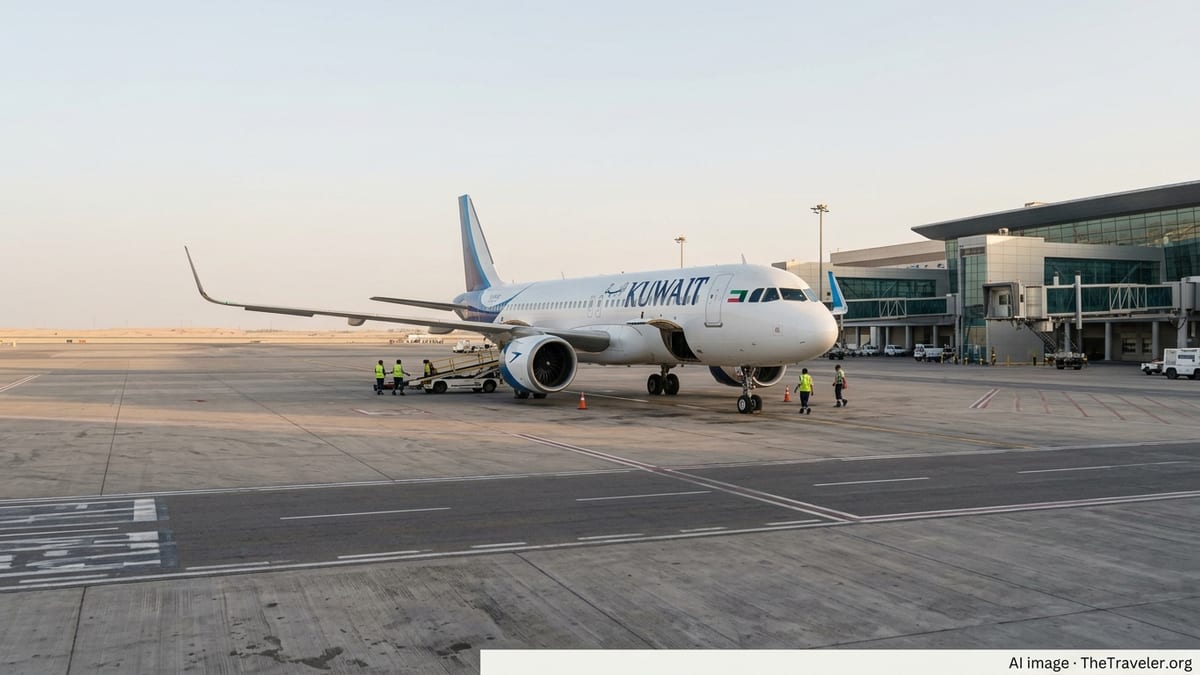
Kuwait Airways is preparing to launch a new nonstop service between Kuwait City and Moscow operated by Airbus A320neo aircraft, a move that revives direct Gulf–Russia connectivity and underlines the carrier’s focus on fuel-efficient growth across its short and medium-haul network.
Get the latest news straight to your inbox!
New Gulf–Russia Link Targets Growing Demand
The planned Kuwait–Moscow service marks Kuwait Airways’ return to the Russian capital after several years without a direct connection, according to recent schedule disclosures and published industry coverage. The route will connect Kuwait International Airport with one of Moscow’s main airports, offering a fresh option for business travelers, leisure passengers and transit traffic between the Gulf and Russia.
Publicly available timetable data indicates that the airline intends to operate multiple weekly frequencies, designed to capture both point-to-point demand and onward connections across the Middle East, Indian subcontinent and Asia. The timing positions Kuwait City as a convenient intermediate hub for passengers who previously relied on longer routings through other Gulf gateways.
A direct Kuwait–Moscow link also comes at a moment when carriers across the region are reassessing their networks in response to shifting travel flows between Russia, the Gulf and beyond. The new route is expected to complement existing services offered by rival Gulf airlines rather than compete solely on trunk city pairs, adding another layer of capacity to a market that has seen periodic reductions and restarts in recent years.
Industry analysts note that the reintroduction of a Kuwait–Russia connection reflects a broader pattern of airlines selectively rebuilding secondary long narrowbody routes where demand has proven resilient, even as widebody deployment remains concentrated on the busiest hubs.
A320neo at the Center of Kuwait Airways’ Fleet Strategy
The Kuwait–Moscow flights will be operated by Kuwait Airways’ Airbus A320neo aircraft, highlighting the importance of the type in the carrier’s single-aisle strategy. The airline has been phasing in A320neo family jets as part of a multi-year fleet renewal program aimed at improving fuel burn, emissions performance and passenger comfort compared with older narrowbody models.
Airbus documentation shows that the A320neo delivers a double-digit reduction in fuel consumption versus previous-generation A320 family aircraft, primarily through new-generation engines and aerodynamic refinements. This efficiency profile is particularly critical on medium-haul sectors such as Kuwait–Moscow, where airlines seek to balance operating cost, range and capacity without moving to larger widebody equipment.
Kuwait Airways’ A320neo fleet is configured with a two-class layout that includes a dedicated business cabin and an economy section tailored to regional and medium-haul demand. For the Moscow route, the cabin product positions the carrier to appeal to both corporate travelers and price-sensitive leisure passengers while keeping unit costs competitive.
The airline’s emphasis on the A320neo also aligns with its broader Airbus-focused renewal plan, which includes A321neo and A330neo aircraft on other parts of the network. Using the same narrowbody family for a range of medium-haul missions is expected to simplify crew training, maintenance and operational planning.
Reigniting Gulf–Russia Travel and Transit Flows
The Kuwait–Moscow relaunch is poised to reinforce the Gulf’s role as a connective bridge between Russia and markets in South Asia, Southeast Asia and the Middle East. Kuwait Airways’ network structure enables passengers from Moscow to connect via Kuwait to destinations such as the Indian subcontinent, select African points and other Gulf cities without backtracking through more congested hubs.
Travel trade reports indicate that outbound Russian demand toward warm-weather destinations and shopping-focused city breaks has remained a consistent driver of traffic for Gulf carriers. By adding Kuwait as an additional access point, the new route may spread flows more evenly across the region’s hubs while offering travelers differentiated schedules, fares and connection options.
For Kuwait, the service enhances the country’s ambition to grow as an origin-and-destination market rather than serving solely as a transfer point. Increased connectivity to major global cities is seen in publicly available policy documents and aviation plans as one of the levers to diversify the national economy and support tourism, retail and services.
Regional observers suggest that a stable Kuwait–Moscow operation could also open the door to deeper bilateral tourism initiatives and coordinated marketing campaigns across both markets, particularly if load factors and forward bookings demonstrate sustained interest beyond initial launch demand.
Efficiency Gains Support Sustainability and Cost Control
Deploying the A320neo on the Kuwait–Moscow route underscores how airlines are using new-technology narrowbodies to address both environmental targets and bottom-line pressures. Manufacturer data and independent assessments highlight that the A320neo family can cut fuel burn and associated carbon emissions by around one fifth compared with older designs of similar size, depending on configuration and operating profile.
On a medium-haul mission such as Kuwait–Moscow, these savings translate into lower operating costs per seat, giving Kuwait Airways more flexibility in pricing and capacity decisions. The reduced fuel burn also supports emerging regulatory and voluntary frameworks that encourage airlines to minimize emissions and prepare for more stringent environmental requirements in the coming years.
The A320neo’s noise footprint, advanced cabin air systems and modern interiors provide additional benefits for both passengers and airports. Quieter departures and arrivals can be an asset at noise-sensitive airports, while updated cabins with modern lighting and in-flight entertainment help airlines compete on passenger experience even when operating smaller-gauge aircraft.
Publicly available fleet information indicates that Kuwait Airways has been progressively shifting flying hours from older narrowbody models to its A320neo family, which may further amplify the efficiency and sustainability gains associated with medium-haul routes such as Moscow.
Positioning Kuwait International Airport as a Growing Hub
The new Kuwait–Moscow service dovetails with longer-term efforts to expand capacity and modernize infrastructure at Kuwait International Airport. Airport planning documents and published analyses describe ongoing terminal projects intended to increase throughput and improve the passenger experience as Kuwait targets higher traffic volumes over the next decade.
While some elements of the airport expansion have faced delays, the overall trajectory points toward a more capable hub handling a broader mix of regional and intercontinental services. Additional medium-haul links such as Moscow are viewed by aviation observers as stepping stones that build connectivity and support the case for further investment.
As Kuwait Airways adds routes served by efficient narrowbodies like the A320neo, the airline can incrementally widen its network without the step-change in capacity associated with deploying larger aircraft. This measured approach may help match supply with demand more closely, particularly on markets that are still maturing or recovering from recent volatility.
The Kuwait–Moscow launch therefore serves not only as a new city pair on Kuwait Airways’ map but also as a signal of the carrier’s broader strategy: leveraging next-generation aircraft to carve out a defined role in Gulf connectivity, balancing cost control with network expansion and positioning Kuwait City as an increasingly relevant hub for travel between Russia, the Gulf and beyond.