

More news on this day
New flight capacity from Kuwait Airways, Saudia and EgyptAir into Cairo and Egypt’s Red Sea coast is helping power a strong rebound in visitor numbers from Germany and Saudi Arabia, strengthening the country’s position as a regional tourism hub.
Get the latest news straight to your inbox!
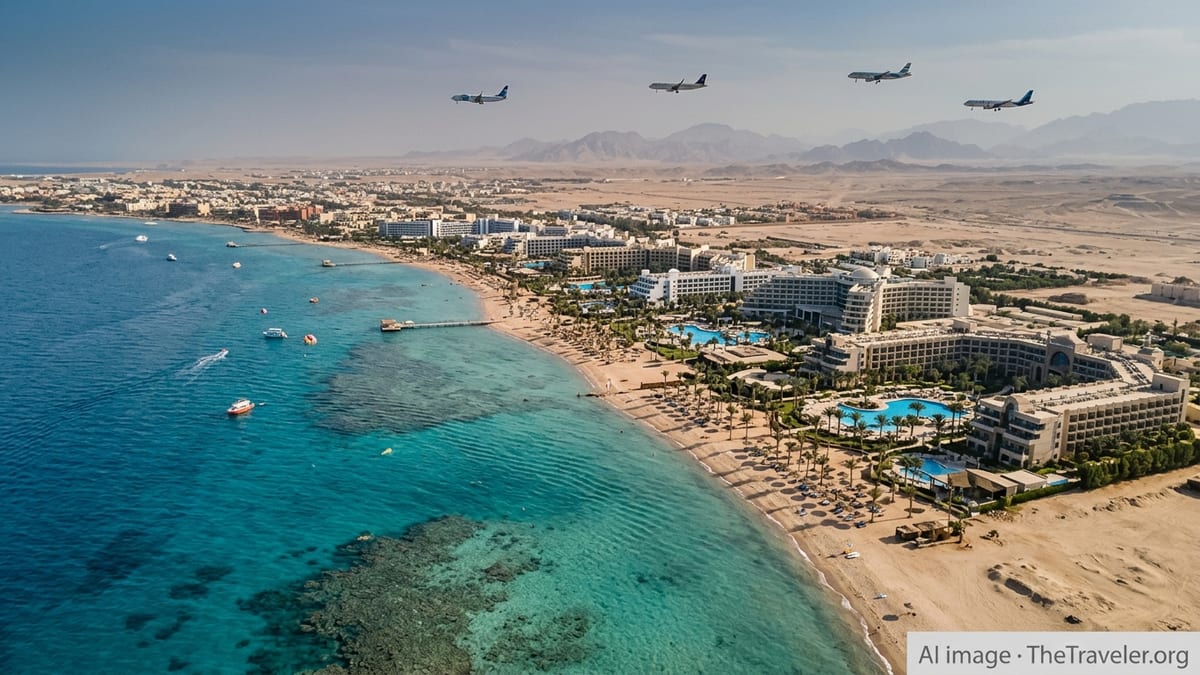
Airlines Add Capacity Into Cairo and Red Sea Gateways
Publicly available schedules show that Kuwait Airways, Saudia and EgyptAir have all been increasing service on key routes into Egypt, particularly Cairo and popular Red Sea resorts. Multiple carriers now operate the busy Kuwait City to Cairo corridor, with Kuwait Airways competing alongside EgyptAir and several regional rivals, underpinning strong two-way traffic between Egypt and the Gulf.
Recent announcements indicate that Kuwait Airways is further deepening its Egypt network with new services into secondary Egyptian gateways such as Sphinx International Airport near Cairo, broadening access for leisure and visiting‑friends‑and‑relatives traffic from the Gulf. Industry analysts note that this expansion comes as Kuwait prepares for a wider aviation build‑out supported by new airport infrastructure.
Saudia has also focused on strengthening Egypt links as part of a broader Red Sea tourism strategy, supported by Saudi Arabia’s own coastal developments. Increased frequencies on Jeddah and Riyadh services to Cairo, as well as flights to Red Sea destinations, are helping to funnel Saudi holidaymakers into Egyptian beach resorts and cultural circuits.
EgyptAir, for its part, has been adding capacity across its medium‑haul network with new aircraft and schedule adjustments that reinforce Cairo’s role as a hub for both European and Gulf markets. Industry data points to more seats into Hurghada and Sharm el‑Sheikh, key entry points for sun‑and‑sea tourism, aligning the flag carrier’s strategy with Egypt’s broader goal of lifting visitor arrivals.
German and Saudi Travelers Lead Egypt’s Demand Recovery
Tourism statistics for 2023 and 2024 highlight Germany and Saudi Arabia among the top source markets for inbound visitors to Egypt. Market analyses report that German travelers were the single largest group of foreign tourists, with arrivals from Germany approaching or exceeding 1.9 million in 2023 and remaining strong through 2024.
Studies of Egypt’s tourism performance show that total arrivals in 2024 reached roughly 15.7 to 16 million visitors, with Germany, Russia, Saudi Arabia, the United Kingdom and Poland accounting for a significant share of that volume. Within this mix, Germany and Saudi Arabia are consistently identified as key contributors to growth, particularly for Red Sea beach destinations.
The Red Sea governorate and resort belt, including Hurghada and Sharm el‑Sheikh, has become a focal point of this demand. Research into regional tourism flows indicates that the Red Sea resorts hosted millions of beach tourists in 2023, with German visitors ranking among the leading European nationalities and Saudis providing a growing stream of short‑haul leisure traffic.
Egyptian tourism bodies have repeatedly emphasized the importance of the German market at major industry events, while also targeting Saudi Arabia and other Gulf states with dedicated marketing campaigns. The alignment of airline capacity with these priority markets is viewed by analysts as a central factor behind recent record‑setting tourism figures.
Cairo Hub Feeds Cultural Circuits and Coastal Escapes
Cairo’s status as Egypt’s primary aviation and tourism hub is being reinforced by new and expanded airline services. Timetable data show dense connectivity from Gulf cities such as Kuwait City, Riyadh and Jeddah into Cairo International Airport, enabling convenient two‑center holidays that combine the capital’s cultural attractions with Red Sea beach stays.
Travel trade reports describe growing interest in itineraries that route German and Saudi travelers through Cairo for visits to the pyramids, museums and historic neighborhoods before onward travel to Hurghada, Sharm el‑Sheikh or emerging Red Sea destinations. EgyptAir’s role as a connector, alongside services from Saudia and Kuwait Airways, is helping to smooth these multi‑stop journeys.
Cairo’s expanding hotel inventory and upgraded attractions, including new museum projects, are also playing into this pattern, encouraging visitors who previously flew directly into coastal airports to add time in the capital. Analysts note that this shift spreads tourism spending more evenly between inland and coastal regions while reinforcing Cairo’s long‑term role as a regional gateway.
The combination of strong origin markets, diversified air access and improving on‑the‑ground infrastructure has positioned Cairo to capture a larger share of high‑value cultural tourism even as the Red Sea continues to draw mass‑market beach travelers from Europe and the Gulf.
Red Sea Resorts Absorb Capacity and Signal Confidence
Red Sea resorts remain the backbone of Egypt’s tourism economy, and increased airline capacity is flowing directly into these destinations. Market research suggests that Red Sea resorts have been contributing around 40 percent of Egypt’s tourism revenue, with Hurghada and Sharm el‑Sheikh welcoming close to nine million beach tourists in 2023 alone.
Despite occasional safety incidents in the Red Sea in recent years, tourism analyses indicate that overall visitor numbers to the coast continued to rise through 2023 and 2024. Industry observers view the sustained capacity commitments from Kuwait Airways, Saudia and EgyptAir as a signal of confidence in the long‑term appeal of Egypt’s coastal product.
Travel booking patterns show that German visitors, who are traditionally loyal to Red Sea diving and all‑inclusive beach holidays, have been returning in large numbers, while Saudi travelers are increasingly opting for short breaks and family stays at Egyptian resorts. The combination of established European demand and growing Gulf interest is helping hotels maintain high occupancy levels outside peak European holiday periods.
Tourism analysts also point to parallel investment in resort upgrades, sustainability measures and new experiences along the Red Sea coast. These improvements, coupled with convenient direct and connecting flights from the Gulf and Europe, are expected to support further growth in visitor numbers over the coming seasons.
Outlook: Capacity Expansion Supports Ambitious Tourism Targets
Economic and tourism policy documents for Egypt outline ambitious targets to push annual visitor numbers beyond recent records, with projections for the current fiscal period suggesting potential arrivals of around 17 million tourists. The continued expansion of airline networks from key source markets is regarded as essential to achieving those goals.
By tightening links between Kuwait, Saudi Arabia, Germany and Egypt’s main gateways, Kuwait Airways, Saudia and EgyptAir are effectively underwriting the next phase of the country’s tourism recovery. Their schedules are giving tour operators and independent travelers alike more flexibility on dates, price points and routing options.
Analysts expect competition on these routes to remain intense, supporting relatively attractive fares into Cairo and the Red Sea even as global aviation costs fluctuate. That, in turn, could keep Egypt among the most competitive medium‑haul winter‑sun and cultural destinations for German travelers, while consolidating its role as a favored short‑break option for Saudi and wider Gulf visitors.
With airlines signaling confidence through multi‑year fleet and route planning, and with tourism demand from Europe and the Gulf rebounding strongly, Egypt’s airports, hotels and coastal resorts appear poised to benefit from another robust season as German and Saudi travelers return in force.