

More news on this day
Regional airspace alerts, geopolitical flare ups and shifting airline strategies have reshaped Gulf skies in the past two years, yet Kuwait’s aviation sector is working to turn turbulence into a catalyst for new routes and renewed hub ambitions.
Get the latest news straight to your inbox!
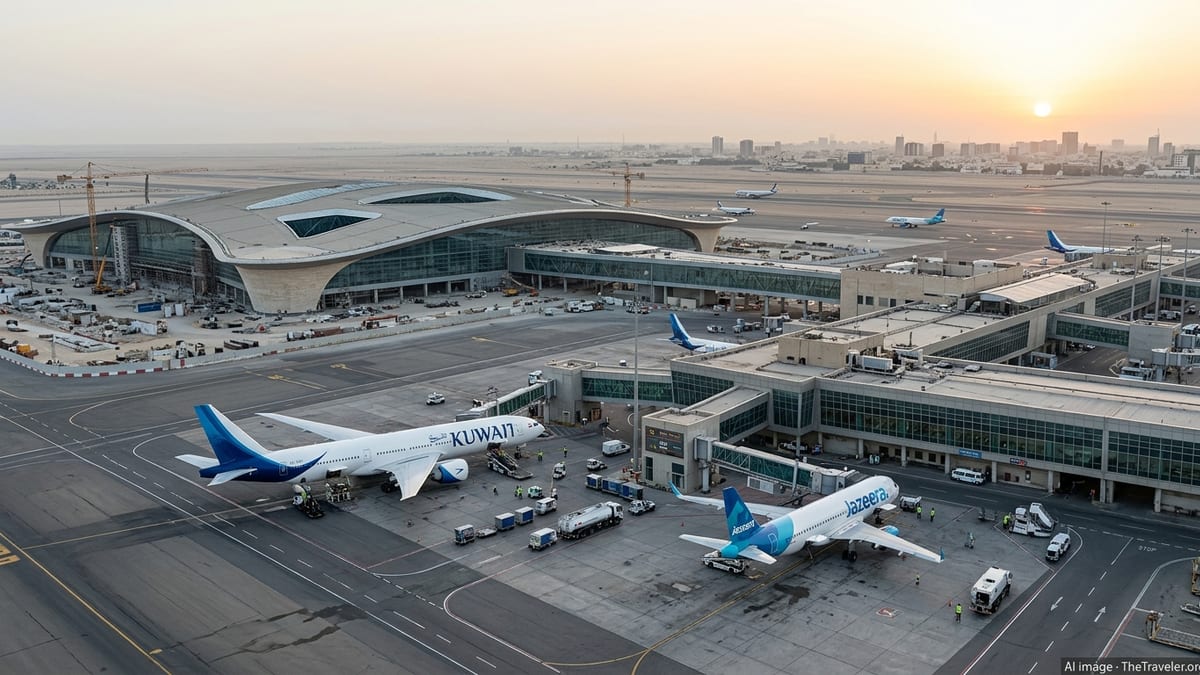
From Stagnation Risk To Strategic Reset
For much of the past decade, Kuwait International Airport risked falling behind its Gulf neighbours as larger hubs in Dubai, Doha, Riyadh and Abu Dhabi captured the lion’s share of long haul growth. Passenger traffic rebounded strongly after the pandemic, reaching about 15.6 million in 2023, but then slipped marginally to around 15.4 million in 2024, according to publicly available airport statistics. Analysts noted that while this decline was modest in absolute terms, it contrasted with double digit growth at rival hubs and underlined the urgency for Kuwait to rethink its aviation strategy.
At the same time, several foreign airlines pared back or exited the Kuwait market altogether, citing aircraft allocation priorities, fleet constraints and comparatively weaker yields. Coverage across regional business outlets indicates that around a dozen international carriers have withdrawn services over the past two to three years, including some major European names. This retrenchment initially raised concerns that Kuwait would become a peripheral stop in the Gulf aviation map.
Yet the same pressures that exposed structural weaknesses have also accelerated a reset. With competition for transfer traffic intensifying, Kuwait’s policymakers have leaned more heavily on homegrown carriers and network tweaks, while airport planners pushed ahead with capacity projects aimed at reshaping the country’s position as a secondary hub and origin and destination gateway.
Published data from Kuwait’s Directorate General of Civil Aviation and regional industry groups shows that aircraft movements and cargo volumes have held relatively firm despite softer passenger numbers, suggesting that airlines are recalibrating capacity rather than abandoning the market. This has provided a foundation for Kuwait’s carriers to step into gaps left by departing operators.
Home Carriers Move To Fill Route Gaps
Kuwait Airways and low cost operator Jazeera Airways have emerged as central players in the country’s response to regional upheaval. Over the past two years, both airlines have publicised new and resumed routes across South Asia, Central Asia and secondary European cities, positioning Kuwait as a practical alternative transit point when traditional corridors are disrupted. Route announcements reported in trade publications highlight increased links to destinations in India, Pakistan and Bangladesh, as well as seasonal and niche links into the Caucasus and Eastern Europe.
Network maps released by the airlines show Kuwait Airways leaning into medium haul connectivity to Europe, North Africa and the Indian subcontinent, while Jazeera Airways focuses on cost sensitive flows between Gulf states and labour and leisure markets in South and Central Asia. As major global carriers trimmed or temporarily suspended Kuwait services, these home airlines added frequencies on high demand sectors and introduced new links designed to capture displaced passengers seeking reliable options that avoid more congested hubs.
Industry commentary indicates that Kuwait’s carriers have also quietly used regional airspace volatility to their advantage. During periods when parts of Gulf and Levant skies were subject to advisories or temporary closures, schedule data shows Kuwait based flights adjusting routings and departure times to maintain connectivity to key markets, sometimes with longer flight paths but with fewer outright cancellations. This operational continuity reinforced the role of Kuwait City as a stable origin point even as transfer flows fluctuated.
Crucially, the new routes are not confined to short haul sectors. Public timetables and recent expansion plans point to renewed emphasis on medium haul links to Europe and Africa that can be sustained once regional tensions ease. By entering underserved city pairs and timing departures to connect with busy South Asian inbound waves, Kuwait’s airlines are experimenting with a more agile hub model that depends on schedule design as much as sheer scale.
Turning Regional Airspace Turbulence Into Opportunity
Geopolitical tensions around the Red Sea, the eastern Mediterranean and parts of the Gulf have repeatedly forced airlines to re evaluate routings since late 2023. Airspace notices and tracking data documented periods when carriers detoured around conflict zones, accepted longer flight times or consolidated services. While Kuwait’s own airspace was not always at the centre of these events, its location between the northern Gulf and key east west corridors allowed it to serve as a useful waypoint and backup routing option.
According to published coverage of flight disruptions in mid 2025, some carriers temporarily suspended operations into parts of the Gulf, while others rerouted services to keep clear of higher risk areas. During these windows, Kuwait’s ability to maintain outbound operations on adjusted tracks created an opening to market itself as a relatively predictable point for origin and destination travel to South Asia and selected European destinations.
Travel industry reports suggest that corporate and expatriate travellers increasingly looked for routings that balanced safety perceptions, visa convenience and schedule reliability. Kuwait’s simplified entry rules for certain nationalities and the availability of competitive fares on Jazeera Airways and Kuwait Airways allowed the country to capture part of this redirected demand, particularly on labour and visiting friends and relatives routes.
While this surge is not on the same scale as the boom at mega hubs, the incremental traffic has helped stabilise volumes at a time when some foreign airlines remain cautious about returning. It has also demonstrated that Kuwait can benefit from having multiple medium sized carrier bases rather than relying entirely on one dominant national airline.
New Terminal Capacity And The Push For A Smarter Hub
Underpinning Kuwait’s aviation reset is a significant airport expansion. Construction of the new Terminal 2, a multibillion dollar project led by an international contractor, is intended to triple the airport’s nominal capacity from around 13 million to an initial 25 million passengers annually, with some projections suggesting an eventual range closer to 50 million. Industry briefings describe T2 as a key plank in Kuwait’s effort to reposition itself as a modern, efficient hub capable of handling sustained growth in transfer and origin and destination traffic.
Although the terminal’s completion has been delayed beyond its original target date, recent local reporting indicates that work has progressed and that authorities see the facility as central to regaining competitiveness within the Gulf. Architectural previews and project updates point to larger check in halls, expanded contact stands and improved transfer flows, which could help airlines design tighter connection banks and more attractive schedules once it opens.
In the meantime, incremental upgrades at existing facilities and operational planning have been crucial in handling peak flows. Coverage of the 2026 New Year holiday period reported more than 150,000 passengers moving through Kuwait International Airport over a single multi day peak, with more than 1,000 flights handled through a combination of staffing adjustments and coordination among airport stakeholders. These stress tests offer a glimpse of how the airport could manage higher volumes once T2 comes online.
Capacity on the ground also supports strategic ambitions in the air. With global passenger numbers surpassing pre pandemic levels and demand in the Middle East projected to keep rising, Kuwait’s planners are positioning the new terminal as an asset that allows airlines to commit additional aircraft and open longer haul routes without being constrained by congestion.
Competitive Pressures And The Road Ahead
Despite these moves, Kuwait still faces formidable competition. Recent traffic rankings compiled by regional aviation observers place Kuwait International Airport at the bottom of Gulf hubs in terms of growth momentum, with a slight decline in passengers in early 2025 even as airports in Dubai, Riyadh, Jeddah, Doha and Abu Dhabi post robust increases. The challenge is not merely to add capacity, but to differentiate the hub and sustain a pipeline of routes that can thrive alongside larger competitors.
Part of the answer lies in leveraging Kuwait’s specific market profile. A sizeable expatriate workforce, strong ties to South and Southeast Asia and a growing appetite for leisure travel among Kuwaiti residents create opportunities for point to point services and smart connections that do not always require massive transfer banks. Jazeera Airways’ focus on cost conscious travellers and Kuwait Airways’ ability to offer full service options give the market a degree of segmentation that can appeal to different passenger segments.
Another element is regulatory and policy reform. Commentaries in regional business media have highlighted the role that transparent slot allocation, efficient ground handling and streamlined passenger processing play in making a smaller hub attractive to airlines. Moves to simplify transit procedures, expand e visa eligibility and modernise airport services could amplify the impact of T2 and give Kuwait’s carriers more flexibility to design creative routings that take advantage of emerging demand.
As global aviation enters a steadier growth phase beyond the post pandemic rebound, Kuwait’s experience illustrates how even a relatively small Gulf market can turn regional chaos into renewed opportunity. By using airspace disruptions as a prompt to redesign networks, investing in terminal capacity and empowering local carriers to fill strategic gaps, Kuwait is attempting to convert short term turbulence into a longer term rebalancing of its place on the route map.