

More news on this day
Air passengers in and out of Kuwait are facing renewed disruption as Kuwait Airways and regional carrier Gulf Falcon cancel at least five key flights, cutting links to Geneva, New York, Bahrain and other important destinations amid the continued closure of Kuwaiti airspace and wider regional instability.
Get the latest news straight to your inbox!
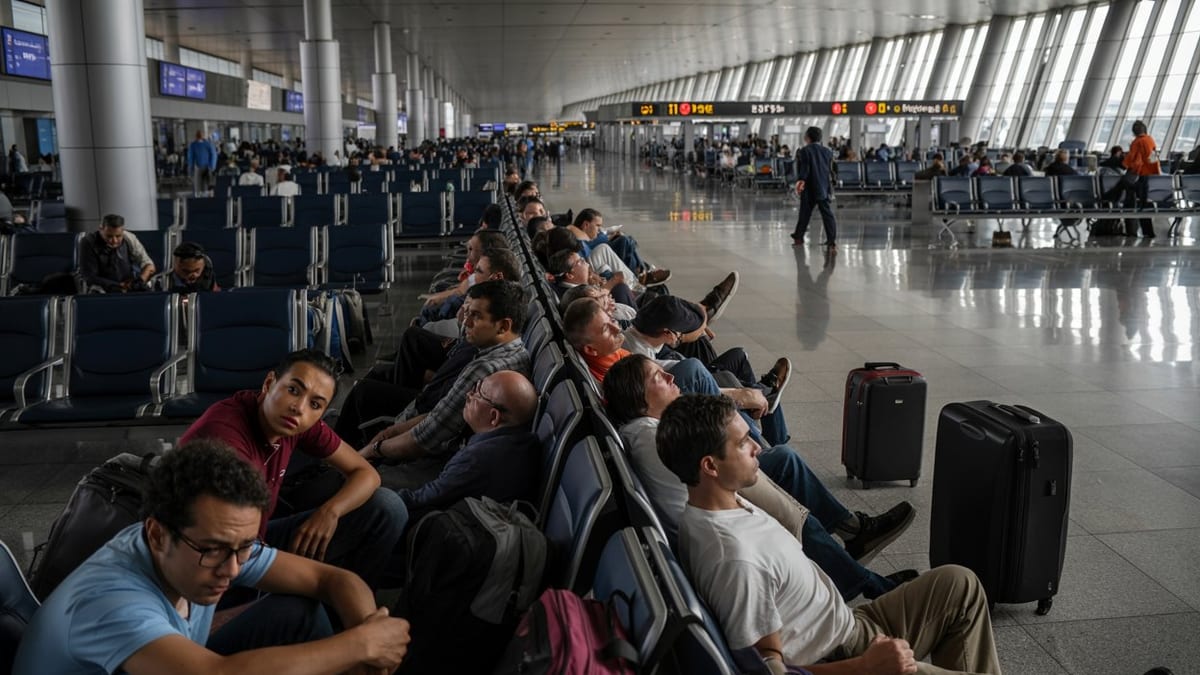
Image by Travel And Tour World
Fresh Cancellations Hit Kuwait’s Already Strained Air Network
Newly published schedules and traveler reports indicate that Kuwait Airways has withdrawn several long haul and regional services, including flights connecting Kuwait International Airport with Geneva and New York, while Gulf Falcon has axed short haul operations on routes linking Kuwait with Bahrain and neighboring Gulf hubs. The latest changes add to a wave of suspensions that began after Kuwaiti airspace was closed on 28 February 2026 in response to escalating regional tensions.
The most recent update points to at least five individual flight rotations being removed from sale or marked as canceled across the coming days. These include a Kuwait Airways service to Geneva, typically used by business travelers and international organizations, and an onward long haul connection to New York that relies on Kuwait as a key transit and origin point. On the regional side, Gulf Falcon flights feeding passengers between Kuwait and Bahrain have been pulled from timetables, further reducing connectivity across the northern Gulf.
Publicly available airport and airline information shows that these cancellations are not isolated schedule tweaks but part of a broader restructuring intended to cope with airspace closures, shifting routings around conflict zones, and uncertainty over when normal traffic levels can safely resume. With airlines operating fewer aircraft in and out of the region, even a handful of canceled rotations can translate into hundreds of disrupted journeys.
Travel industry analysts note that Kuwait’s position as both a destination and a transfer point amplifies the impact. Passengers bound for Europe or North America who would normally connect via Kuwait are now being forced to rebook through alternative hubs, while residents and expatriates in Kuwait face limited options to reach regional centers such as Bahrain and Doha on short notice.
Geneva and New York Passengers Confront Long Rebook Delays
The suspension of Kuwait Airways flights serving Geneva and New York is proving particularly disruptive for travelers with imminent departures. Geneva is a major gateway for diplomatic, humanitarian and financial traffic, and Kuwait’s connection has traditionally offered a convenient link for officials, aid workers and business passengers heading to and from the Gulf. With the route now interrupted, many are being rerouted through other European hubs, often involving longer travel times and tighter connection windows.
For New York bound traffic, the impact is even more pronounced. Kuwait Airways’ services to John F. Kennedy International Airport form one of the country’s principal direct links to the United States. According to published coverage and schedule data, affected passengers are being shifted onto alternative routings via partner or competing carriers, sometimes with overnight layovers in cities such as London, Frankfurt or Istanbul as capacity on remaining services tightens.
Travel forums and passenger accounts suggest that some customers only learned of their cancellations within a short window before departure, leaving limited time to organize new itineraries. In several cases, travelers report receiving app notifications or email updates indicating that their Kuwait to Geneva or Kuwait to New York segments had been removed, followed by instructions to contact customer service or their booking agent for rebooking options.
With demand for transatlantic and Europe bound seats still high, rebooking passengers from multiple canceled Kuwait flights is straining available capacity on neighboring carriers. This is leading to situations where travelers must accept significantly altered itineraries, depart several days earlier or later than planned, or switch airports within the same metropolitan area to find workable connections.
Regional Links to Bahrain and the Gulf Weaken Further
While long haul passengers face major schedule changes, the removal of Gulf Falcon flights on Kuwait to Bahrain and related Gulf routes is also having a notable effect on day to day mobility within the region. Bahrain serves as a key financial and transit hub, and frequent short haul flights typically allow business travelers and residents to move quickly between Kuwait and Manama for meetings, medical appointments or onward connections.
Operational updates circulating among regional travel agents indicate that multiple Kuwait to Bahrain rotations have been pulled from Gulf Falcon’s schedule over the coming days, with knock on effects for connecting itineraries to destinations in the wider Middle East and South Asia. Passengers who previously relied on a short hop to Bahrain to catch long haul services on other carriers are now being advised to route entirely through alternative hubs such as Doha, Dubai or Riyadh.
The combined reduction in Kuwait’s own capacity and in feed services from Gulf Falcon is creating what industry observers describe as a “thinning corridor” across the northern Gulf. Even when flights are still operating, reduced frequencies mean fewer same day options and less resilience when disruptions occur. For example, a traveler missing a morning connection from Kuwait to Bahrain may now have to wait until the following day to secure a comparable itinerary.
Businesses with frequent travel needs are responding by adjusting trip plans, shifting in person meetings to virtual formats where possible, or relocating some activities to more accessible cities. Travel managers report that employees are being encouraged to build extra buffer time into journeys that still touch Kuwait or Bahrain, in anticipation of last minute changes to flight status.
Passenger Options: Refunds, Vouchers and Complex Rebookings
As cancellations multiply, passenger attention is increasingly focused on what recourse is available. Publicly available information from Kuwait Airways and Gulf Falcon indicates a combination of refund, voucher and rebooking policies, often depending on the date of travel, the fare type and whether a ticket was purchased directly or via an intermediary. In many cases, airlines are waiving certain change fees for flights explicitly labeled as canceled in their systems.
In online discussion boards, travelers describe a patchwork of experiences when trying to secure refunds or alternative flights. Some report relatively smooth rebooking onto later dates or different routings at no extra cost, particularly when contacting airlines through dedicated call centers or in person sales offices. Others describe delays in reaching customer service, conflicting guidance between airline representatives and travel agencies, or uncertainty about how long refund processing will take.
Consumer advocates note that passenger rights vary by jurisdiction and by the specific origin and destination of a flight. For trips touching the European Union or the United Kingdom, established compensation and assistance rules can apply when cancellations are not caused by extraordinary circumstances. For purely regional itineraries, however, travelers often have to rely on airline specific policies, which may prioritize credits for future travel instead of cash refunds.
Advisories from travel industry bodies recommend that passengers keep detailed records of cancellation notices, booking confirmations and any additional expenses incurred, such as hotel stays or alternative transport, in case reimbursement becomes possible. They also suggest that travelers who purchased comprehensive travel insurance should review policy terms carefully, as some plans include coverage for delays and cancellations linked to airspace closures and security events, while others exclude them.
What Travelers Should Do Now if They Are Booked via Kuwait
With conditions changing rapidly, airlines and airport operators are urging passengers with upcoming trips involving Kuwait to monitor their bookings closely and prepare contingency plans. Industry guidance highlights the importance of checking flight status repeatedly in the days and hours before departure, as some services are being formally canceled only shortly before scheduled takeoff once operational constraints become clear.
Travel planners recommend that passengers holding tickets on Kuwait Airways or itineraries that rely on Gulf Falcon connections review alternative routing options in advance. This can include mapping out potential connections via other Gulf hubs, identifying nearby cities that might offer more reliable departure points, or discussing flexible arrangements with employers to adjust travel dates at short notice if necessary.
For those who have already had flights canceled, the most practical next step is typically to contact the original booking channel, whether that is the airline directly or an online travel agency. Industry practice suggests that bookings made through third party sites often need to be changed or refunded through the same intermediary, which can add an extra layer of communication but may also provide additional support options.
As the situation around Kuwaiti airspace and regional flight operations continues to evolve, passengers are being advised to remain alert to further schedule changes affecting long haul routes to Europe and North America as well as short haul links across the Gulf. While airlines are gradually refining their timetables in response to ongoing constraints, the latest round of cancellations from Kuwait Airways and Gulf Falcon underscores that travel plans touching Kuwait are likely to remain vulnerable to disruption in the near term.