

More news on this day
Travelers in and out of Kuwait are facing a fresh wave of disruption as Kuwait Airways and regional carrier Gulf Falcon cancel five more key flights, affecting links to Geneva, New York, Bahrain and other destinations amid the ongoing closure of Kuwaiti airspace and wider Gulf conflict-related restrictions.
Get the latest news straight to your inbox!
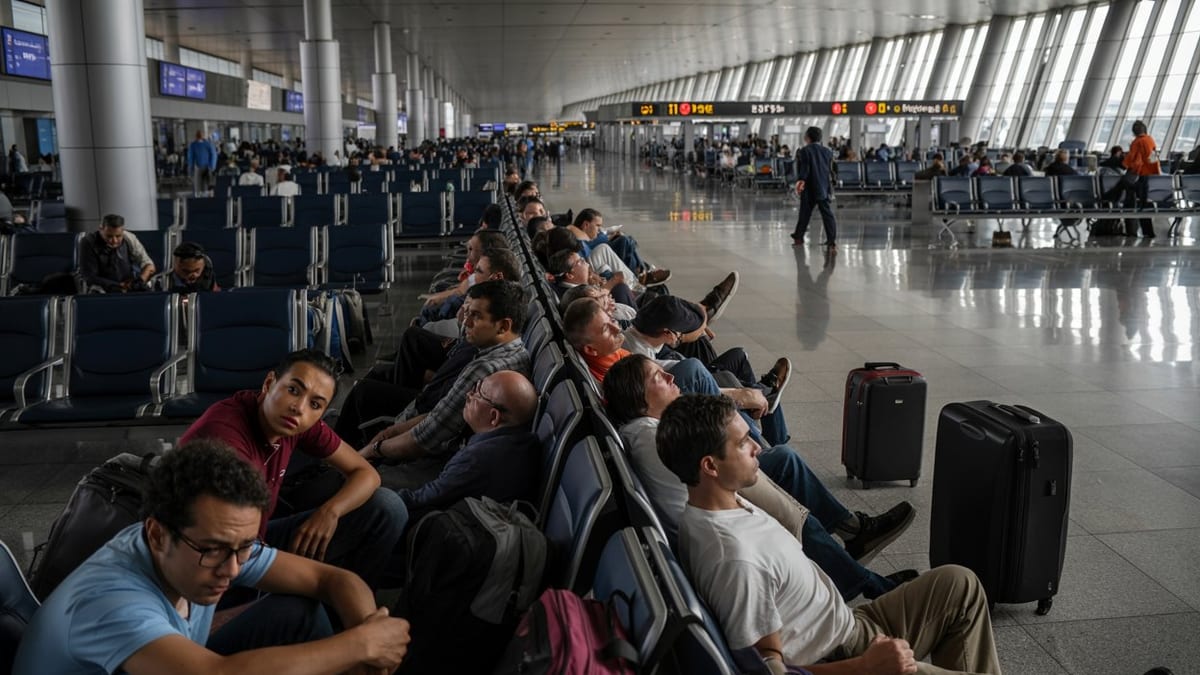
Image by travelandtourworld.com
New Cancellations Hit High-Demand Routes
According to flight-tracking data and updated schedules published over the weekend, Kuwait Airways has withdrawn services on select rotations to Geneva and New York, while Gulf Falcon has canceled additional short- and medium-haul flights that include Bahrain and other regional hubs. The newly affected services add to an already extensive list of suspensions that began after Kuwait closed its airspace in late February in response to escalating regional tensions and repeated missile and drone attacks.
Operational notices and publicly available timetables indicate that at least five individual flights on these routes have been pulled from the schedule in the latest update, with some categorized as outright cancellations and others shifted to “inactive” status for the coming days. These moves particularly impact long-haul connectivity between Kuwait and major Western gateways such as New York, as well as important intra-Gulf links used by business travelers and transit passengers.
While exact flight numbers vary by day, the pattern shows Kuwait Airways consolidating or suspending widebody services that would typically connect Kuwait with Europe and North America via Geneva and New York, while Gulf Falcon is scaling back regional frequencies, including Bahrain, to match the constrained airspace environment. For many passengers, the result is a mix of last-minute notifications, rebookings, and uncertainty about when regular operations will resume.
Industry analysts note that these cancellations come at a time when demand for outbound travel from the Gulf would normally be strengthening ahead of spring and early summer, making the latest adjustments particularly disruptive for both leisure and corporate itineraries.
Security Risks and Airspace Closures Continue to Drive Disruption
The latest flight cuts are closely linked to the broader regional security crisis that has reshaped aviation flows across the Middle East since late February. Reports from international news outlets and aviation intelligence groups describe a sustained campaign of missile and drone strikes affecting infrastructure in Kuwait and neighboring states, including incidents targeting Kuwait International Airport and its fuel and radar facilities.
Publicly available information from flight operations advisories shows that Kuwaiti airspace remains effectively closed for regular commercial traffic, forcing airlines to use complex routings, alternative gateways, or temporary groundings. Kuwait Airways, Gulf Falcon and other regional carriers are operating within a patchwork of restrictions that also encompass parts of the airspace over Iran, Iraq, Bahrain, and other Gulf countries, limiting available corridors and safe diversion options.
With risk thresholds elevated, airlines are required to balance safety considerations with the economic imperative to maintain at least some level of service. Analysts point out that long-haul routes such as Kuwait–New York, which cross multiple sensitive airspace zones and depend on reliable fuel supply and overflight permissions, are especially vulnerable to rapid schedule changes when the security picture deteriorates.
Aviation observers also highlight that even when alternative routings are technically possible, the added flight time, fuel burn, and air traffic congestion can make certain services temporarily uneconomical, contributing to the wave of cancellations now being seen in Kuwait and across the wider Gulf.
Passengers Face Uncertainty on Rebooking and Refunds
Alongside the operational challenges, the human impact of the latest cancellations is increasingly visible. Social media posts and traveler forums in recent days describe passengers receiving short-notice messages that their Kuwait Airways or Gulf Falcon flights have been canceled or placed under review, with limited clarity on rebooking options or timelines for refunds.
Public comments from affected travelers indicate a patchwork of responses, with some passengers successfully rebooked on alternative dates or rerouted via other Gulf or European hubs, while others report being offered refunds with processing times extending to several weeks. In some cases, customers say they are being advised to initiate cancellations themselves online, prompting concern about whether they will retain eligibility for full refunds or insurance coverage.
Consumer advocates note that conflict-related disruptions occupy a grey area in many standard fare rules and travel insurance policies. Depending on the ticket type and jurisdiction, passengers may be entitled to refunds when the airline cancels a flight, but compensation for additional expenses, missed connections, or extended hotel stays can be harder to obtain, particularly when cancellations are framed as resulting from extraordinary security circumstances.
Travel experts recommend that passengers holding tickets on the affected Kuwait–Geneva, Kuwait–New York, and Kuwait–Bahrain routes carefully document all communications from airlines and booking agents, monitor reservation status frequently, and review policy language related to war, civil unrest, and airspace closures before making changes themselves.
Workarounds via Neighboring Hubs and Land Transfers
With Kuwait’s primary airport operating under strict constraints, some travelers are turning to creative workarounds to continue their journeys. Published coverage from regional media and airline advisories describes growing use of alternative gateways in Saudi Arabia and other neighboring countries, with passengers combining limited air services and road transfers to bypass closed or heavily restricted airspace.
In several instances, Kuwait-based travelers seeking to reach Europe or North America are reported to be driving across the border to Saudi airports where more flights remain available, then connecting onward via Riyadh, Jeddah, or Dammam. Others are piecing together multi-stop itineraries through less affected hubs further afield, such as Istanbul or Cairo, though these options often involve longer travel times and higher fares.
Industry analysts caution that such workarounds are highly dynamic and depend on evolving security assessments, fuel availability, and regulatory decisions in multiple jurisdictions. As a result, what is feasible on one day may not be available the next, making forward planning difficult and increasing the importance of flexible bookings and real-time status checks for passengers originating in or transiting through Kuwait.
Travel management companies report that corporate clients are increasingly requesting contingency plans that avoid Kuwait and certain other Gulf gateways altogether for the duration of the crisis, further shifting demand to alternative routes and hubs and adding pressure to already busy airports elsewhere in the region.
What Travelers Should Do Now
Given the uncertainty around the duration of airspace restrictions and the likelihood of further schedule changes, travel specialists advise that anyone with upcoming trips involving Kuwait Airways, Gulf Falcon, or routes through Kuwait remain proactive. Checking bookings daily, signing up for airline notifications, and consulting with travel agents or corporate travel departments can help reduce the risk of arriving at the airport to find a flight canceled or significantly delayed.
Public advisories from governments and aviation bodies consistently recommend that travelers treat departure times and routings in the region as provisional, even when flights appear as confirmed in online systems. Passengers are encouraged to consider flexible or refundable tickets where possible, to verify whether their insurance policies cover disruptions linked to conflict, and to keep essential items in carry-on bags in case of extended layovers or unplanned overnight stays.
For those who must travel imminently between Kuwait and cities such as Geneva, New York, or Bahrain, experts suggest exploring routings that use alternative hubs while also tracking developments around the reopening of Kuwaiti airspace. Although there is no firm timeline for full restoration of services, industry observers expect airlines to gradually rebuild schedules once security conditions stabilize and operational constraints ease.
Until that point, the latest wave of cancellations by Kuwait Airways and Gulf Falcon underscores that travelers to and from Kuwait should be prepared for ongoing disruption, frequent changes to flight plans, and a heightened need for flexibility as the regional aviation map continues to shift.