

More news on this day
Kuwait has introduced a mandatory digital system requiring all travelers to declare cash holdings above 3,000 Kuwaiti dinars, about 9,700 US dollars, signaling a tougher stance on border financial controls and aligning the country with a growing global shift toward data-driven travel security.
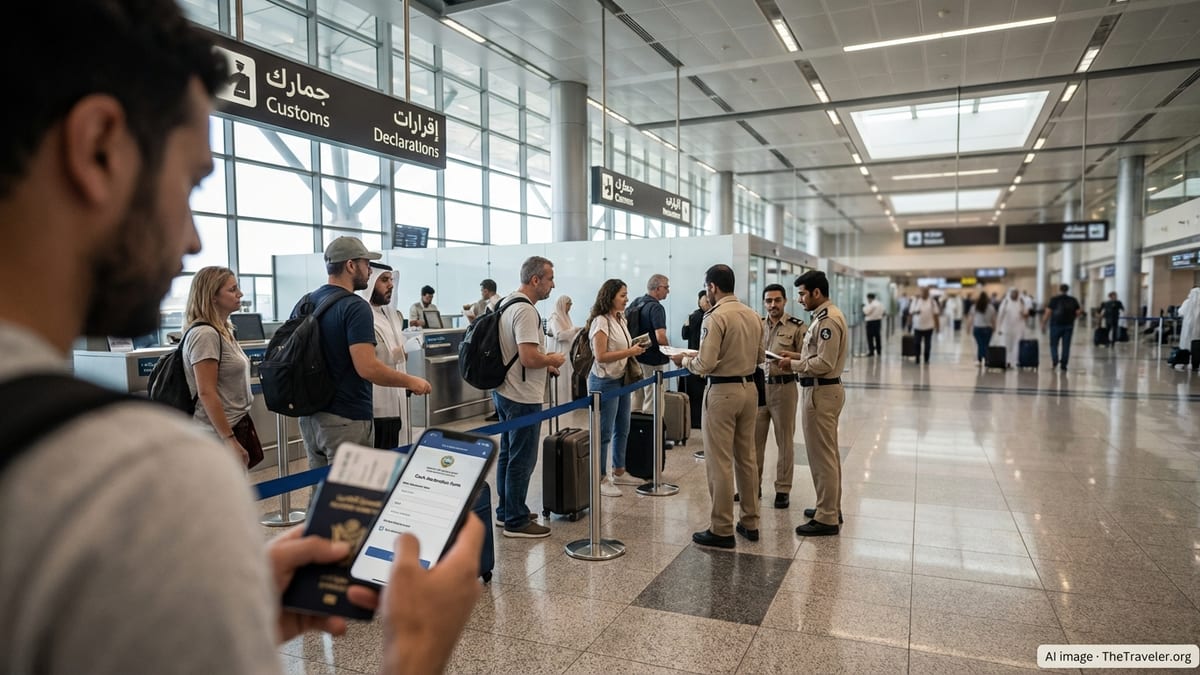
New Digital Cash Declaration Rule at Kuwaiti Borders
The General Administration of Customs in Kuwait this week launched a new regulation that obliges residents and visitors entering or leaving the country to declare any cash, negotiable instruments or precious metals valued above 3,000 Kuwaiti dinars through the state Sahel mobile application. The threshold is equivalent to roughly 9,700 US dollars, placing Kuwait in line with common international declaration limits at airports and land borders.
Officials describe the initiative as part of a broader effort to modernize border procedures and close gaps in the monitoring of cross border cash movements. By moving the declaration process into a centralized digital platform, authorities say they aim to strengthen the fight against money laundering, terrorist financing and other financial crimes that exploit physical currency flows.
The new system replaces paper based disclosure forms with an electronic declaration that can be completed before travel or while transiting ports of entry. Once submitted, the Sahel platform generates a digital notice that customs officers can review in real time, allowing them to focus inspections on higher risk travelers and transactions while expediting clearance for compliant passengers.
Travelers who fail to declare funds above the 3,000 dinar limit or who provide false information face potential fines, confiscation of undeclared cash and, in serious cases, prosecution under Kuwait’s anti money laundering framework, authorities have warned in public statements accompanying the rollout.
Part of a Global Trend Toward Data Driven Border Controls
Kuwait’s move comes as a growing number of governments tighten pre arrival screening and post arrival monitoring through digital declarations, advanced passenger information systems and biometric checks. From long standing cash disclosure regimes in the United States and European Union to newer digital entry platforms in the United Kingdom, Canada, Australia, Singapore and New Zealand, border agencies are increasingly relying on data collected before and during travel to identify risks.
Countries such as New Zealand have expanded nationwide digital arrival declarations that consolidate customs, immigration and biosecurity information into a single online form, replacing traditional paper cards and enabling earlier risk assessment. Similar pre travel authorisation and declaration tools are now embedded in electronic travel authorisation schemes and e visa systems used by governments including the United Kingdom and Canada.
Security specialists say these tools allow authorities to cross check passenger details and declared funds against watchlists and financial intelligence databases, while generating anonymised data that can be used to map routes, trends and emerging threats. The shift is also intended to reduce manual paperwork at airports, though critics argue it can shift the administrative burden onto travelers and airlines.
While specific fee levels, taxes or surcharges vary widely across jurisdictions, the common feature is a more comprehensive digital record of who is entering or leaving a country, what they are carrying and how often they travel, supported by automated alerts and analytics in the background.
How the Sahel App Changes the Traveler Experience
For passengers moving through Kuwaiti ports, the most immediate change is the expectation that any significant cash holdings will be reported electronically rather than declared verbally to an officer or via a paper form at a customs desk. Authorities say travelers can log into the Sahel application, select the dedicated funds disclosure service and enter the amount, currency and origin of the cash or assets they are transporting.
Once the declaration is filed, the system issues an electronic confirmation notice that can be presented on a smartphone or other device if requested by border personnel. Customs officials can retrieve the record directly from backend systems, cross checking it with passport data and travel history captured when the passenger’s documents are scanned on arrival or departure.
Officials in Kuwait emphasize that the Sahel based disclosure is available to both citizens and foreign nationals, including tourists transiting the country. The service is designed to be completed in advance of travel, which may be particularly useful for business travelers, expatriate workers and residents who routinely move funds between Kuwait and other financial centers in the Gulf and beyond.
Travel advisers in the region are recommending that passengers who expect to carry substantial cash review the latest customs guidance before departure and ensure that the Sahel application is installed and functioning on their devices. They note that travelers who are unfamiliar with the platform or who arrive without advance registration may face longer processing times during the initial adjustment period as officers verify compliance.
Balancing Financial Transparency and Privacy Concerns
The expansion of digital declaration and tracking tools has revived debate about how to balance border security and financial transparency with travelers’ expectations of privacy and data protection. Civil liberties advocates warn that the growing volume of personal and financial information collected at borders can be vulnerable to misuse if safeguards, clear retention limits and independent oversight are not firmly in place.
In Kuwait, customs officials have stressed that the new Sahel based cash disclosure service operates under existing financial crime and data protection laws, with information shared only with authorized agencies involved in enforcement and supervision. However, detailed public guidance on how long declarations will be stored, how they may be cross referenced with other government databases and what rights individuals have to access or correct their data remains limited.
Similar questions have been raised in other jurisdictions that have implemented tightly integrated border systems combining digital declarations, biometric verification and travel history databases. Privacy commissioners in several countries have urged governments to conduct formal impact assessments and to publish plain language explanations of how travel data is used, anonymised and ultimately deleted.
Supporters of Kuwait’s reform argue that digital declarations are less intrusive than extensive manual questioning at the border and that the focus on relatively high cash thresholds limits the impact on ordinary leisure travelers. They contend that those carrying large sums of physical currency should reasonably expect additional scrutiny, given international standards targeting tax evasion and illicit finance.
What Travelers Should Do Now
Travel industry specialists are advising passengers planning trips to or from Kuwait to factor the new requirements into their pre departure checklists, particularly if they expect to carry significant amounts of cash, bank drafts or high value precious metals. They recommend checking the exact value of holdings against the 3,000 dinar threshold shortly before travel, taking into account exchange rate movements that could tip a traveler above the limit.
Passengers should ensure they have access to the Sahel app, a stable internet connection either before leaving or on arrival, and sufficient time to complete the declaration accurately. Experts stress that it is better to over declare than to risk falling foul of customs officers who may calculate the total value differently or include items the traveler did not consider part of their cash holdings.
Those who prefer not to use mobile applications, or who face language and accessibility barriers, may still be able to seek assistance from customs staff at ports of entry, though officials are steering most travelers toward the digital channel. Airlines and travel agents in the region are expected to incorporate reminders into booking confirmations and pre flight communications as the policy beds in.
With more countries moving to similar digital declaration and tracking systems, frequent travelers are likely to encounter a patchwork of online forms, apps and pre authorisation tools as they cross borders. Kuwait’s adoption of a high value cash disclosure rule through Sahel underlines how financial transparency and travel technology are becoming increasingly intertwined in the global journey from check in to customs.