

More news on this day
Travelers arriving in Kyoto on ANA, Japan Airlines, Qantas and United Airlines are facing a new reality from March 1, 2026, as the historic city rolls out Japan’s highest hotel tax, sharply raising nightly costs at luxury properties such as Ace Hotel Kyoto and Hyatt Regency and signaling a tougher national stance on overtourism.
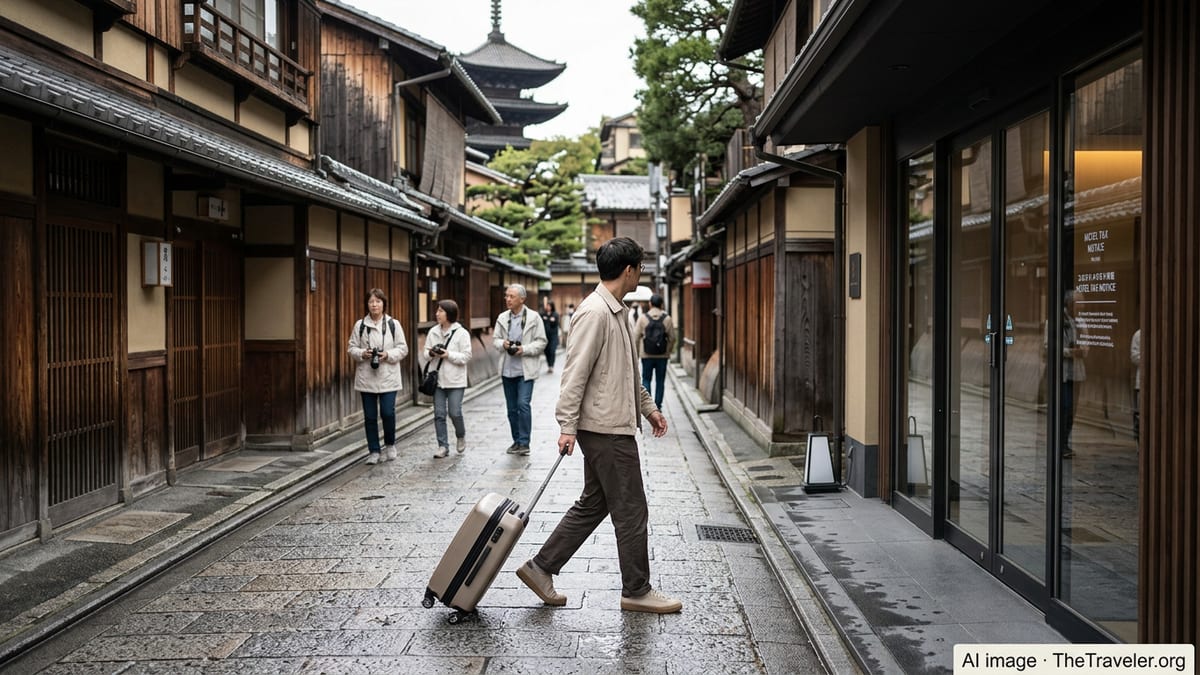
Kyoto’s Record Tourism Meets Japan’s Toughest Hotel Tax
Japan has been riding an unprecedented tourism boom, with international arrivals and spending repeatedly breaking records in 2025. Kyoto, a centerpiece of the country’s Golden Route and home to temples, machiya townhouses and UNESCO-listed districts, has been both a beneficiary and a victim of that success. Crowds clog narrow lanes around Kiyomizudera and Arashiyama, while residents complain of noise, litter and rising rents.
In response, Kyoto has approved a sweeping overhaul of its accommodation tax that takes effect on March 1, 2026. The current cap of 1,000 yen per person, per night will jump to a maximum of 10,000 yen for the most expensive rooms, giving the city the highest lodging levy in Japan. The tax applies to both domestic and international visitors and is collected directly by hotels, ryokan and guesthouses at check-out.
The new system is strictly tiered by room rate per person. Stays under 6,000 yen remain taxed at 200 yen per night, but mid-range and premium tiers double or quadruple, and the top band for rooms priced at 100,000 yen and above will carry that 10,000 yen nightly charge. City officials say the additional revenue will fund infrastructure upgrades, heritage conservation and crowd-management programs rather than serve as a simple cash grab.
Luxury Stays at Ace Hotel Kyoto and Hyatt Regency in the Crosshairs
While budget travelers in simple business hotels or guesthouses will see little change, the impact at upscale properties is far more pronounced. At lifestyle-focused Ace Hotel Kyoto, where design-led rooms, creative suites and a central location near Karasuma Oike attract younger international visitors, many categories are priced high enough that guests will be pushed into the steeper tax brackets from March 2026.
Hyatt Regency Kyoto, a long-established five-star near Sanjusangendo and Kyoto National Museum, is similarly exposed. Premium rooms and suites regularly reach price levels that will attract the 4,000 yen or 10,000 yen nightly tax bands, especially in peak seasons such as cherry blossom and autumn foliage. For a couple paying 100,000 yen per person, per night in a top suite, the tax alone could add 20,000 yen to the bill each night.
For travelers from long-haul markets such as the United States and Australia, that surcharge comes on top of already elevated airfares, a weaker yen that has drawn more visitors, and rising demand for Kyoto’s limited inventory of luxury rooms. Travel advisors say some clients will absorb the extra cost as the price of exclusivity in a world-famous heritage city, but others may trade down to slightly less expensive properties or shorten stays.
Airlines Watch for Shifts in Demand from Australia, the US and South Korea
The tax change comes as airlines including ANA, Japan Airlines, Qantas and United Airlines are carrying record numbers of passengers into Kansai and other Japanese gateways. Australia, the United States and South Korea have all emerged as powerhouse inbound markets, benefiting from expanded nonstop routes and aggressive fare sales over the past two years.
Kyoto’s new levy will not change base airfares, but it may subtly reshape itineraries and booking patterns. Airline revenue managers and tour operators are watching for signs that high-end passengers, especially those booking business class and premium economy cabins, begin to favor Tokyo, Hokkaido or lesser-known cultural cities over Kyoto for the bulk of their nights. Some carriers are already highlighting alternative Kansai-area bases such as Osaka and Kobe in marketing materials aimed at price-sensitive travelers.
Package tour providers linking flights on ANA, Japan Airlines, Qantas and United with hotel stays in Kyoto are also recalibrating. Contracted room blocks at properties like Ace Hotel Kyoto and Hyatt Regency may require repricing or the inclusion of clear tax disclosures. Industry insiders expect more dynamic packaging where part of a Japan itinerary is spent in Kyoto, with additional nights shifted to nearby cities that do not yet impose such a steep luxury levy.
Is Kyoto the Template for Japan’s Wider Overtourism Crackdown?
Kyoto’s accommodation tax overhaul is one of the clearest signals yet that Japan is ready to lean on pricing tools to moderate visitor pressure. Nationally, policymakers have already increased the international departure tax embedded in airline tickets, and regional authorities have experimented with timed entry, crowd controls and new rules at popular attractions like Mount Fuji and certain geisha districts.
Travel economists say Kyoto’s move may serve as a test case. If the city succeeds in raising revenues, improving local sentiment and maintaining overall visitor numbers, other destinations such as Kanazawa, Nara or parts of Tokyo could consider similar tiered hotel taxes, particularly for luxury stays. The aim is less to cap arrivals outright and more to ensure that high-spending travelers contribute proportionally to the upkeep of the places they enjoy.
However, there are risks. Some hoteliers warn that aggressively targeting luxury guests could push affluent visitors into day trips that bring congestion without corresponding lodging tax revenue, or even divert them to rival cities in Asia offering tax breaks and incentives. Others argue that a clearer emphasis on sustainable tourism messaging, limits on short-term rentals and better dispersal of visitors across seasons and neighborhoods might achieve similar goals with fewer side effects.
What Travelers Should Expect in 2026 and Beyond
For international visitors planning 2026 trips, the practical implications are straightforward but potentially significant. Anyone booking Kyoto stays that exceed the mid-range price tiers should factor the new nightly tax into their budget and pay close attention to whether quoted rates include or exclude local levies. The higher the room category, the steeper the surcharge, particularly at design-forward and full-service hotels in central and eastern Kyoto.
Travel planners suggest that guests flying in on ANA, Japan Airlines, Qantas or United Airlines build more transparency into their itineraries, asking agents and hotels to itemize taxes and fees in advance. Some may opt to split nights between Kyoto and other destinations, or to choose slightly lower room categories that fall just beneath the most expensive tax band while still offering comfort and character.
What is clear is that Kyoto’s decision marks a new phase in Japan’s effort to tackle overtourism through financial levers rather than caps on visitor numbers. Whether it becomes a model for the rest of the country, or an isolated experiment in one of its most visited cities, will be closely watched by airlines, hoteliers and travelers across the Asia Pacific and beyond.