

More news on this day
Kyoto’s steep increase to its hotel accommodation tax, now coming into force, is rippling far beyond Japan’s ancient capital as governments in the United States, Canada, Italy, Brazil, Germany, France, Thailand and other tourism powerhouses weigh how to balance record visitor numbers with mounting pressure for more sustainable travel.
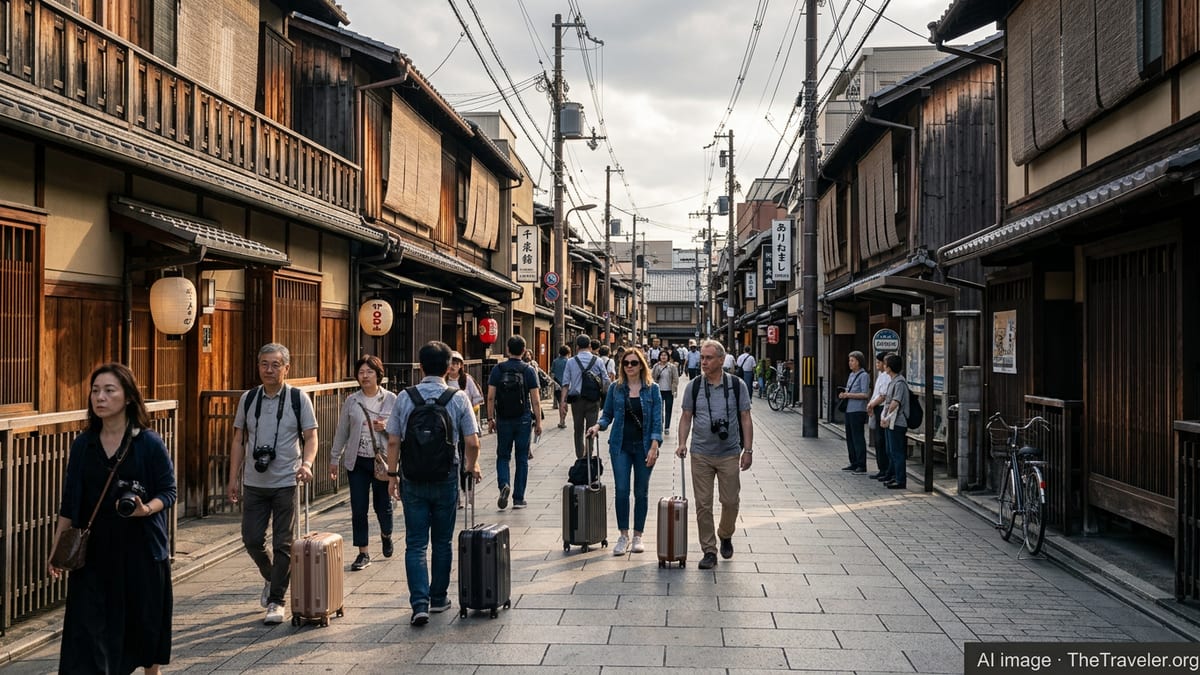
Kyoto Rolls Out Japan’s Highest-Ever Hotel Tax
From March 1, 2026, Kyoto is applying the highest hotel accommodation tax in Japan, a tiered levy that can reach up to 10,000 yen per person, per night on luxury stays. The change marks an up to tenfold jump on previous rates for top-end properties, turning Kyoto into a test case for how hard cities can lean on visitors’ wallets in the name of sustainability.
The revised structure keeps lower rates for budget and midrange rooms while concentrating the sharpest increases on high-priced accommodation, a sector that has boomed alongside Japan’s post-pandemic tourism surge. Local officials argue the move is not about shutting the door on visitors but about asking them to shoulder more of the cost of maintaining streets, transport and historic districts under unprecedented strain.
Kyoto’s leaders have framed the tax as a cornerstone of a broader sustainable tourism strategy that also includes limits on access to some geisha districts, crowd management at marquee temples and shrines, and proposals for differentiated fares on city buses for residents and tourists. Together, the measures signal a decisive shift away from the pre‑pandemic growth‑at‑all‑costs mindset that once dominated Japan’s tourism policy.
Japan as a whole is grappling with similar dilemmas. The national government is reviewing an increase to the country’s international departure tax and backing local initiatives such as higher park fees and timed entry at popular sites. Kyoto’s new levy is being closely watched in Tokyo and other regions as authorities consider how far travelers will tolerate higher costs in exchange for more orderly and culturally respectful experiences.
Record Visitor Numbers Drive Overtourism Backlash
Japan welcomed nearly 37 million international visitors in 2024, surpassing pre‑pandemic highs and underscoring its position as one of the world’s hottest destinations. Kyoto, celebrated for its temples, machiya townhouses and traditional arts, has been at the epicenter of that boom, recording tens of millions of total visitors and a rapid rebound in foreign arrivals.
For many residents, the return of mass tourism has brought a familiar mix of economic benefits and everyday frustrations. Crowded buses, queues spilling into narrow residential streets and complaints about litter and intrusive photography have fueled calls for stronger controls. Local businesses dependent on tourism, from ryokan owners to souvenir shops, have largely accepted the new tax as a necessary step if it keeps the city livable and visitor satisfaction high over the long term.
Experts note that Kyoto’s new tax is unlikely to deter most international travelers entirely, especially those booking high‑end stays where the levy is proportionally small relative to total trip costs. Instead, the expectation is that the added revenue will flow into practical improvements: better public transport capacity during peak seasons, reinforced cleaning and waste management, conservation work at heritage sites and multilingual campaigns about local etiquette.
The concept echoes a wider global rethink of tourism policy. As destinations from Venice to Bali wrestle with overtourism, the focus has shifted from simply chasing arrivals to managing visitor flows, emphasizing “high value, low impact” tourism, and asking travelers to pay more directly for the preservation of the places they come to see.
United States Travelers Face Rising Costs, Growing Awareness
American visitors, now among the largest and fastest‑growing segments of inbound travel to Japan, are directly in the crosshairs of Kyoto’s tax overhaul. Tour operators and online travel agencies that specialize in Japan have begun adjusting package prices and advising clients to budget for higher on‑the‑ground costs in 2026 and beyond.
Industry analysts say most United States travelers are unlikely to cancel trips over a few extra dollars per night, particularly given the still‑favorable yen exchange rate compared with the pre‑pandemic era. However, they expect the tax to accelerate shifts in behavior, from shorter stays in Kyoto and more nights in lesser‑known regional cities, to increased interest in small‑group tours designed around off‑peak itineraries.
At the policy level, officials and destination marketers in the United States are closely watching Kyoto’s rollout as they confront crowding in their own hotspots, from national parks to cities like New York and Honolulu. While there is no single nationwide tourism tax, a patchwork of hotel levies, conservation fees and seasonal access rules is evolving, often justified using the same language of sustainability and quality of life that Kyoto authorities have adopted.
Travel advisors say the conversation with clients is changing. Rather than treating taxes and fees as hidden annoyances, more trips now incorporate frank discussions of how these charges fund trail maintenance, transit upgrades or cultural preservation programs. For a growing cohort of American travelers, the idea of contributing more directly to destination upkeep is becoming part of the responsible travel ethos.
Global Precedent: From Europe to Brazil and Thailand
Kyoto’s recalibrated visitor tax places Japan firmly within a global trend that has gathered pace across major tourism economies. Italy, long a pioneer with city‑level levies in Venice, Florence and Rome, is rolling out new access charges and stricter booking systems for its most fragile sites. France and Germany continue to refine bed taxes and environmental surcharges, often channeling funds into urban infrastructure and heritage conservation.
Elsewhere, destinations as varied as Brazil and Thailand are experimenting with measures that echo Kyoto’s intentions, from mandatory insurance and environmental fees for island visits to caps on daily visitor numbers in oversaturated coastal areas. Canada’s national parks and popular urban centers have also embraced higher fees and timed entry systems, arguing that controlled growth is better than risking local backlash that could undermine tourism’s social license.
Travel industry observers describe a broader shift from viewing tourism primarily as an engine of job creation and foreign exchange to treating it as a complex system with social, environmental and cultural costs. In that context, Kyoto’s move is less an outlier than a high‑profile example of how destinations are testing the upper limits of what travelers will accept when framed as an investment in more authentic, less chaotic experiences.
The pattern is not uniform, and critics in many countries warn that rapidly rising taxes risk pricing out younger or budget‑conscious visitors, concentrating travel among wealthier segments. Still, the overall trajectory points toward higher baseline costs for international tourism, particularly in cities and regions that have become global bucket‑list staples.
What Kyoto’s Tax Signals for Future Travel Planning
For travelers planning Japan itineraries from the United States, Europe or elsewhere, Kyoto’s new accommodation tax underscores the need to think more carefully about both budgets and the broader footprint of their trips. Advisors recommend paying close attention to how taxes are itemized in hotel quotes, as levies are often added per person, per night at check‑out rather than folded into advertised room rates.
The shift is also prompting a fresh look at shoulder‑season and low‑season travel, when crowding is less acute and local residents often reap a steadier flow of income from tourism. As more destinations adopt higher taxes or dynamic pricing linked to peak periods, flexible travelers may find that visiting outside the busiest months offsets some of the additional costs while aligning with sustainability goals.
For Kyoto, success will be measured less in raw arrival numbers than in whether the city can preserve its cultural fabric while maintaining tourism as a pillar of its economy. If the new tax delivers visible improvements on the ground and helps ease tensions between residents and visitors, it may become a model that other heritage‑rich destinations are eager to replicate.
What is clear is that Kyoto’s decision has elevated visitor taxes from a line‑item afterthought to a central tool in the global debate over how to make tourism genuinely sustainable. As countries from the United States to Thailand navigate their own versions of the overtourism challenge, they will be watching closely to see whether travelers accept higher costs in exchange for better‑managed, more meaningful journeys.