

More news on this day
Kyrgyzstan is preparing to introduce tighter rules for children crossing its borders from May 2026, a move that is expected to reshape how families and international tour operators plan trips across Central Asia.
Get the latest news straight to your inbox!
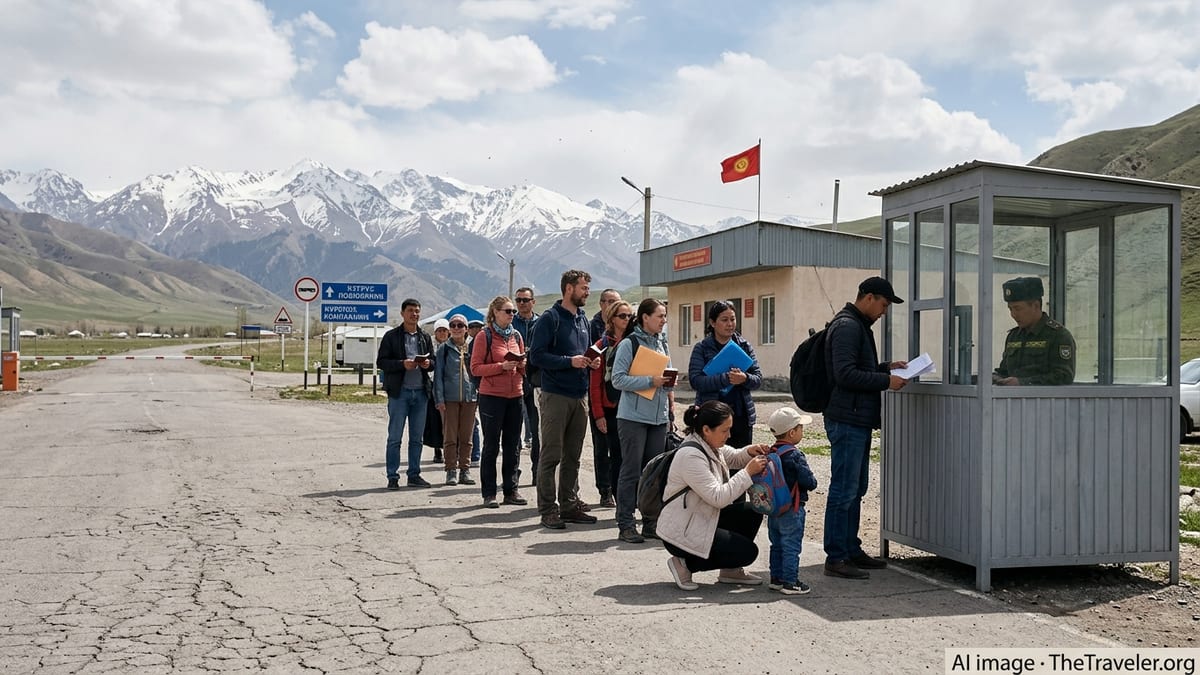
Evolving Border Policy Focuses on Child Protection
Publicly available legislative drafts and policy discussions in Bishkek point to a broad recalibration of Kyrgyzstan’s border regime that places new emphasis on the protection of minors. In parallel with recent reforms to simplify passport issuance for under-16s and to clarify guardianship documentation, lawmakers have been debating how children travel in and out of the country, especially in cases of separated or divorced parents.
Reports from local parliamentary coverage in early March 2026 describe proposals to streamline passport procedures while at the same time tightening rules around parental consent for a child’s international travel. Lawmakers have highlighted situations in which one parent refuses consent or uses it to obstruct legitimate travel, prompting calls for clearer, unified standards at border checkpoints.
While Kyrgyzstan already requires that children hold appropriate identification and, in practice, may request evidence of parental permission at the border, the forthcoming rules are expected to codify these practices more explicitly. Observers note that the same reform agenda that is modernizing migration laws and visa rules is now being extended to child travel, with May 2026 set as a key implementation milestone.
Regional context also matters. Cross-border movement in Central Asia has expanded in recent years on the back of new bilateral agreements and reopening of land crossings. As more families treat Kyrgyzstan as part of wider multi-country trips, border officials are under pressure to balance easier mobility with safeguards against disputes over custody and international child abduction.
What Is Expected to Change From May 2026
According to the emerging proposals, the new framework from May 2026 is likely to require more consistent documentation for minors leaving Kyrgyzstan, particularly when they are not accompanied by both legal guardians. Travel industry analyses suggest that officials are moving toward a standard model in which a child traveling with one parent, another relative, or in an organized group may need to carry written proof of consent from non-traveling guardians, along with copies of identity and custody documents where applicable.
Discussion drafts indicate that border officers will gain clearer guidance on which documents to request and how to assess them, reducing the scope for discretionary decisions at checkpoints. For example, written consent forms are expected to be standardized in format and may need to be notarized or otherwise certified when one parent is absent or when a child travels with a third party such as a coach, school representative, or tour leader.
Another anticipated change is the tighter linkage between civil registry data and border control systems. As Kyrgyzstan digitizes records related to birth, guardianship, and travel documents, the new rules are expected to allow border agents to cross-check parent and child details more efficiently. This could help resolve disputes at the border but may also lengthen processing times during the initial rollout period as staff adapt to new procedures.
While the details of secondary regulations are still being finalized, May 2026 is widely referenced in domestic reporting as the target date when the updated child travel provisions will begin to apply in practice. Families planning trips after that date are being advised by regional travel specialists to treat the new regime as a firm timeline and prepare documentation accordingly.
Impact on Families and Mixed-Nationality Households
The most immediate impact will be felt by Kyrgyz citizens and residents who regularly travel with children for holidays, education, or to visit relatives abroad. For cross-border families, particularly those in which parents live in different countries or hold different citizenships, the anticipated consent requirements could add new layers of paperwork and planning time.
Parents in blended or separated households may need to secure formal agreements spelling out travel rights, rather than relying on ad hoc arrangements. Family law practitioners following the debate note that standardizing consent procedures at the border could, over time, reduce conflict by clearly defining each parent’s responsibilities and the documentation required for foreign trips.
For families living in neighboring states who habitually cross into Kyrgyzstan for weekend trips, shopping, or tourism, the effect will depend on how strictly the new provisions are applied at land borders. Regional traffic has risen sharply since 2023, and recent statistics for 2025 show a double-digit increase in foreign entries, underlining how common cross-border family travel has become.
Travel planners also point out that the rules will intersect with airline and tour operator policies on unaccompanied minors. Families sending children alone or in school groups to language camps, trekking programs, or cultural exchanges in Kyrgyzstan after May 2026 may need to align carrier consent forms with the new national requirements to avoid last-minute complications at departure or arrival.
Implications for International Tour Operators and Itineraries
International tour operators have increasingly marketed Kyrgyzstan as a family-friendly adventure destination, combining the country’s mountain landscapes with regional city breaks in neighboring states. The introduction of more formal child travel requirements from May 2026 is expected to impact how these companies design, price, and sell multi-country itineraries.
Industry briefings circulating among Central Asia specialists suggest that operators will need to adjust booking processes to collect additional information on traveling minors well in advance. This may include copies of birth certificates, guardianship decisions in the case of separated parents, and signed consent letters that meet Kyrgyz standards, rather than relying solely on the requirements of the traveler’s home country.
Some companies are likely to introduce new pre-departure checklists specific to Kyrgyzstan, particularly for trips that involve land border crossings in and out of the country. There is also an expectation that liability language in tour contracts will be updated to clarify that families are responsible for securing correct documentation for children, given the potential for denied boarding or refused entry if consent rules are not met.
In the short term, consultants anticipate a period of uncertainty as border posts apply the new regulations and as tour staff, especially those based outside the region, become familiar with the updated procedures. Over time, once standard practice is established and widely communicated, the rules may simply become another item on the extensive paperwork already associated with family travel.
How Travelers Can Prepare Ahead of the New Rules
Travel advisories and expert guides on Kyrgyzstan are already encouraging families to plan ahead for journeys scheduled after May 2026. The most consistent recommendation is to treat parental consent documentation as essential rather than optional, even if a specific carrier or neighboring country does not explicitly require it.
Families are being urged to ensure that each child holds an individual passport, that names and birth dates match across all documents, and that any court orders related to custody or travel are easy to produce if questions arise at the border. For children traveling with one parent, a standardized consent letter from the non-traveling parent, preferably notarized, is increasingly seen as best practice.
International visitors booking package tours that include Kyrgyzstan may wish to verify what their operator recommends for minors in light of the upcoming rules, particularly for overland routes or open-jaw itineraries that combine air, road, and possibly rail segments. Early discussions with airlines, schools organizing trips, or youth programs based in Bishkek can help clarify how documentation checks will be handled once the new framework is in effect.
While the reforms are framed domestically as a child-protection measure, their practical impact will be felt across the travel ecosystem that connects Kyrgyzstan with the wider world. Families who take the time to understand and prepare for the new rules before May 2026 are likely to navigate the transition more smoothly, preserving Kyrgyzstan’s appeal as a distinctive, if administratively more complex, destination for cross-border journeys with children.