

More news on this day
La Trinidad, the mountain valley famed as the Strawberry Capital of the Philippines, is in full festival mode as its 2026 Strawberry Festival rolls out a “Limitless” celebration of harvest, heritage, and hometown pride.
Get the latest news straight to your inbox!
‘Limitless La Trinidad’ Sets the Tone for 2026
The municipality of La Trinidad in Benguet opened its 2026 Strawberry Festival period in early March under the theme “Limitless La Trinidad: Heart, Harvest, Harmony,” a slogan that local coverage describes as capturing the town’s drive to expand opportunities in agriculture and tourism while deepening community ties. The festival is scheduled to run from March 4 to April 1, filling nearly a month with cultural performances, food events, and civic activities tied to its signature berry.
Publicly available information shows that the theme builds on recent years in which La Trinidad has worked to reassert its identity as the country’s premier strawberry producer. Previous editions highlighted the town’s claim as the Strawberry Capital of the Philippines and drew attention to its productive valley farms. The 2026 “Limitless” framing pushes the narrative further, presenting strawberries not only as an agricultural commodity but also as a symbol of resilience, creativity, and shared prosperity.
The festival has been institutionalized through a municipal ordinance passed in 2011, giving the celebration a fixed place in the town’s annual calendar and supporting the continuity of its programs. That legal foundation has helped organizers refine the schedule each year, balancing crowd-drawing spectacles with activities that foreground local culture and small-scale producers.
Reports indicate that officials expect a fresh surge of visitors in 2026, helped by pent-up travel demand, social media buzz around the town’s photo-friendly strawberry fields, and renewed efforts to package La Trinidad and nearby Baguio as a combined highland getaway. The “Limitless” tagline positions the festival as a gateway to a broader experience of Benguet’s landscapes and mountain culture.
Parades Turn the Valley Into a Moving Strawberry Canvas
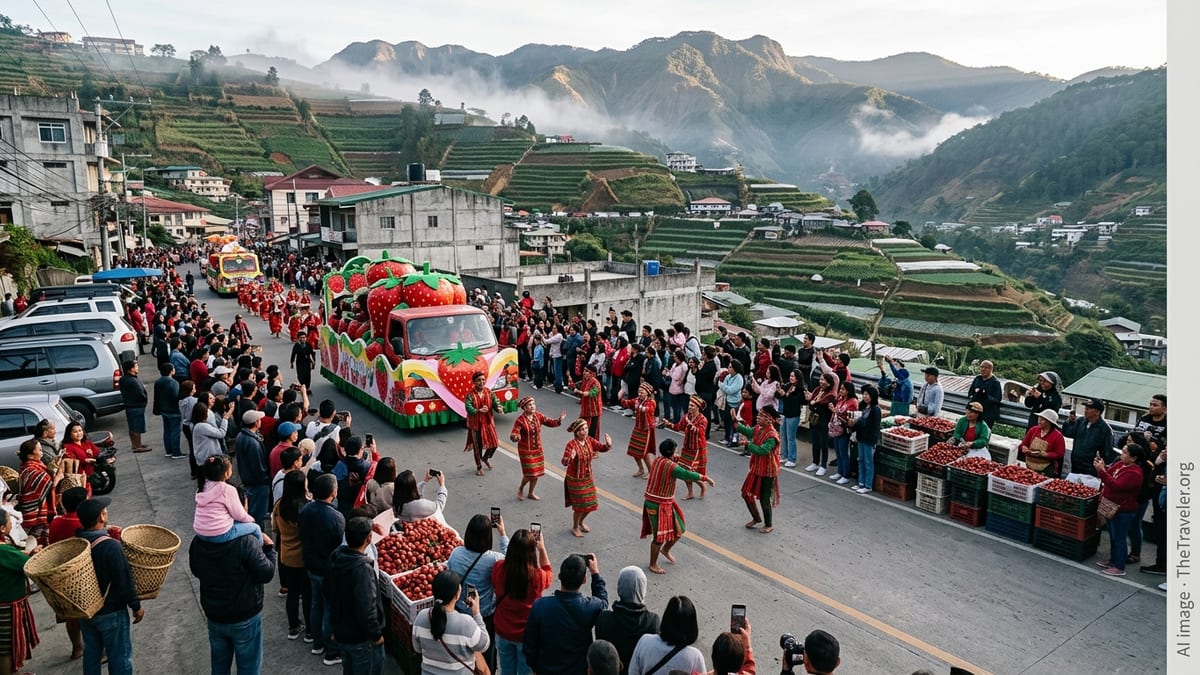
The core spectacle of the festival remains its colorful street and float parades, which transform La Trinidad’s main thoroughfares into a moving gallery of berry-themed imagery. Local media coverage of recent editions has highlighted how barangays, schools, and community groups collaborate for months to design costumes and floats that weave together strawberries, Cordilleran motifs, and references to local livelihoods.
In line with that tradition, the 2026 festival calendar includes a civic and cultural parade, a separate float procession, and street dancing competitions expected to draw large numbers of students and performers. Past photo coverage from similar parades shows participants in layered red and green costumes, with headdresses mimicking plump strawberries and choreographies that reference planting, harvesting, and thanksgiving rituals.
The float parade, in particular, has become a visual shorthand for La Trinidad’s contemporary identity. Recent festival coverage has documented floats stacked with crates of fresh berries, woven baskets, carved wooden figures, and floral arrangements that echo the highland environment. For visitors watching from the roadside, the effect is that of a valley-sized storyboard that moves slowly past, stitching agriculture, folklore, and modern tourism into a single narrative.
These parades also serve a practical promotional role. By giving each participating barangay or organization a platform to showcase its own story, the festival encourages travelers to venture beyond the main highway into upland communities where vegetable terraces, flower farms, and small homestays can be found. The result is a more dispersed visitor flow and greater chances for direct spending in neighborhoods outside the town center.
From Giant Cakes to Farmgate Berries
La Trinidad’s Strawberry Festival is as much about taste as it is about visual spectacle. Over the years the town has become known for headline-grabbing desserts, most famously the giant strawberry shortcake that earned a Guinness World Record for weight in 2004. That milestone is regularly referenced in festival coverage and continues to shape expectations for large-scale, shareable strawberry creations.
Recent editions have featured giant cakes and thousands of strawberry cupcakes prepared for distribution to the public, and 2025 programming was marked by a massive basket-shaped cake made with hundreds of kilograms of fresh fruit. While the detailed design of the 2026 signature dessert is still emerging in local reports, the “Limitless” theme suggests another high-impact presentation intended to reinforce La Trinidad’s record-breaking legacy.
Beyond the marquee sweets, the festival period is also peak season for sampling the berry in simpler forms. Visitors typically head to the fields for pick-and-pay experiences, where they can walk between rows of plants, fill plastic clamshells, and pay by weight at the edge of the farm. Market stalls and roadside kiosks throughout the valley respond with an expanded range of products, from fresh berries and preserves to jams, wines, ice cream, and strawberry-flavored street snacks.
For local growers and small food businesses, the festival provides a concentrated window in which to showcase quality and innovation. Publicly available production figures indicate that La Trinidad’s strawberry farms cover dozens of hectares and produce substantial volumes per harvest, giving the town enough supply to feed both festival demand and regular market channels during the March peak.
Culture, Community, and Highland Traditions
While strawberries are the star attraction, the festival also operates as a cultural platform for the indigenous and migrant communities that have shaped La Trinidad. Annual programs typically include ecumenical services, traditional rituals, and performances by cultural troupes that present highland dances and music to a mixed audience of residents and tourists.
Among the more distinctive elements is the Dongba ni Kavajo, a traditional gathering centered on the pony boys who historically transported people and goods along mountain trails. Festival schedules for 2026 list this event toward the latter part of March, providing visitors an opportunity to witness a practice that connects modern tourism with older mobility and trade patterns in the Cordillera highlands.
Evening activities such as barangay nights, talent showcases, and pageants add another layer to the program. These events, often held in the municipal gymnasium or sports complex, offer a venue for youth groups, artists, and civic organizations to present their work and build local pride under the broader Strawberry Festival banner.
The emphasis on culture also serves a strategic purpose for tourism. By foregrounding traditions, rituals, and local narratives alongside commercial attractions, La Trinidad positions its festival as an experience that goes beyond photo opportunities. This approach resonates with travelers seeking more meaningful encounters and helps differentiate the town from lowland fruit festivals that focus primarily on rides and food stalls.
Planning a Visit to La Trinidad’s Strawberry Season
For travelers considering a trip during the 2026 Strawberry Festival, timing and logistics are crucial. The official schedule from March 4 to April 1 is punctuated by particularly busy days, including parade dates, cake or cupcake serving events, and closing ceremonies. These high-profile activities tend to draw the largest crowds, fill accommodations in and around La Trinidad, and create heavier traffic on the approach roads from Baguio and the lowlands.
Travel and tourism outlets describe La Trinidad as conveniently accessible from Baguio City by jeepney, taxi, or private vehicle, with travel times from Metro Manila to the highland area typically ranging from four to six hours by bus or car depending on traffic and weather. Many visitors opt to base themselves in Baguio, making day trips to La Trinidad’s strawberry farms and festival venues, while others seek homestays and smaller inns within the valley for closer access to early-morning markets and events.
Weather in March at these elevations is generally mild, but travelers are advised by local guides and tour operators to prepare for strong sun at midday and cooler evenings, especially when staying in open-air viewing areas along the parade routes. Comfortable walking shoes are essential, as festival days often involve stretches of standing and walking between dispersed venues, markets, and farm areas.
With the “Limitless La Trinidad” theme framing the 2026 edition, expectations are high that the Strawberry Festival will continue to evolve as a signature highland celebration. For visitors, it offers a chance to taste freshly picked berries at their peak, experience Cordilleran culture in motion, and watch a small mountain valley confidently project its identity onto the national tourism stage.