

More news on this day
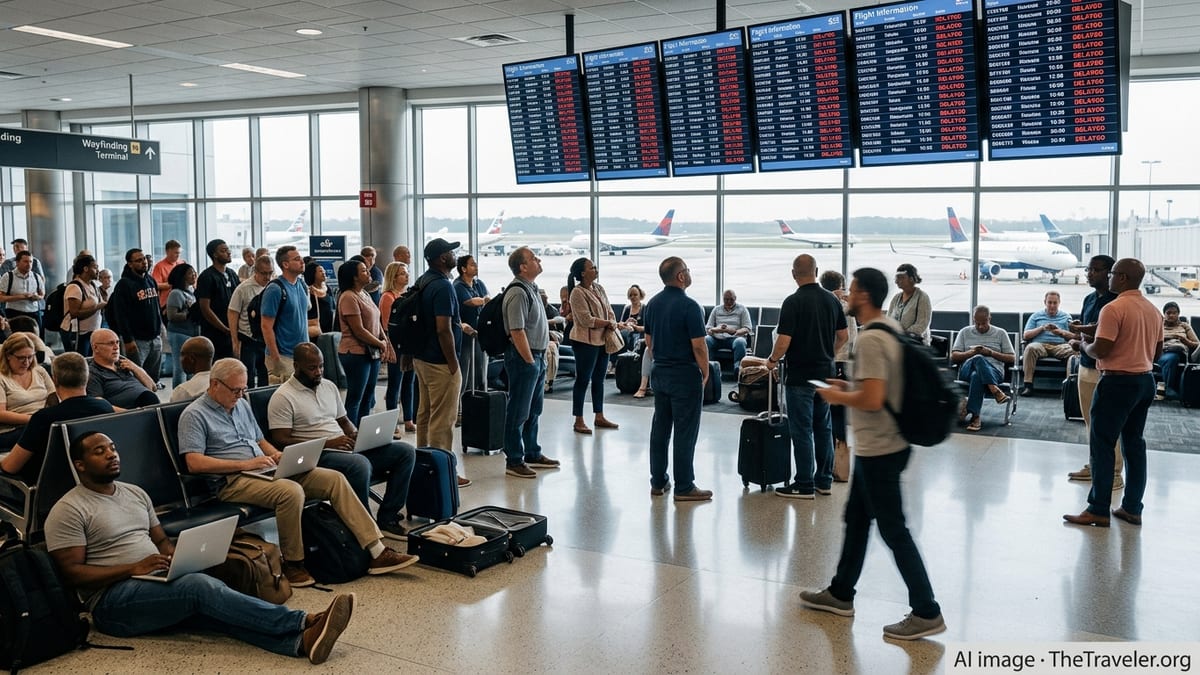
Thousands of passengers were left stranded at New York’s LaGuardia Airport on March 31 as 158 flight cancellations and more than 300 delays rippled through airline networks, disrupting travel plans across North America.
Get the latest news straight to your inbox!
LaGuardia Emerges as Epicenter of a New Disruption Wave
Publicly available aviation data and industry coverage indicate that LaGuardia once again became the country’s leading trouble spot, with a concentrated cluster of cancellations and delays that far outpaced other airports on Monday. Regional and mainline carriers including Republic, Endeavor Air, Southwest, United and Jazz registered the bulk of the 158 cancellations tied to LaGuardia, part of a wider pattern of operational strain across the United States.
Reports from flight-tracking services show that LaGuardia’s schedules slowed sharply as the day progressed, with departure banks thinning out and arriving aircraft held on the ground or rerouted. Average delay times rose well beyond typical congestion levels, compounding the disruption for travelers with tight connections or evening arrivals into New York.
The situation follows a stretch of heightened turbulence for the New York air system in recent days, including earlier ground delays and a period of reduced runway capacity. Published analyses of historic performance already rank LaGuardia among the most delay-prone major U.S. airports, and Monday’s figures reinforced that reputation as airlines struggled to reset their operations.
Ripple Effects From New York to Chicago, Boston and Toronto
While the most visible chaos unfolded in LaGuardia’s terminals, the fallout extended well beyond New York City. Data compiled in travel-industry reports show significant knock-on disruption in Chicago, Raleigh-Durham, Boston, Toronto and a long list of secondary hubs that rely heavily on LaGuardia connections. Flights in both directions were affected, leaving passengers stuck on either end of their journeys.
In practical terms, a canceled departure from New York often translated into an aircraft and crew never reaching its next destination, triggering subsequent cancellations or lengthy delays downline. Cities such as Chicago and Boston recorded clusters of scrubbed flights linked to LaGuardia, while Toronto and several U.S. regional airports reported high cancellation ratios on relatively small schedules, magnifying the local impact.
These cascading effects mirror patterns seen in previous nationwide disruption events, where a single constrained airport or region can quickly destabilize far-flung parts of the network. With LaGuardia acting as a key spoke for both domestic and cross-border routes, the latest outage amplified travel headaches across North America within hours.
Airlines Struggle to Rebuild Schedules and Reposition Crews
Operational snapshots published by aviation news outlets highlight how heavily the disruption was concentrated among a handful of carriers. Republic, a major regional operator for several U.S. airlines, accounted for the largest share of cancellations and delays, followed by Endeavor Air, Southwest, United, Jazz, Spirit and Delta. Each airline faced the dual challenge of managing stranded customers and repositioning aircraft and crews within a constrained time window.
Once cancellations reached triple digits, the knock-on effects multiplied. Flight crews timed out of legally permitted duty periods, aircraft missed scheduled maintenance slots and overnight routings became more complicated to restore. Even when weather and airspace conditions improved, the residual imbalance in planes and personnel limited how quickly carriers could add back capacity.
Publicly available guidance from airlines and regulators stresses that rebooking options vary widely by carrier and ticket type. On days with concentrated disruption, same-day alternatives often evaporate quickly, especially for peak-time departures from slot-controlled airports such as LaGuardia. That dynamic appeared to play out again, with many travelers facing multi-hour waits in service lines and limited options for immediate onward travel.
Recent Turbulence Underscores LaGuardia’s Fragile Capacity
The latest wave of cancellations arrived on the heels of a particularly difficult period for LaGuardia. Over the past week, the airport operated under constrained conditions following a deadly runway crash involving an Air Canada jet and an airport fire vehicle, an incident that temporarily closed one runway and sharply reduced capacity. Coverage of that event pointed to hundreds of cancellations and sustained delays while investigators and clean-up crews worked on the tarmac.
Although the affected runway has since reopened and traffic flows have gradually improved, flight-tracking data shows LaGuardia continuing to record some of the nation’s highest daily tallies of delays and cancellations. The new round of 158 cancellations and 300-plus delays appears to reflect a system still working through residual strain, with limited operational slack to absorb additional shocks.
Longer-term assessments of New York’s airport system have repeatedly warned that LaGuardia’s tightly packed schedule, limited airfield footprint and complex airspace leave little room for error. When weather, infrastructure constraints or safety events reduce throughput, delays can quickly exceed scheduled flight times and propagate throughout the network. The current disruption has provided another real-time illustration of those vulnerabilities.
What Travelers Across North America Are Experiencing
For passengers on the ground, the statistics translate into hours spent in crowded terminals, missed connections and unexpected overnight stays. Travel media reports describe long check-in and customer-service lines at LaGuardia, as travelers sought rebooking options not only for New York flights but also for onward journeys to cities across the United States and Canada.
At downline airports, the effects were less visually dramatic but no less disruptive. Travelers in cities such as Raleigh-Durham, Norfolk, Cleveland, Atlanta and Indianapolis faced sudden cancellations or last-minute schedule changes on flights tied to the LaGuardia hub. In several smaller markets, a relatively small number of cancellations represented a large percentage of the day’s schedule, effectively cutting off direct service to New York for much of the day.
Passenger-rights information from transportation agencies notes that travelers affected by cancellations should monitor airline apps, email and text alerts for rebooking options, and in some cases may be eligible for refunds or vouchers. With LaGuardia’s latest disruption still working its way through airline schedules, many passengers across North America are likely to feel the impact for at least another day as carriers slowly rebuild their networks.