

More news on this day
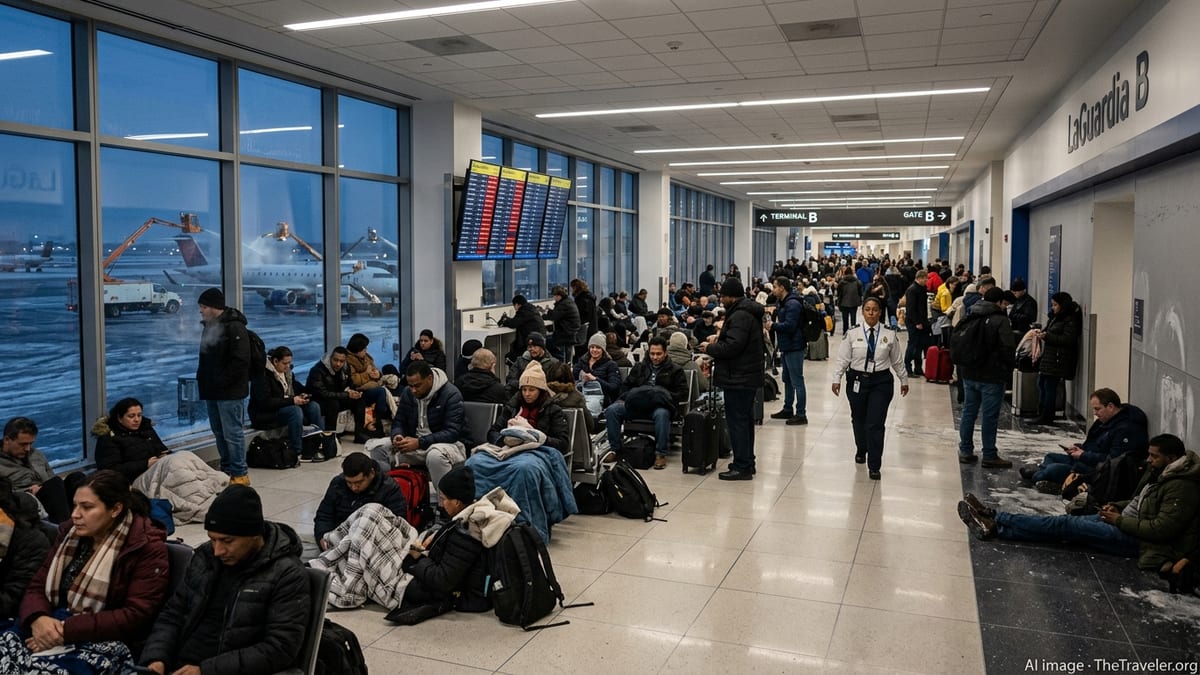
New York’s LaGuardia Airport has lurched from tragedy to gridlock this week, as a deadly runway collision and a late-season freeze combined with residual schedule disruptions to leave hundreds of flights delayed and passengers resorting to sleeping on terminal floors.
Get the latest news straight to your inbox!
Deadly Runway Collision Still Rippling Through Operations
LaGuardia’s latest turmoil traces back to the night of March 22, when an Air Canada Express regional jet arriving from Montreal collided with an airport firefighting truck on Runway 4. Publicly available incident summaries and subsequent coverage report that both pilots were killed in the impact, while dozens of passengers and ground personnel sustained injuries.
Investigators from federal safety agencies have opened a major inquiry into how a rescue truck came to be on an active runway as the jet was landing. Preliminary descriptions of tower recordings, published by multiple outlets, point to a brief and chaotic sequence in which the vehicle was cleared to cross the runway as the aircraft was on final approach. The collision severed the forward section of the jet and scattered debris across the tarmac, forcing an immediate airport shutdown.
LaGuardia, which normally relies on two runways to manage one of the densest schedules in the United States, was limited to a single operational runway for days while investigators documented the scene and crews removed the wreckage. A key runway only reopened on March 26 after inspections and repairs, according to widely cited airport statements. Even with that reopening, published tracking data shows LaGuardia continuing to record some of the nation’s highest volumes of delays and cancellations as airlines worked through a large backlog of displaced aircraft and crews.
Freezing Weather Turns Disruption Into a Full Meltdown
Just as LaGuardia began restoring runway capacity, a sharp drop in temperatures over the New York region late this week compounded the disruption. Forecast discussions from meteorological services pointed to overnight lows below freezing and the potential for slick conditions, a challenging backdrop for an airport already operating with little margin.
Freezing air temperatures alone are not unusual for late March, but they can quickly trigger deicing bottlenecks when combined with moisture and an overburdened schedule. Aircraft require thorough removal of ice and frost before departure, and each treatment can add significant time on the ground. With LaGuardia’s tight runway layout and congestion-prone taxiways, that extra time translates into slower traffic flows and longer lines of jets waiting to depart.
Reports from flight-tracking platforms on March 27 and March 28 show LaGuardia again near the top of national rankings for departure and arrival delays, with hundreds of flights pushed back or canceled in a 24-hour window. Travelers described extended ground holds as crews cycled planes through deicing pads, while some inbound flights diverted to other airports when approach queues lengthened during bursts of freezing rain and low ceilings.
Over 500 Flight Disruptions Leave Travelers Sleeping on the Floor
The cumulative effect of the crash-related shutdown, constrained runway capacity and weather-driven deicing delays has been a cascading series of schedule disruptions. Compilations from delay-tracking services indicate that, over several days, LaGuardia has seen well over 500 flights either delayed or canceled, with knock-on effects spreading to hubs across North America.
Inside the terminals, that turbulence has played out in scenes of visible frustration. Images and descriptions circulating on social media show passengers stretched out on thin airport blankets or bundled in coats and hoodies, camped along concourse walls and clustered near power outlets. Families with small children appear attempting to sleep on the floor beside carry-ons, while others queue for hours at customer-service desks in search of rebooking options.
Publicly available commentary from consumer advocates notes that New York’s close-in airports offer limited late-night hotel capacity during major disruptions, especially when a storm or operational crisis affects multiple facilities at once. With LaGuardia’s terminals already constrained by space and seating, many travelers whose flights were canceled after midnight reported few alternatives beyond staying in the building until morning departures.
Why LaGuardia Is So Vulnerable to Cascading Crises
LaGuardia’s recent meltdown highlights vulnerabilities that aviation analysts have long associated with the airport. The facility operates in a tightly constrained footprint along the edge of Flushing Bay, with short runways, limited taxi space and little room to expand. Even in normal conditions, it is considered highly sensitive to minor operational disruptions, as there is minimal slack in the system to absorb delays.
The airport’s schedule is heavily slot-controlled, meaning airlines crowd departures and arrivals into peak periods dictated by business and commuter demand. That structure can deliver convenience when everything runs smoothly, but it also means that any interruption — from a runway closure to a sudden need for intensive deicing — tends to propagate quickly through the day’s timetable. Flights delayed in the morning often cause aircraft and crews to miss later rotations around the country.
Recent years have also seen LaGuardia balance major construction and modernization projects with ongoing operations. Even as new terminals come online, recurring infrastructure work and maintenance windows limit flexibility. The runway collision in March, followed so closely by a spell of freezing weather, exposed how quickly those factors can converge into a broader system failure, particularly during busy spring break and business travel periods.
What Passengers Can Expect in the Coming Days
As of March 28, published airport and airline updates indicate that LaGuardia is gradually restoring more normal operations, but with lingering disruptions. Airlines continue to adjust schedules, trim some frequencies and reroute aircraft to rebuild buffers into the system. Travelers booked through the airport over the weekend are being urged in public advisories and media coverage to monitor flight status closely and allow extra time for security screening and potential gate changes.
Weather forecasts suggest that the coldest overnight temperatures will moderate slightly after the weekend, which could ease deicing demands, but low-pressure systems moving along the East Coast still have the potential to bring additional rain, low clouds or gusty winds that can slow arrivals. Operational data from recent days shows that even modest weather complications can prolong recovery when airlines are already contending with displaced crews and aircraft.
For now, LaGuardia passengers may continue to face the possibility of long waits and overnight stays inside the terminal. Travel experts quoted in public forums recommend packing basic overnight essentials in carry-on bags, using airline apps for rapid rebooking, and, when possible, considering alternative New York area airports for time-sensitive trips until LaGuardia’s schedules stabilize.