

More news on this day
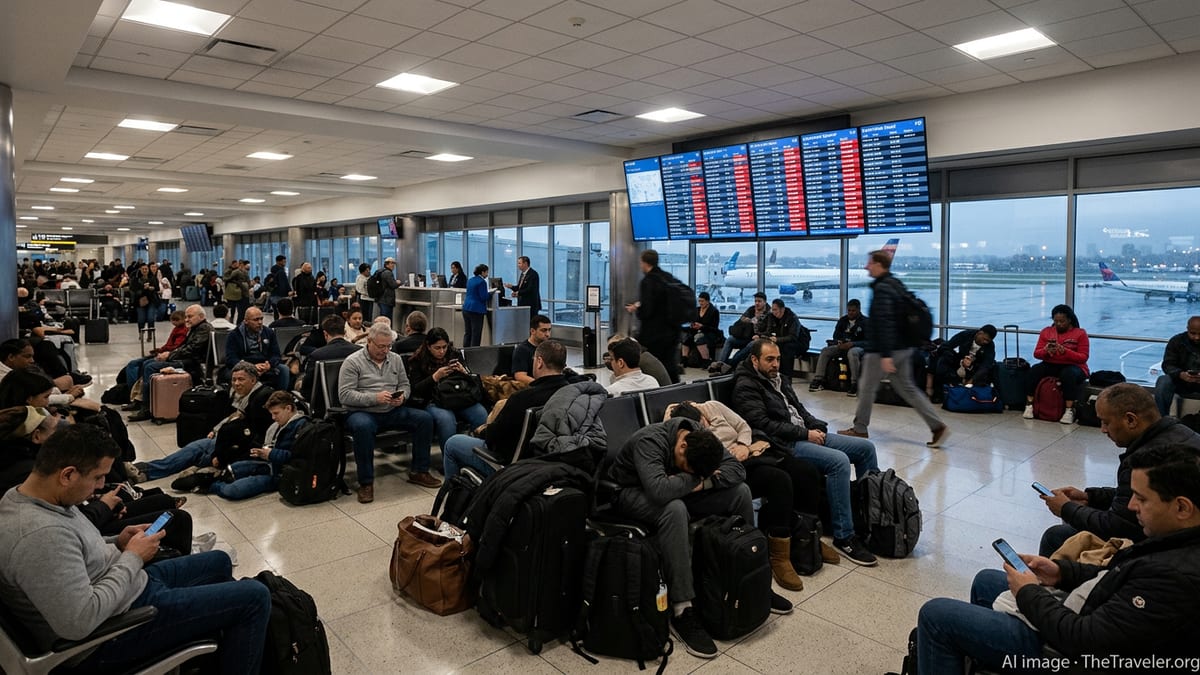
Hundreds of passengers were left stranded at New York’s LaGuardia Airport after more than 70 flights were cancelled in a single day, disrupting travel plans across the United States and triggering a new wave of frustration over chronic congestion at one of the country’s busiest hubs.
Get the latest news straight to your inbox!
What Happened at LaGuardia
Published coverage and live flight-tracking data indicate that New York’s LaGuardia Airport saw over 70 flight cancellations and additional delays concentrated within a short window, impacting departures and arrivals on multiple major carriers. The disruption quickly spilled over into later banked departures as aircraft and crew schedules fell out of position.
Reports show that cancellations affected a mix of regional and mainline services, with a notable share on short-haul routes to cities in the Northeast and Mid-Atlantic. These high-frequency routes are particularly vulnerable when airlines are forced to trim schedules, as a single operational or weather trigger can cascade through multiple rotations in a day.
While specific causes vary by carrier and route, publicly available information points to a combination of factors commonly seen at LaGuardia: tight runway capacity, limited room for holding or diversions, and quickly changing weather conditions that can reduce arrival and departure rates. When these elements combine, airlines often preemptively cancel flights at capacity-constrained airports to avoid gridlock later in the day.
Impact on Passengers and the Wider Network
The immediate consequence for travelers at LaGuardia was a surge in stranded passengers, many of whom reported spending long stretches in the terminal waiting for updates or rebooking options. As cancellations mounted, available seats on remaining flights to key destinations were quickly snapped up, leaving some travelers facing overnight stays or multi-stop reroutes.
Because LaGuardia functions as a critical spoke for business and leisure traffic throughout the Northeast corridor, disruptions there tend to ripple outward. When aircraft and crews fail to reach their next scheduled stops, downstream flights in cities far from New York can also be delayed or cancelled, creating a national knock-on effect that can last into the following day.
Publicly available transportation analyses have repeatedly highlighted that New York’s three major airports rank among the highest in the country for cancellations and delays, particularly during peak seasons and adverse weather. LaGuardia’s compact layout and limited runway length leave less margin to recover once schedules begin to slip, which means passengers traveling through the airport often feel the impact sooner and more sharply than at larger, less capacity-constrained hubs.
Why LaGuardia Is So Vulnerable to Disruptions
A key reason disruptions at LaGuardia escalate so quickly lies in the airport’s structural constraints. The runways are relatively short compared with many major U.S. hubs, and the airfield has limited space for additional taxiways, holding pads, or expansion. When low visibility, strong winds, or thunderstorms pass through the New York region, air-traffic controllers often must reduce the number of flights allowed to land and depart each hour.
To comply with these lower movement rates, airlines typically respond by trimming schedules, often targeting regional flights first. Such preemptive cancellations can reach dozens of departures in a matter of hours, particularly during morning and evening peaks. When a single airline cuts a cluster of flights, other carriers may follow to keep operations manageable, leading to an aggregate total that exceeds 70 cancellations or more.
LaGuardia’s role as a predominantly short-haul, high-frequency business airport also adds to its fragility. Many of its routes rely on tight turn times and multiple daily frequencies rather than a few long-haul services. This design benefits travelers when operations run smoothly, but it also means there are more individual flights that can be delayed or cancelled when conditions deteriorate.
What Travelers Can Do If Their Flight Is Affected
For passengers facing cancellations at LaGuardia, publicly available airline policies suggest several immediate steps. The first is to check flight status directly through the airline’s official digital channels, which are usually updated more quickly than departure boards in the terminal. Many carriers automatically rebook affected passengers on the next available flight and notify them through email or app alerts, though options may be limited when cancellations are widespread.
Travelers may be able to request alternative routings through other hubs, especially when traveling beyond the immediate New York region. In periods of heavy disruption, some airlines open temporary change-fee waivers, allowing passengers to shift travel dates or airports in the region without additional charges, subject to fare differences and seat availability. Monitoring for such waivers and acting quickly can improve the chances of securing a workable itinerary.
Given the scarcity of hotel rooms near major New York airports during disruption events, passengers facing overnight delays are often advised by consumer advocates to explore a broad area for accommodation, including Manhattan and nearby boroughs, rather than focusing solely on airport-adjacent properties. Keeping receipts for meals, ground transportation, and lodging can be important when later seeking any eligible reimbursements under airline or credit card travel protections.
Planning Ahead for Future LaGuardia Trips
The latest wave of cancellations at LaGuardia underscores how vital contingency planning has become for travelers using this airport. Travel experts analyzing historical performance data often recommend scheduling critical journeys on earlier flights in the day, when there is more slack to absorb delays and a greater chance of securing backup options if something goes wrong.
Building additional time into connections, especially when linking to international flights via another hub, can also reduce the risk of missed onward journeys. When possible, travelers who are highly schedule-sensitive sometimes opt for neighboring airports such as John F. Kennedy International or Newark Liberty International, comparing on-time statistics and cancellation rates before booking.
For now, the latest disruption at LaGuardia serves as a reminder that even on seemingly routine travel days, sudden clusters of cancellations can leave hundreds of passengers stranded with little warning. As airlines and airport operators continue efforts to upgrade infrastructure and refine scheduling practices, travelers passing through LaGuardia are likely to keep relying on flexible itineraries, robust travel insurance, and real-time information to navigate one of the most congested airspaces in the country.