

More news on this day
Passengers traveling through the United States faced another day of frustration as LaGuardia Airport in New York recorded around 17 flight cancellations and more than 300 delays, triggering widespread disruption for carriers such as Republic Airways, Endeavor Air, Delta Air Lines, United Airlines and others on routes linking Chicago, Toronto, Dallas, Miami and additional hubs across North America.
Get the latest news straight to your inbox!
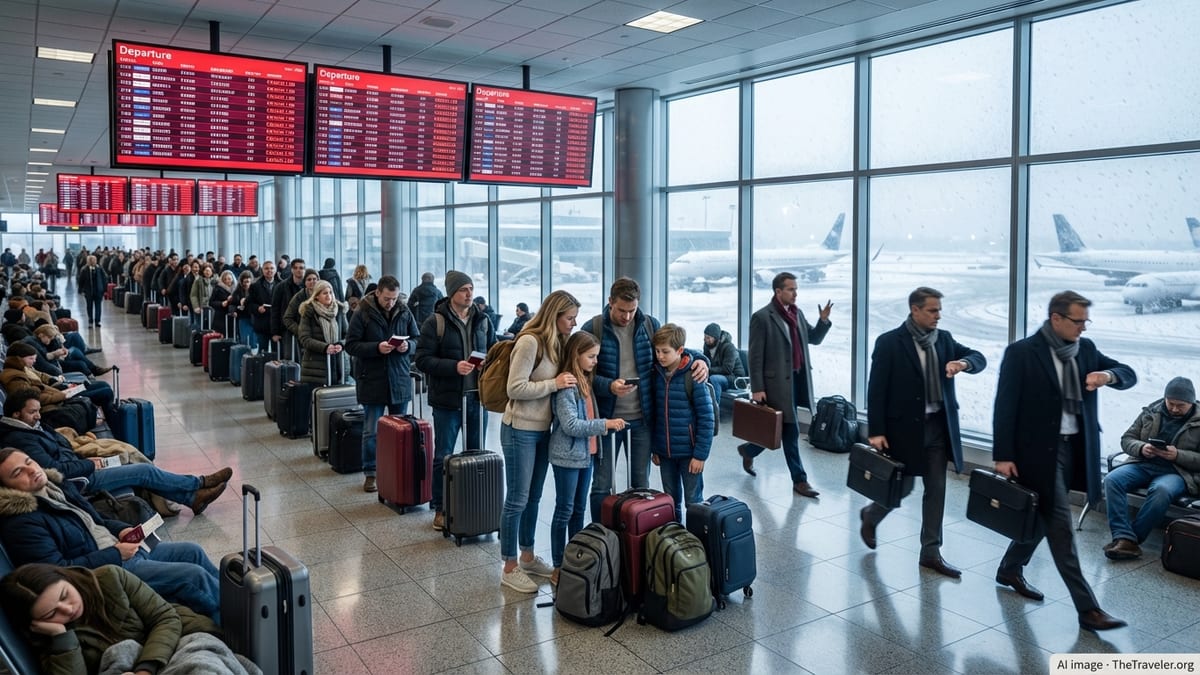
Persistent Operational Strain After Recent LaGuardia Turmoil
Publicly available flight tracking data shows LaGuardia continuing to rank among the most disrupted airports in the country in late March and early April 2026, even after a runway collision recently forced a temporary shutdown and ground stop. In the latest wave of problems, roughly 17 flights were cancelled and more than 300 were delayed in a single operating period, underscoring how fragile schedules remain at one of New York City’s key domestic gateways.
The renewed disruption comes only days after LaGuardia reopened a runway following a fatal collision between an Air Canada Express regional jet and a fire vehicle, an incident that led to hundreds of cancellations and delays across the United States as traffic was halted and then slowly restarted. Subsequent days have seen what reports describe as elevated levels of congestion and ongoing schedule adjustments as airlines and air traffic managers work through residual backlogs.
Recent traveler reports and aviation tracking platforms indicate that LaGuardia is operating under tighter throughput constraints than usual while investigations and safety protocols remain in focus. That has left less room for routine operational hiccups, causing relatively modest issues to cascade into broader knock-on delays affecting airlines and their partners.
Republic, Endeavor, Delta, United and Partners Among the Hardest Hit
The latest batch of cancellations and delays at LaGuardia struck a familiar group of carriers that depend heavily on the airport for regional and domestic connectivity. Regional operators including Republic Airways and Endeavor Air, which fly under major-brand banners for large network airlines, appear prominently in delay statistics, reflecting their central role in feeding passengers into and out of New York.
Delta Air Lines and United Airlines, along with their regional affiliates, have been listed among the most affected operators in recent days, as their LaGuardia-focused schedules connect to a dense network of short-haul and medium-haul routes. These carriers rely on quick turnarounds and precise slot timing, making them particularly vulnerable when gate availability, runway capacity or air traffic control constraints tighten for even a few hours.
Other airlines, including Southwest Airlines, Air Canada and additional U.S. mainline and low-cost carriers, have also been caught up in the disruption cycle. With LaGuardia serving as a key spoke and, in some cases, a focus city for these airlines, schedule instability in New York can quickly translate into rolling irregular operations across multiple regions.
Ripple Effects Across Chicago, Toronto, Dallas, Miami and More
The immediate impact of cancellations and delays at LaGuardia has not been confined to New York. Flight tracking pages and airport status boards across the network show knock-on disruptions affecting departures and arrivals in Chicago, Toronto, Dallas, Miami, Atlanta and other major hubs. Many of these routes are operated by regional carriers on behalf of larger airlines, meaning an issue on one LaGuardia leg can strand aircraft and crews far from New York.
In Chicago and Dallas, delays have been most visible on high-frequency shuttle-style services that depend on tight schedules to serve business travelers. When an inbound aircraft from LaGuardia arrives late or is cancelled altogether, subsequent rotations on routes to secondary cities can also suffer, creating a widening circle of delays throughout the day.
Toronto and other Canadian gateways have also seen disruptions linked to LaGuardia services, particularly where cross-border flights rely on specific time slots to coordinate with customs and immigration operations. Miami and Florida airports, popular with leisure travelers heading into or out of the Northeast, have reported pushed-back departure times and late arrivals as aircraft originating in New York miss their planned operating windows.
Weather, Capacity Limits and Staffing Add to the Pressure
Multiple recent accounts from aviation tracking platforms and public forums point to a combination of factors behind the wave of cancellations and delays. Weather systems moving through the Northeast, along with intermittent low visibility and wind restrictions, have periodically limited how many flights LaGuardia can handle per hour, prompting ground delay programs and flow-control measures.
At the same time, the airport is reported to be contending with tighter runway and taxiway constraints following the recent accident, with some operational adjustments reducing overall throughput while safety reviews continue. When layered onto an already busy schedule, these constraints have left airlines with less flexibility to absorb disruptions caused by late-arriving aircraft, technical issues or crew scheduling limitations.
Across the national airspace system, staffing challenges in air traffic control and ground operations continue to be cited as a background pressure that can turn localized problems into system-wide delays. When controllers or ramp crews are stretched, it can take longer to clear backlogs after a weather cell passes or a runway restriction is lifted, prolonging the time passengers spend waiting in terminals or on taxiways.
What Travelers Can Expect in the Days Ahead
Given LaGuardia’s central role in the U.S. and Canadian short-haul network, the recent pattern of around 17 cancellations and more than 300 delays in a single day suggests that travelers using the airport should be prepared for continued irregular operations in the near term. Airlines are continuing to adjust schedules and, in some cases, consolidate flights as they work to restore reliability while accommodating safety and capacity constraints.
Passengers booked on flights touching LaGuardia, especially those connecting through Chicago, Toronto, Dallas, Miami and other busy hubs, may face elevated risks of missed connections or last-minute rebookings as long as the airport remains under operational pressure. Travel industry guidance generally recommends allowing longer connection times, checking flight status frequently on official airline channels and being prepared for gate or schedule changes close to departure.
For now, LaGuardia remains a focal point of disruption within the broader U.S. aviation network, and the latest wave of cancellations and delays illustrates how issues concentrated at a single urban airport can quickly affect thousands of travelers across multiple cities and carriers.