

More news on this day
Passengers across the United States faced a fresh wave of travel disruption as New York’s LaGuardia Airport recorded 16 cancelled flights and 504 delays, a concentration of operational problems that reverberated through key routes linking Atlanta, Dallas, Miami and other major hubs while impacting carriers including Republic Airways, United Airlines and Southwest Airlines.
Get the latest news straight to your inbox!
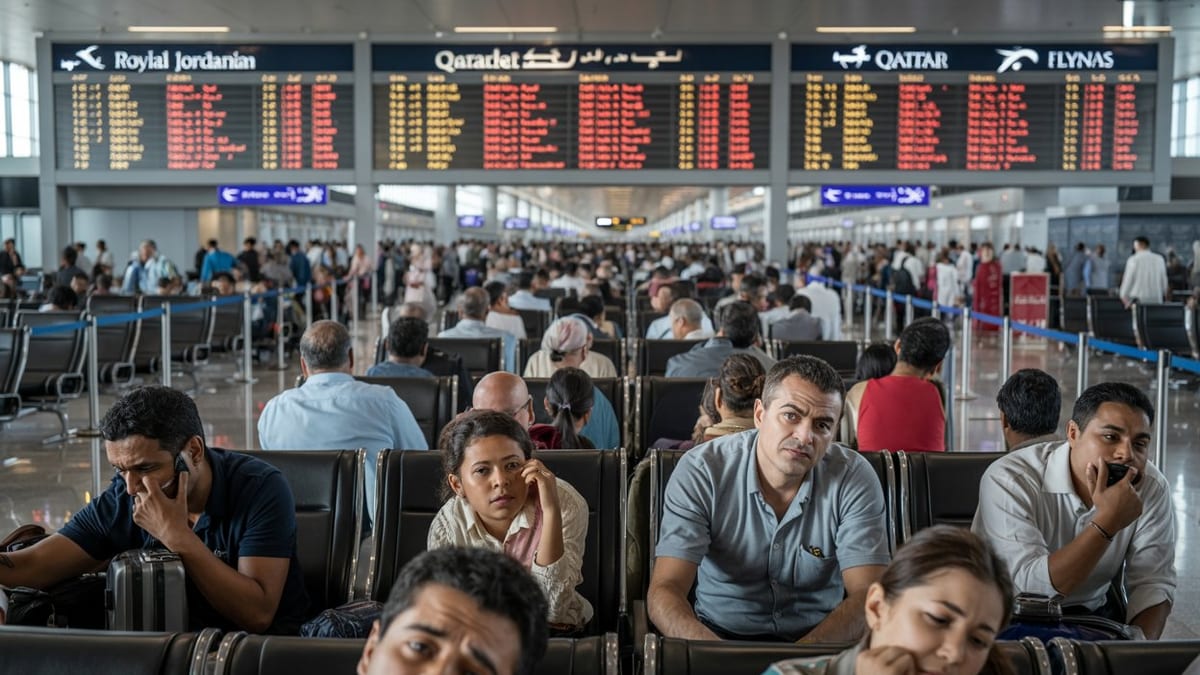
Network Disruption Centered On LaGuardia
The latest operational log for LaGuardia shows a relatively small number of outright cancellations compared with an elevated volume of delayed departures and arrivals, underscoring how even limited schedule cuts can translate into widespread disruption when paired with extensive late operations. Publicly available tracking data indicates that LaGuardia’s 16 cancellations were overshadowed by more than 500 delayed services, creating rolling congestion across the airport’s tightly scheduled banks of flights.
Reports indicate that the imbalance between cancellations and delays contributed to longer turnaround times on the ground, as aircraft and crews remained tied up on late inbound legs. With LaGuardia operating within constrained airspace and limited runway capacity, every delay had the potential to cascade, pushing subsequent flights outside their scheduled departure windows and intensifying pressure on gate availability.
Airline performance data and recent disruption patterns show that such days at LaGuardia rarely remain a local issue. Because the airport serves as a key node for connections up and down the East Coast and into the Midwest and South, knock-on effects quickly emerge on linked routes, amplifying passenger frustration far beyond New York City.
At the same time, national aviation system constraints, including air traffic flow management measures and pockets of adverse weather, appeared to interact with carrier-specific operational challenges. This combination made it more difficult for airlines to recover schedules once the day’s first wave of delays had taken hold.
Republic, United, Southwest And Regional Partners Hit Hard
Operational data compiled from flight-status platforms shows that Republic Airways, United Airlines and Southwest Airlines were among the most exposed to the LaGuardia slowdown. Republic, which operates regional services on behalf of several major carriers, plays a critical role in feeding passengers into and out of LaGuardia, meaning that disruption to its schedule tends to reverberate across multiple branded networks.
United’s LaGuardia operations connect heavily with its hubs in cities such as Chicago and Washington. When departures from New York fall behind schedule, aircraft and crews destined for onward segments can arrive late into other airports, compressing connection times and increasing the risk of missed onward flights. Publicly available on-time performance summaries for United and its regional partners illustrate how late-arriving aircraft are a recurring driver of delays, and the latest LaGuardia episode fits that broader pattern.
Southwest, while not as large at LaGuardia as in some other markets, remains tightly integrated into the national schedule through high-frequency routes from cities including Atlanta and Dallas. Travel-industry coverage of recent disruption events has highlighted that even a modest number of delayed Southwest rotations at New York can compromise punctuality on subsequent sectors, given the airline’s reliance on quick turnarounds and point-to-point scheduling.
Other carriers, including additional regional operators and North American mainline airlines, also appeared in delay tallies, though often with smaller absolute numbers of affected flights. Even so, for passengers on those services, individual delays of one to three hours translated into missed meetings, lost vacation time and unexpected overnight stays.
Ripple Effects Across Atlanta, Dallas, Miami And Other Hubs
The concentration of delays at LaGuardia quickly spilled into other major airports, with routes into Atlanta, Dallas and Miami featuring prominently in disruption summaries. These cities rank among the busiest aviation hubs in the United States, and they handle dense schedules that connect domestic passengers with both regional and international networks.
In Atlanta, one of the world’s largest connecting hubs, late arrivals from LaGuardia can interfere with tightly timed connection banks. When New York flights reach the gate behind schedule, passengers may miss onward departures to secondary cities, in turn leaving empty seats on some segments and forcing rebookings on others. This ripple effect can reshape passenger loads across an airline’s entire domestic network by the end of the day.
Dallas has emerged as another focal point for knock-on disruption. Travel and aviation tracking reports have recently documented delayed operations on routes between Atlanta and Dallas and between New York and North Texas, reflecting how congestion in one region often interacts with busy peak times in another. When flights from LaGuardia land late into Dallas, crews may reach duty-time limits sooner, aircraft may miss scheduled maintenance windows, and subsequent departures can be pushed back.
Miami and other sunbelt destinations also felt the effects, particularly for travelers relying on LaGuardia as a starting point for leisure trips or Caribbean connections. A delayed morning departure from New York can cause passengers to miss limited-frequency services later in the day, turning what was meant to be a single-day journey into a protracted, multi-stop itinerary.
Why A Handful Of Cancellations Can Paralyze A Travel Day
Industry data from the United States Department of Transportation shows that most flight delays fall into a handful of categories, including carrier-related issues such as maintenance and crew availability, extreme weather and broader national aviation system constraints. On days like the most recent disruption at LaGuardia, several of these factors can align, adding layers of complexity that multiply the impact on passengers.
Operational statistics over recent years indicate that cancellations represent only a small share of overall irregular operations, yet they often draw the most attention. The LaGuardia figures, with 16 cancellations set against 504 delays, demonstrate that it is prolonged late operations, not outright scrubbed flights, that can paralyze the travel day for the greatest number of people.
Once delays start to build, airlines frequently prioritize completing flights, even if they depart hours behind schedule, to avoid leaving passengers entirely stranded. This strategy keeps aircraft and crew sequences intact but can leave travelers spending long stretches in crowded terminals or aboard aircraft waiting for takeoff clearance. At an airport with limited runway and taxiway flexibility, such as LaGuardia, those late departures then contribute directly to further congestion.
Analysts who study historical punctuality trends also note that recovery becomes more difficult as the day progresses. Early-morning delays can sometimes be absorbed by adjusting later rotations, but by afternoon and evening peak periods, there is less buffer built into timetables. As a result, a set of morning weather or traffic-management restrictions over New York can translate into missed late-night departures in distant cities, long after local conditions at LaGuardia have improved.
What Travelers Can Do When Disruptions Mount
For passengers caught in the latest wave of disruption, the experience often involves long lines, crowded departure areas and last-minute gate changes. Consumer guidance from aviation regulators and travel organizations suggests several steps that can help mitigate the impact, even when delays appear unavoidable.
Travel-advice materials emphasize the importance of monitoring flight status through airline apps and airport information screens, since gate changes and departure times can shift repeatedly during a disruption event. Passengers are also encouraged to check whether their carrier has issued travel waivers for affected airports, which can allow itinerary changes without additional fees when operational problems reach a certain threshold.
Information published by the United States Department of Transportation highlights that, while airlines are generally not required to compensate travelers for delays caused by weather or air traffic system issues, carriers may offer meal vouchers, hotel discounts or flexible rebooking in cases of severe disruption. Policies differ by airline and situation, so passengers are advised to review the specific conditions listed on carrier websites and in booking confirmations.
Travel planners note that building extra connection time into itineraries involving congestion-prone airports such as LaGuardia, Atlanta or Dallas can provide an additional buffer on days when delays begin to mount. While this approach may lengthen total travel time on paper, it can reduce the likelihood of missed onward flights and the need for last-minute overnight stays when irregular operations spread across the network.