

More news on this day
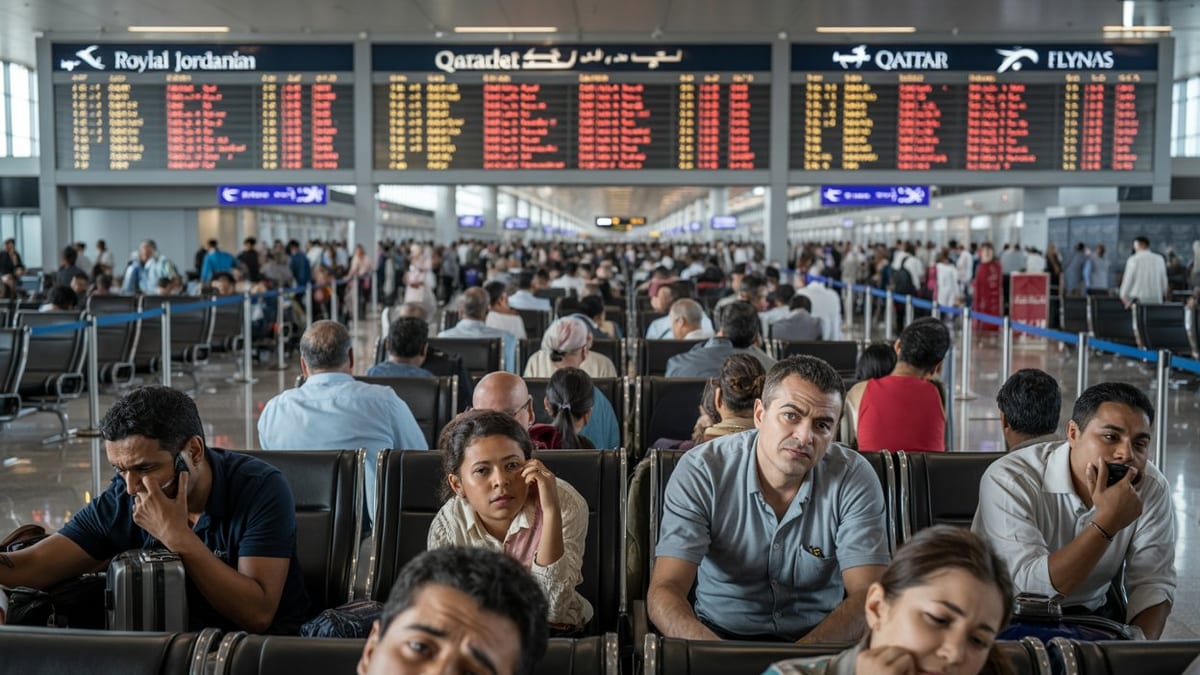
Hundreds of travelers were left isolated in terminal queues and packed gate areas at New York’s LaGuardia Airport on Sunday as a fresh wave of cancellations and delays disrupted tightly scheduled regional flights linking Canada with major U.S. cities including Toronto, Raleigh, Boston, and Chicago.
Get the latest news straight to your inbox!
Regional Networks Buckle Under Cancellations and Delays
Publicly available flight-tracking dashboards for Sunday indicated 79 cancellations and 589 delays tied to operations at LaGuardia and its web of regional connections, with Endeavor Air, Republic Airways, Jazz Aviation, and other feeder carriers among the operators most affected. Many of these flights run under the banners of major U.S. and Canadian airlines, meaning passengers often only discovered the operating carrier when their departure boards flipped to “delayed” or “cancelled.”
LaGuardia has been running at reduced resilience for much of late March and early April after a series of weather and operational shocks across the northeastern United States. Data compiled over recent days shows a recurring pattern in which early schedule disruptions at New York and Boston ripple outward into Canada and the U.S. Midwest, turning short regional hops into all-day ordeals for those attempting to connect through the busy New York hub.
On Sunday, the numbers were stark for travelers on cross-border and short-haul business routes. Flights linking LaGuardia with Toronto Pearson, Boston Logan, Chicago O’Hare and Raleigh–Durham accounted for a disproportionately high share of the delayed departures, reflecting how concentrated regional traffic is on a handful of tightly timed banks of flights.
Carriers such as Endeavor, Republic, and Jazz typically operate smaller jets that cycle through multiple legs per day. Aviation analysts note that once the first round of flights is pushed back or cancelled, the same aircraft and crews are often scheduled to operate additional sectors, magnifying the disruption throughout the day.
Knock-on Effects from Earlier LaGuardia Turmoil
LaGuardia’s struggles this spring did not begin on Sunday. In recent weeks, the airport has featured repeatedly in nationwide disruption tallies, appearing alongside hubs in Chicago, Dallas, Houston, and Atlanta as one of the most delay-prone facilities in the United States. Earlier storms along the East Coast and a high-profile safety incident involving an Air Canada Express aircraft operated by Jazz have intensified scrutiny of operations at the New York airport.
Following that collision, publicly available information shows that LaGuardia ran on constrained capacity for several days, with airlines cancelling or rerouting regional flights while investigators and airport teams worked through immediate safety and infrastructure checks. Reddit threads, flight-data dashboards, and airline travel-waiver notices from late March point to periods where LaGuardia was handling significantly fewer movements than normal, concentrating pressure on the flights that remained.
Those earlier cuts left backlogs of passengers needing reaccommodation on already crowded early April services. As more typical spring weather patterns returned, the airport’s limited buffer against disruption meant even moderate air-traffic management programs or brief ground stops quickly produced outsized effects, especially across regional networks.
Sunday’s figures therefore represent not only a bad day of operations but also the culmination of weeks of strain on LaGuardia’s schedule. Frequent flyers between Toronto and New York in particular have reported multiple days of cancellations for Air Canada and Jazz-operated services, while travelers on U.S. regional affiliates have described rolling delays between LaGuardia and secondary business markets like Raleigh and Midwestern cities.
Cross-Border Routes Between Canada and U.S. Cities Hit Hard
The latest disruption has been especially visible on routes linking Canadian gateways with LaGuardia and other U.S. business centers. Flight data indicates that services between Toronto and New York have recorded clusters of cancellations since late March, with some days seeing multiple Jazz-operated frequencies scrubbed entirely. Those patterns were echoed on Sunday, when cancellations again concentrated around short-haul regional jets shuttling between the two countries.
South of the border, LaGuardia’s ties to Boston, Chicago, and Raleigh have been similarly fragile. Storm systems earlier this season have already exposed how quickly delays at one end of a regional corridor can push the entire day’s schedule out of alignment. When aircraft and crews arrive late from Boston or Chicago, the return legs to LaGuardia start behind schedule, and subsequent sectors onward to other cities often inherit the delay.
For passengers, the geographical spread of affected routes has meant missed business meetings in downtown Toronto, stranded leisure travelers in North Carolina, and families in Boston watching departure times slip ever further into the evening. With many of the cancellations emerging from regional affiliates rather than the mainline brands, rebooking options have often been limited to later flights already near capacity.
Publicly available route maps and timetables highlight how central LaGuardia is in tying together these short-haul markets. The airport sits at the nexus of high-frequency corridors to Chicago, Boston, and Toronto, so instability on any of those routes can quickly pull the wider network off schedule.
Passenger Experience: Long Queues, Sparse Information
At LaGuardia itself, Sunday’s disruptions translated into scenes of crowded waiting areas around regional departure gates and unusually long customer-service lines. Travelers posting on social channels and aviation forums over the past week have described repeatedly reissued departure times, rolling delay notices, and, in some cases, cancellations announced only after passengers had already boarded or completed long security lines.
Reports from LaGuardia-focused community forums suggest that many travelers still feel unsettled by the recent safety incident and the airport’s continuing operational constraints. Several have highlighted the difficulty of distinguishing between weather-related, infrastructure-related, and staffing-related causes when airlines and online tools list only generic explanations such as “air traffic control” or “operational reasons.”
For those attempting to connect through LaGuardia, even modest delays have sometimes been enough to disrupt entire itineraries. Passengers flying from Canadian cities to LaGuardia and onward to southern U.S. destinations report missed onward flights and unexpected overnight stays when inbound regional jets arrived far behind schedule. With hotel prices elevated across New York, rebooking and accommodation have been costly and time-consuming.
Consumer advocates have reminded travelers in published guidance that they may be entitled to refunds when flights are cancelled, even for non-refundable tickets, and that some airlines offer meal or hotel vouchers in the case of long delays. However, accessing those benefits often requires persistence at crowded service desks or long waits on customer-service phone lines during peak disruption periods.
What Travelers Can Expect in the Coming Days
While Sunday’s count of 79 cancellations and 589 delays underscores the scale of the current disruption, flight-data trends from earlier this week suggest that conditions can improve quickly once weather stabilizes and air-traffic programs ease. However, LaGuardia’s recent history indicates that the airport remains vulnerable to renewed turbulence from even relatively small operational shocks.
As airlines work through displaced passengers from the weekend, observers expect some residual delays on Monday morning regional banks, particularly on routes to and from Toronto, Boston, Chicago, and Raleigh. Aircraft and crew positioning will be key variables: if enough overnight ferries and schedule adjustments succeed, on-time performance could rebound, but incomplete repositioning may lead to another day of rolling setbacks.
Industry commentators note that the concentration of short-haul traffic on a small group of regional carriers such as Endeavor, Republic, and Jazz means that any one airline’s operational issues can have a noticeable effect across multiple major-brand networks. With spring travel demand rising, those regional affiliates are likely to remain under pressure as they juggle tight schedules and limited spare capacity.
For now, passengers planning to fly through LaGuardia or on regional links between Canada and U.S. cities are being advised in public travel updates to monitor flight-status tools closely, build extra connection time into itineraries, and prepare for the possibility that even a seemingly routine short-haul hop could turn into a far longer journey.