

More news on this day
Hundreds of travelers at New York’s LaGuardia Airport are facing long waits and missed connections as a fresh wave of 79 flight cancellations and 589 delays disrupts cross-border services linking Canada with major U.S. cities including Toronto, Raleigh, Boston and Chicago.
Get the latest news straight to your inbox!
Operational Strain Follows Runway Crash and Capacity Limits
Publicly available data and recent coverage indicate that LaGuardia is still working through severe operational strain after a recent crash involving an Air Canada Express regional jet and an airport fire vehicle, which temporarily closed one runway and forced the airport to operate at reduced capacity for several days. With limited runway availability and tight scheduling typical of LaGuardia, even a partial shutdown has translated into cascading delays and cancellations across the network.
Flight-tracking figures referenced in multiple reports show LaGuardia recording some of the highest disruption levels in the United States in recent days, with hundreds of flights affected in a 24-hour window. Against this backdrop, regional operators such as Endeavor Air, Republic Airways and Jazz Aviation, which link LaGuardia to Canadian hubs like Toronto and Montreal as well as U.S. cities including Raleigh, Boston and Chicago, are shouldering a disproportionate share of schedule upheaval.
The latest tally of 79 cancellations and 589 delays tied to these carriers reflects not only the reduced runway throughput at LaGuardia but also the knock-on effects at downline airports. Aircraft and crews delayed on earlier legs are arriving out of sequence, forcing late-day departures to be postponed or cut entirely, leaving aircraft and passengers stranded in multiple cities.
Travel industry analyses note that LaGuardia’s chronic congestion leaves operators with little margin when unexpected events occur. Once one runway goes out of service or an extended ground delay program is introduced, queues build quickly, and regional flights with tighter turnaround times are often the first to be rescheduled or canceled.
Cross-Border Routes between Canada and U.S. Hubs Hit Hard
The disruption is being felt most acutely on short-haul cross-border and regional routes. Jazz Aviation, operating as a regional partner for Air Canada, normally runs frequent services between Toronto and LaGuardia, as well as links from Montreal to New York. Recent flight-tracking snapshots and airline schedule updates show multiple cancellations on these corridors, compounding the impact on travelers connecting between Canadian cities and U.S. business centers.
On the U.S. side, Endeavor Air and Republic Airways operate key feeders into LaGuardia from cities such as Raleigh, Boston and Chicago. When LaGuardia imposes arrival or departure restrictions, these thinner regional routes often see aircraft held at origin, swapped to other duties or removed from the schedule altogether, concentrating disruption on passengers who rely on one or two daily frequencies rather than a dense bank of alternatives.
Reports from aviation data providers suggest that passengers traveling between Toronto and major U.S. hubs are encountering a mix of extended ground holds, rolling departure times and last-minute cancellations. Connections onward to places like Raleigh and smaller Midwest markets are especially vulnerable, as missed inbound flights to LaGuardia leave travelers without same-day alternatives.
The disruptions have also complicated cargo and mail operations on these regional jets, which typically carry time-sensitive shipments in addition to passengers. Delays out of LaGuardia ripple to distribution centers in both countries, adding a secondary layer of logistical strain beyond the visible queues at airport gates.
Passengers Face Long Waits, Confusion and Limited Options
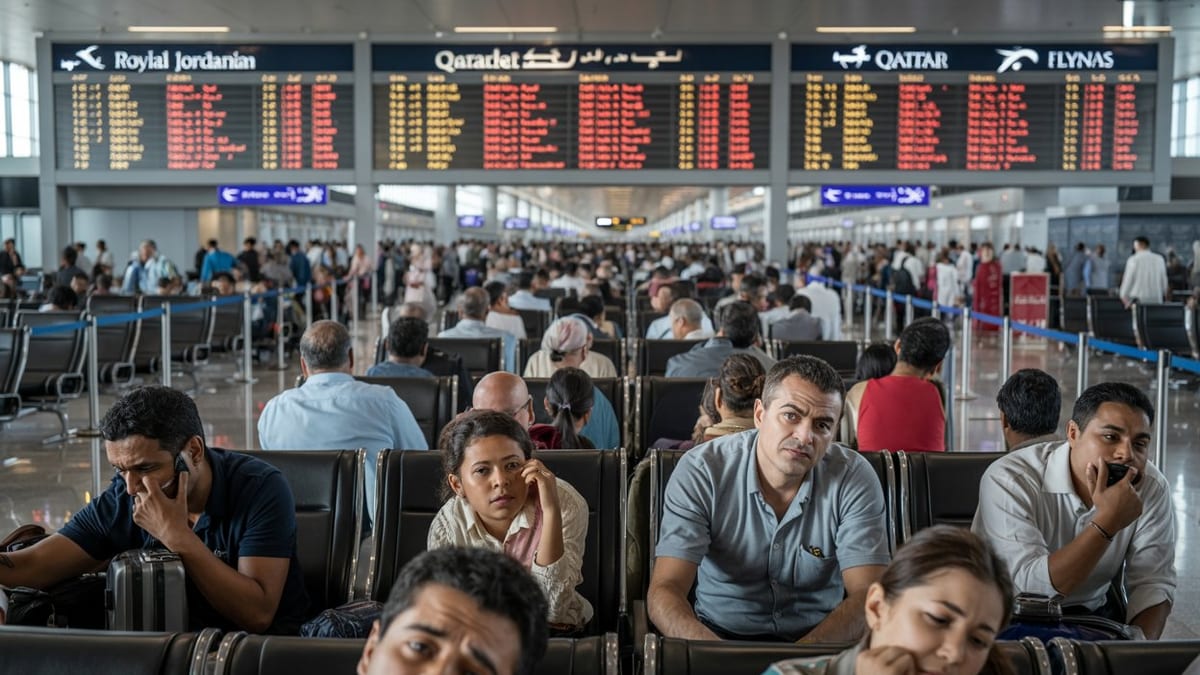
Accounts shared publicly by travelers and summarized in local and national coverage describe crowded concourses, long customer service lines and intermittent information about departure times. With flights repeatedly pushed back or removed from departure boards, many passengers attempting to travel between Canada and U.S. cities connected through LaGuardia report missing events, business meetings and family gatherings.
Regional disruptions are particularly challenging for travelers holding separate tickets or complex itineraries. A delayed Jazz or Endeavor leg from Toronto or Raleigh into LaGuardia can cause passengers to miss onward mainline flights to other U.S. destinations, often leaving them responsible for rebooking and overnight accommodation when protections across separate bookings do not apply.
Some travelers are turning to alternative airports such as Newark and John F. Kennedy in New York, or opting for direct services that bypass LaGuardia altogether. However, recent nationwide disruption patterns show that other hubs are also experiencing elevated levels of delays and cancellations, limiting the effectiveness of such workarounds during peak periods.
Taxi queues and rideshare demand around LaGuardia have reportedly increased as stranded passengers abandon air travel for rail, bus or long-distance car journeys, particularly on shorter corridors such as New York to Boston or New York to Toronto, where same-day surface travel may still be feasible.
Airlines Adjust Schedules and Offer Limited Flexibility
According to publicly available airline advisories, several carriers serving LaGuardia, including major U.S. mainline airlines and their regional partners like Endeavor, Republic and Jazz, have been adjusting schedules across the Northeast and cross-border markets. These adjustments include consolidating lightly booked flights, retiming services to better align with reduced runway capacity and, in some cases, temporarily suspending selected frequencies to or from LaGuardia.
Travel-industry reporting indicates that many carriers are offering limited flexibility measures such as waiving change fees for affected flights, allowing passengers to rebook within a defined time frame without penalty. However, such policies usually do not guarantee same-day alternatives, especially where aircraft availability is constrained or when entire route segments are temporarily reduced.
Airline operations teams are also reshuffling aircraft and crews to reestablish more stable rotations once conditions at LaGuardia gradually improve. This process can take several days, particularly for regional fleets that operate multiple short hops per day between secondary markets and the New York area.
Analysts note that while these short-term measures may help restore reliability over time, they can initially appear to worsen conditions for some travelers, as pre-planned flights are proactively canceled to prevent late-day meltdowns, leaving passengers in the near term with fewer options on already busy routes.
What Stranded Travelers Can Do Right Now
Consumer advocates and travel experts reviewing the current disruptions advise passengers affected at LaGuardia and on connecting routes to monitor flight status frequently and to consider same-carrier rebooking options before pursuing more complex alternatives. Airline mobile apps and airport departure boards are being updated throughout the day as new ground delay programs or capacity constraints are introduced.
When a flight is canceled, travelers are generally entitled to a choice between a later flight or a refund of the unused portion of their ticket, depending on the fare conditions. Public guidance from regulators and airline policies emphasize that passengers should check the specific conditions attached to their booking, particularly on itineraries involving multiple carriers or separate tickets across the U.S. and Canada.
Travel specialists also suggest that passengers heading to or from cities like Toronto, Raleigh, Boston and Chicago explore options through nearby airports or on alternative transport modes, particularly for regional journeys where rail or intercity bus networks offer comparable door-to-door times once airport delays are factored in.
For now, the combination of recent runway constraints at LaGuardia, tight regional scheduling and broader strain across North American air travel means that cross-border passengers should build extra time into itineraries and prepare for potential changes, especially when traveling on regional partners such as Endeavor, Republic and Jazz that play a critical role in linking Canadian cities with key U.S. business and leisure markets.