

More news on this day
New York’s LaGuardia Airport endured another bruising day on April 3, as publicly available flight-tracking data showed more than 245 departures and arrivals delayed, creating fresh turmoil for already weary travelers navigating one of the nation’s most disruption-prone hubs.
Get the latest news straight to your inbox!
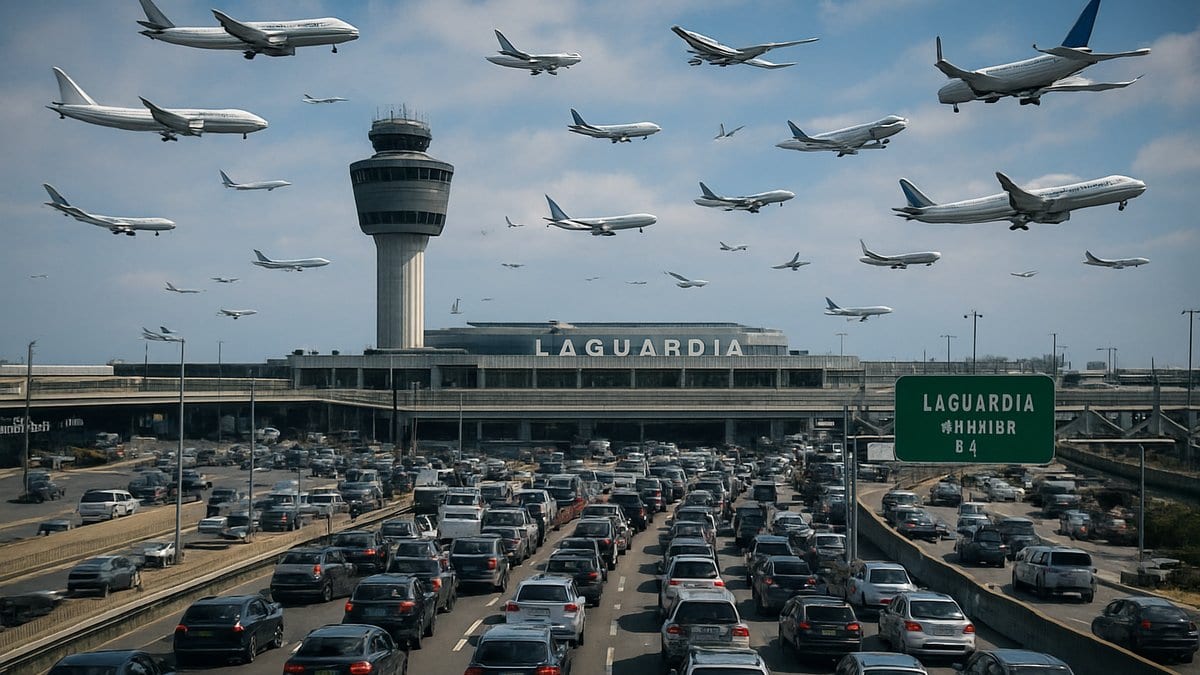
A Fresh Wave of Delays After a Turbulent March
The latest disruption unfolded against the backdrop of an already fragile operation at LaGuardia, where a deadly collision between an Air Canada Express regional jet and an airport fire truck in late March led to an extended closure of key infrastructure and a cascade of schedule adjustments. Airport summaries and airline bulletins indicate that partial runway closures, ground delay programs and rolling travel waivers extended from March 23 through at least April 1, compressing schedules into narrower operating windows and leaving little margin for recovery when problems occur.
Industry dashboards tracking operations at major United States airports showed LaGuardia near the top of national delay rankings in recent days, with more than 300 delayed flights reported on April 2 and a further wave of disruption continuing into April 3. The current tally of more than 245 delays on Friday reflects a modest improvement but still represents a substantial portion of the airport’s daily traffic, given that LaGuardia typically handles just over 3,000 movements per week across roughly 100 destinations.
Published coverage from travel and aviation outlets describes the April 3 situation as a grinding continuation of the post-crash recovery period rather than a single dramatic weather shock. Even as the Federal Aviation Administration’s real-time dashboard at times listed “no delays” for LaGuardia on Friday afternoon, individual airline systems and third-party trackers showed sliding departure times across carriers, underscoring the gap that can exist between headline status indicators and the reality faced by passengers at the gate.
While some earlier disruption across the national network stemmed from severe storms sweeping the East Coast and Midwest in mid-March, the latest LaGuardia-specific crunch appears more closely tied to lingering runway constraints, slot-controlled scheduling pressures and residual congestion from days of rolling delays and cancellations.
Chicago, Montreal and Other Key Routes Hit Hard
Reports from travel-industry analysts and consumer advocacy groups point to heavy disruption on LaGuardia’s high-frequency corridors, particularly routes to Chicago O’Hare and Montreal, which serve as critical domestic and transborder links. Multiple daily flights on these routes are operated not only by major network carriers but also by regional affiliates and low-cost competitors, making them especially vulnerable when the schedule begins to slip.
Coverage in specialized aviation outlets notes that recent safety incidents on LaGuardia’s Chicago and Montreal services have further heightened operational sensitivity along these corridors. An Air Canada Express service between Montreal and LaGuardia that was involved in the late-March runway collision has been cited in several reports as a focal point of ongoing scrutiny, while a separate American Airlines flight from LaGuardia to Chicago diverted to Detroit on March 29 after a bomb threat, triggering an eight-hour ordeal for more than 150 passengers.
Publicly available data on April 3 indicates that many of the roughly 245 delayed flights at LaGuardia were short and medium-haul services feeding major hubs. Disruptions on these spokes can quickly ripple through airline networks, leading to missed connections in cities such as Chicago, Atlanta and Dallas, and forcing carriers to make difficult choices about which flights to prioritize as aircraft and crews fall out of position.
For travelers, the concentration of delays on such critical connecting routes means that a localized problem at LaGuardia can have outsized consequences, turning what might have been a brief hold at the gate into a domino effect of missed onward flights and extended overnight stays hundreds of miles from New York.
From Runway Collision to Prolonged Operational Strain
The fatal March 22 collision at LaGuardia marked a turning point in what had already been a challenging winter and early spring for United States aviation. Publicly available investigative timelines state that the Air Canada Express regional jet collided with a fire truck as it landed on one of LaGuardia’s runways, prompting a full closure of the airport while emergency services responded and federal investigators began their work. Dozens of people were reported injured, and all commercial operations at the airport were temporarily halted.
In the aftermath, airlines serving LaGuardia, including major network carriers and their regional partners, issued travel waivers that covered flights from March 23 through at least March 29, later extended by some operators as runway capacity remained restricted. Internal schedule adjustments reduced the number of available flights and shifted departures into narrower operating windows, leaving airlines little room to absorb further shocks from weather, crew-displacement issues or technical delays.
Travel-industry reports suggest that LaGuardia’s chronic congestion problems magnified the impact of these temporary restrictions. The airport has long ranked among the most delay-prone facilities in the United States, with government and academic studies repeatedly highlighting its tightly packed schedule, constrained airspace and limited runway layout. The sudden loss or partial limitation of one runway, combined with heightened safety protocols after the collision, effectively removed what little flexibility remained in the system.
Even as the airport officially reopened and airlines resumed full schedules on paper, the combined effect of aircraft out of position, displaced crews and a backlog of rebooked passengers created what some analysts describe as a rolling recovery phase. By early April, LaGuardia was no longer fully shut, but operational data show that it was far from normal, with April 2 and April 3 delays stacking on top of earlier disruptions.
National Network Ripple Effects and Passenger Impact
The LaGuardia delays unfolded in parallel with broader national disruption that has dogged United States air travel through March and into April. Reuters and other major outlets previously documented a mid-March storm system that resulted in more than 8,000 delays and 4,000 cancellations nationwide in a single day, with the Federal Aviation Administration imposing ground delay programs at LaGuardia, John F. Kennedy International and Newark Liberty to manage high winds and thunderstorms. That earlier weather shock left many carriers operating with thinner buffers just as LaGuardia’s runway crisis took hold.
Consumer-facing analyses released this week indicate that certain airlines have been hit particularly hard in the current disruption cycle, with one report citing nearly 1,000 delays across several major airports, including LaGuardia, during the peak of the April 3 event. For passengers, the on-the-ground experience has included rolling departure time changes, last-minute gate switches, and, in some cases, missed connections that strand travelers far from their intended destinations.
Social media posts and forum discussions from travelers transiting LaGuardia in recent days describe long waits at departure gates, crowded concourses and a sense of uncertainty as estimated departure times repeatedly slip. While Transportation Security Administration checkpoint data shows that security wait times at some LaGuardia terminals have improved since the intense strains seen during a recent partial government shutdown, bottlenecks at check-in and baggage drop have added further friction to journeys already complicated by operational delays.
Travel advocates highlight that such conditions are particularly punishing for passengers with tight connections, those traveling with small children, and individuals who rely on rigid schedules for work or medical appointments. As the April 3 delay count climbed past 245, these ripple effects extended well beyond New York, affecting travelers whose only connection to LaGuardia was a missed inbound aircraft or a delayed crew.
What Travelers Can Expect in the Days Ahead
Airline advisories and operational forecasts suggest that while the worst of the immediate runway-related disruption has passed, travelers using LaGuardia in the coming days may still encounter elevated risk of delays, especially during peak morning and late-afternoon banks when traffic is densest. Schedule reductions and aircraft-substitution strategies introduced during the closure period are expected to remain in place for some time, as carriers gradually rebuild resilience into their rotations.
Travel analysts recommend that passengers with flexible plans consider shifting to midday departures, which may offer a slightly greater buffer against morning knock-on delays and evening congestion. They also suggest building extra time into itineraries involving connections through Chicago, Atlanta, Dallas and other major hubs that rely heavily on LaGuardia feed, given the potential for residual knock-on effects from the April 3 disruption wave.
Publicly available guidance from travel-rights organizations emphasizes that compensation and rebooking options vary widely depending on airline policies, the cause of delay and the jurisdiction of the ticket. While many of LaGuardia’s recent issues have roots in safety and weather considerations, which can limit monetary compensation, passengers are frequently entitled to free rebooking on later flights, meal vouchers in cases of extended holds, and in some situations hotel accommodations when overnight stays become unavoidable.
With investigators still examining the circumstances of the March 22 collision and policymakers debating how to address chronic congestion at key United States airports, LaGuardia’s performance will remain under scrutiny well beyond this week’s 245-plus delay episode. For now, travelers passing through the New York hub are advised by public-facing aviation resources to treat departure times as provisional, stay closely tuned to airline apps and airport displays, and prepare for a slower journey through one of the nation’s most scrutinized airports.