

More news on this day
New York’s LaGuardia Airport is grappling with severe travel disruption today, as 559 flight cancellations and 99 delays upend schedules for Delta, United Airlines, Southwest, JetBlue and thousands of passengers heading to major US cities including Atlanta, Chicago, Boston and Miami.
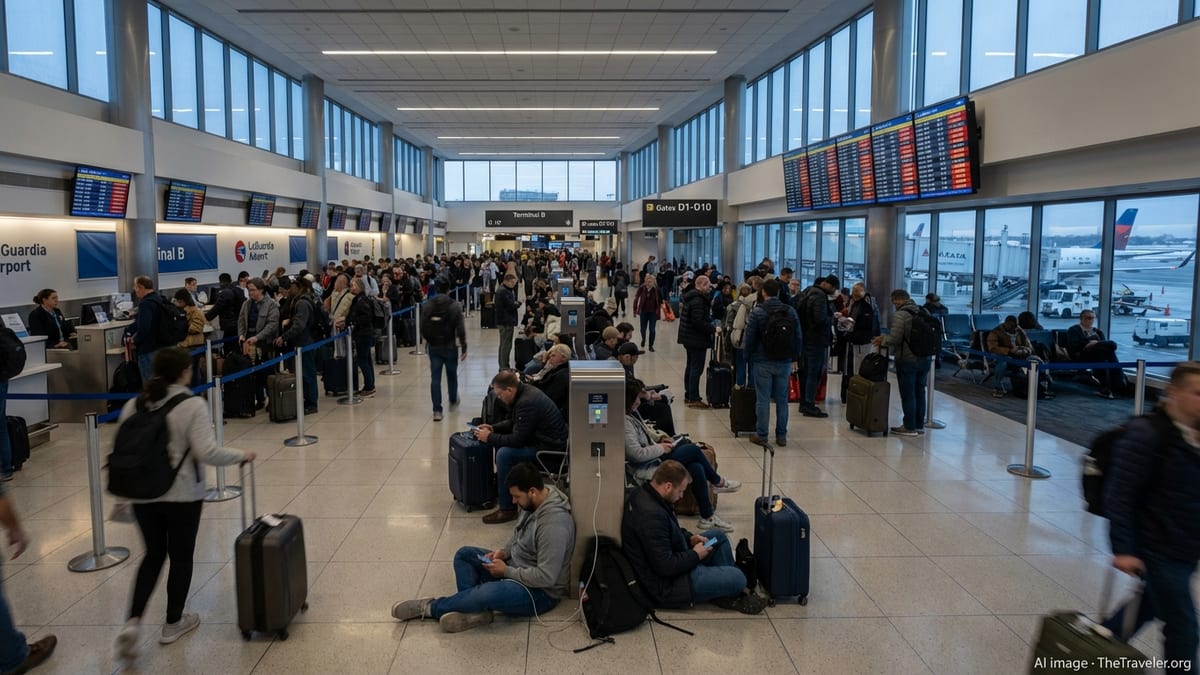
Severe Operational Strain at One of America’s Busiest Airports
The disruption at LaGuardia comes on one of the busy late-winter travel weekends, magnifying its impact on domestic air traffic. With more than 650 combined cancellations and delays, the airport’s tightly choreographed daily schedule has been thrown off balance, leaving aircraft and crews out of position and constraining gate capacity across multiple terminals.
Both arriving and departing flights are affected, with cancellations cutting deeply into peak morning and evening banks. Travelers arriving to discover last-minute changes are lining up at airline service counters, where staff are working extended shifts to rebook passengers, issue meal vouchers and arrange hotel accommodation where required.
The disruptions are extending beyond LaGuardia’s perimeter. Because the airport functions as a key connector in several airlines’ domestic networks, missed connections and aircraft rotations are now affecting schedules in Atlanta, Chicago, Boston, Miami and other hubs that depend on consistent flows of traffic in and out of New York.
Inside the terminals, departure boards are dominated by red and yellow status updates, underscoring the scale of the disruption. Announcements advising passengers to stay close to their gates have become near-constant, as rolling delays and last-minute reassignments shape the day’s operations.
Delta, United, Southwest and JetBlue Among Hardest Hit Carriers
The largest operational burden is falling on the airlines with the most extensive schedules at LaGuardia. Delta Air Lines, a major player at the airport with significant service to Atlanta, Chicago and Boston, is contending with widespread schedule cuts, forcing it to consolidate some frequencies and reroute aircraft through alternate airports where possible.
United Airlines, which relies on LaGuardia for key domestic links into its hub system, is similarly affected, especially on routes feeding Chicago and other Midwestern cities. The need to reposition aircraft and crews is complicating recovery efforts, as cancellations in New York trigger further schedule adjustments in the middle of the country.
Southwest Airlines and JetBlue, both important carriers for travel between New York and major leisure destinations like Florida, are also battling the fallout. Flights between LaGuardia and Miami, along with other Florida cities, are experiencing a mix of outright cancellations and multi-hour delays, straining customer service teams as families and vacationers scramble for alternatives.
For all four airlines, the cumulative impact is measured not just in today’s disrupted flights but in the knock-on effects that will play out over the next 24 to 48 hours, as they work to restore aircraft rotations, manage crew duty limits and absorb stranded passengers into already busy future departures.
Atlanta, Chicago, Boston and Miami See Knock-On Effects
The consequences of LaGuardia’s woes are being felt most clearly at the airports that see the heaviest traffic to and from New York. In Atlanta, a critical Southeast hub, lines are lengthening at customer service counters as passengers on disrupted LaGuardia services search for open seats on alternative departures. Some travelers are being rerouted through other East Coast hubs, prolonging journeys that would normally be nonstop.
Chicago is also seeing visible strain, particularly at O’Hare International Airport, where waves of LaGuardia-related cancellations are layered on top of typical winter weather challenges. For some passengers, options now include being rebooked through secondary airports or accepting next-day travel, as midday and evening flights reach or exceed capacity.
Boston, with its traditionally busy shuttle-style operations to New York, is confronting a reduction in frequency and increased crowding on the flights that do operate. Passengers accustomed to near-hourly service between the two cities are finding that flexibility limited, with remaining flights booked solid and standby lists growing throughout the day.
In Miami and other Florida destinations, the disruption is affecting both outbound New Yorkers starting vacations and returning travelers attempting to end theirs. Full flights and constrained spare capacity make it difficult to absorb canceled passengers, leaving some travelers facing overnight stays and extended time away from work or school.
Ripple Effects Across the National Aviation Network
Because LaGuardia is one of the most delay-prone airports in the United States even on a typical day, significant operational shocks there can quickly radiate across the broader national network. As today’s 559 cancellations and 99 delays cascade outward, aircraft and crew imbalances are surfacing in cities with seemingly no direct link to New York’s current weather or infrastructure challenges.
Smaller and mid-sized airports with limited daily departures are particularly vulnerable. A single grounded aircraft at LaGuardia can translate into the loss of a daily roundtrip for a secondary market, turning a routine schedule disruption into an all-day stranding for passengers with few alternatives.
Meanwhile, major hub airports from the Midwest to the Southeast are contending with last-minute gate changes and altered connection times as LaGuardia-bound or LaGuardia-originating flights disappear from the schedule. Airline operations centers are engaged in an intricate balancing act, re-timing flights to minimize missed connections while avoiding further bottlenecks elsewhere in their networks.
Industry analysts note that these ripple effects underscore how sensitive the US aviation system remains to disruptions at a handful of critical coastal airports. When a single node like LaGuardia suffers a significant shock, airlines and passengers nationwide can feel the consequences for days.
Passengers Face Long Lines, Limited Options and Frayed Nerves
Inside LaGuardia’s terminals, the passenger experience has devolved into a test of endurance and flexibility. Lines at airline customer service desks stretch deep into concourse walkways, with some travelers reporting waits of more than an hour to speak with an agent about rebooking options. Self-service kiosks are in near-constant use as passengers attempt to make changes on their own.
Families traveling with children and older passengers face particular challenges. With many flights fully booked for the remainder of the day, keeping travel parties together on alternative departures is proving difficult. Some travelers are being offered split itineraries or seats on flights connecting through multiple cities, increasing travel times and stress.
Airport concessions, from coffee shops to full-service restaurants, are busier than usual as passengers settle in for unexpectedly long waits. Seating around gates and in common areas is at a premium, with many travelers resorting to sitting on the floor or standing near charging stations to keep devices powered while they monitor changing flight information.
Despite the frustration, airline and airport staff are urging passengers to remain patient and to use official channels for updates rather than relying on rumors or unverified social media posts. Announcements throughout the terminals remind travelers to confirm their flight status via airline apps, text alerts and departure displays before heading to the airport or moving between terminals.
Airlines Race to Recover Schedules and Reposition Aircraft
Behind the scenes, airline operations teams are engaged in a complex recovery effort aimed at restoring a stable schedule as quickly as possible. One of the immediate priorities is repositioning aircraft and crews stranded out of place when flights were canceled at short notice. This often requires operating additional ferry flights without passengers and negotiating new crew pairings that comply with strict duty-time regulations.
Carriers are also adjusting aircraft assignments, moving larger jets onto routes where multiple frequencies have been canceled in order to recover more disrupted passengers with each available departure. Such upgauging can help ease the immediate backlog but may leave other markets temporarily underserved, reflecting the trade-offs involved in large-scale disruption management.
Customer service policies are being flexed to cope with the surge in affected travelers. Change fees on many impacted routes have been waived, and airlines are extending travel waivers that allow passengers to move their trips to different days or nearby airports without financial penalties. In some cases, carriers are working with partner airlines to place passengers on alternative flights when their own schedules offer no viable options.
Even with aggressive recovery measures, industry experience suggests that full normalization of operations may take at least another day. The scale of the cancellations means that some passengers will still be in transit long after LaGuardia’s departure boards return to a more typical pattern.
Guidance for Travelers Heading to or Through LaGuardia
Travel experts and airline representatives are advising anyone scheduled to fly to or from LaGuardia to take a proactive approach. Checking flight status repeatedly before leaving for the airport can prevent unnecessary trips, particularly for early-morning departures that may be canceled overnight as carriers reshape their schedules.
Passengers with flexible plans are being encouraged to consider rebooking through alternate New York area airports, such as John F. Kennedy International or Newark Liberty International, where capacity on some routes may be less constrained. However, shifting airports can introduce its own logistical challenges, including longer ground transfers and different security wait times.
For those who must travel, building in additional connection time is critical. Tight layovers that might be manageable on a normal day are risky amid rolling delays, increasing the chance of misconnecting and facing an overnight stay away from home. Travelers are also urged to keep essential items, including medications and chargers, in carry-on bags rather than checked luggage in case of unplanned overnight disruptions.
Experts also recommend that passengers take advantage of mobile tools. Airline apps, text alerts and online chat functions can sometimes rebook disrupted travelers more quickly than waiting in physical lines, especially when large numbers of people are seeking assistance at the same time.
What Today’s Chaos Reveals About US Air Travel Fragility
The turmoil at LaGuardia is renewing attention on the vulnerabilities of the US aviation system, particularly at older, space-constrained airports serving high-density metropolitan areas. Even as LaGuardia has undergone a multibillion-dollar modernization in recent years, its geographic and runway limitations leave little margin for error when weather, staffing or technical problems arise.
Industry observers note that as airlines seek to maximize efficiency with tighter schedules and fuller planes, the system’s ability to absorb shocks has diminished. When major disruptions occur at a key node like LaGuardia, the interconnected nature of hub-and-spoke networks means that passengers far from New York can end up stranded by events they had no way of anticipating.
The current crisis is likely to fuel ongoing discussions about investments in air traffic control modernization, airport infrastructure and staffing resilience, as policymakers and industry leaders look for ways to reduce the frequency and severity of such large-scale disruptions. For travelers, however, the lessons are more immediate: build extra flexibility into itineraries, keep a close eye on weather and operational forecasts, and always have a backup plan.
For now, thousands of passengers across the United States are living the reality of what can happen when a single airport, even one as familiar as LaGuardia, struggles under the weight of hundreds of cancellations and delays in a single day.