

More news on this day
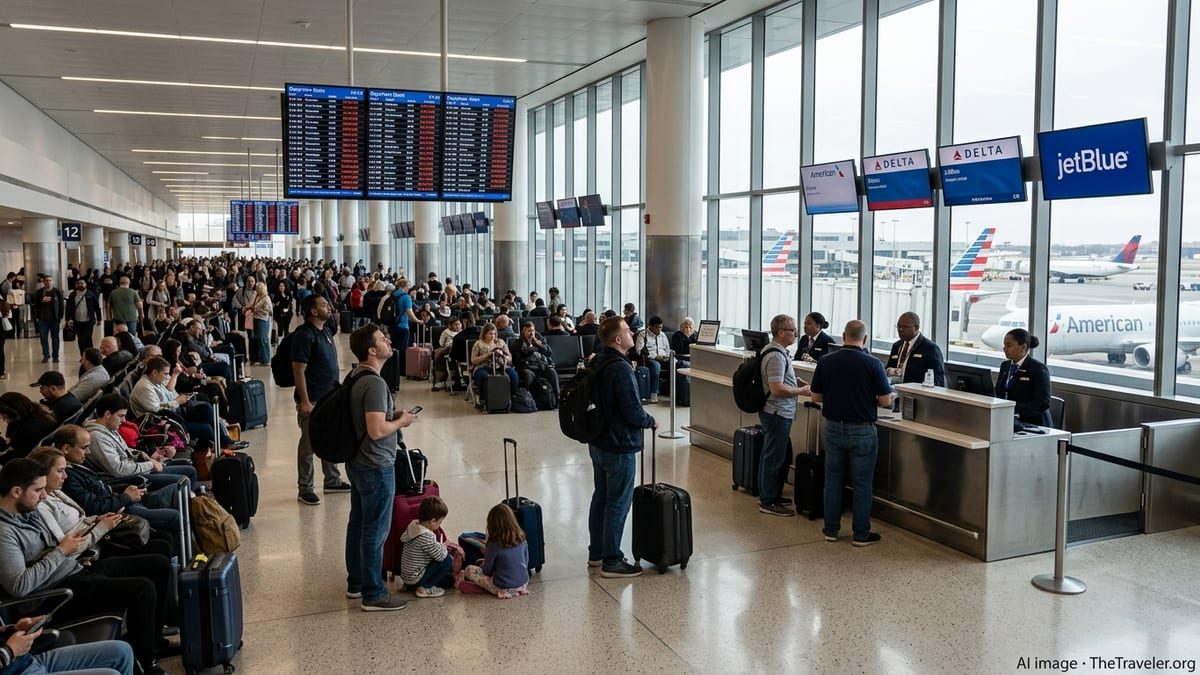
Hundreds of passengers were stranded at New York’s LaGuardia Airport on Sunday as flight-tracking data showed 212 delays and 8 cancellations across major carriers, disrupting connections to Chicago, Miami, Boston and other key U.S. cities.
Get the latest news straight to your inbox!
Heavy Disruptions Hit a Critical New York Hub
Publicly available data from flight-tracking services on Sunday indicated that LaGuardia Airport experienced one of the most disrupted schedules in the country, with more than two hundred flights departing or arriving later than planned and a smaller number canceled outright. The disruptions affected a broad cross-section of domestic routes, concentrating heavily on busy corridors linking New York with major population centers in the Midwest and along the East Coast.
Operations at LaGuardia are especially vulnerable to ripple effects because of the airport’s compact layout, high traffic density and slot-controlled schedule, which limits flexibility when recovery from interruptions is needed. Once delays begin to accumulate, the airport’s tightly choreographed arrival and departure flows can quickly become congested, amplifying the impact on passengers and airlines alike.
Travelers reported extended waits in terminals as rolling updates pushed back departure times, with some flights sitting at gates or on the tarmac while crews and aircraft were repositioned. The situation created crowded gate areas and longer lines at customer service desks, as many passengers attempted to secure alternative connections or rebook their journeys for later in the day or the following morning.
Major Airlines and Key Routes Affected
According to live tracking boards and airline status pages, the disruptions at LaGuardia touched a range of major carriers, including American Airlines, Delta Air Lines, JetBlue Airways and others operating regional and mainline services. These airlines rely heavily on LaGuardia for high-frequency shuttle-style connections, meaning schedule changes at a single hub can reverberate across multiple onward flights.
Routes between New York and Chicago, Miami and Boston were among those most visibly affected, with delays cascading across morning and afternoon banks of departures. Chicago-bound flights faced waits as crews and aircraft arriving from other delayed services were cycled through, while services to Miami and other Florida destinations contended with both conditions in the Northeast and residual weather-related congestion farther south.
Short-haul flights to Boston and other cities along the Northeast corridor also experienced knock-on effects, as aircraft allocated to quick shuttle rotations fell behind schedule. Once early services were pushed back, subsequent flights on the same aircraft often departed progressively later, increasing the number of travelers facing missed connections and late arrivals.
Weather, Airspace Constraints and Congestion Combine
Recent storm systems across the Midwest and East Coast, along with periods of thunderstorms and high winds in the New York area this month, have contributed to repeated ground delays and inflight holds at LaGuardia. National airspace management programs frequently reduce arrival rates into New York City’s airports when visibility, wind or convective weather raise safety margins, forcing airlines to slow or temporarily pause operations.
In addition to weather-related restrictions, ongoing congestion in the region’s airspace and at LaGuardia itself has compounded the problem. When traffic volume is high, even minor disruptions can lead to gate shortages, longer taxi times and further delays as arriving aircraft wait for open parking positions and departing flights queue for takeoff slots.
A backlog of delayed flights can also create staffing and aircraft-rotation challenges for airlines. When crews exceed regulated duty-time limits due to extended ground or air holds, carriers must reposition or replace staff, and aircraft that were scheduled to operate subsequent flights may not reach their next departure points in time. These operational constraints contribute to the kind of cumulative disruption observed at LaGuardia, where a relatively small number of cancellations belies the wider impact of widespread delays.
Stranded Passengers Seek Alternatives
As delays mounted, many passengers turned to same-day rebooking options, travel waivers and alternate routings through other airports in the New York region and beyond. Publicly available information from airline advisories in recent days has highlighted flexible change policies during periods of severe weather and heavy congestion, allowing some travelers to switch to flights from John F. Kennedy International Airport or Newark Liberty International Airport, or to move their trips to different days without additional change fees.
Others sought ground transport alternatives for shorter routes, particularly between New York and Boston or other Northeast destinations, where rail and intercity bus services can sometimes offer a more predictable timeline when aviation networks are strained. However, last-minute shifts of this kind can be difficult for travelers with checked baggage or tightly timed connections to other flights and cruises.
Inside LaGuardia’s terminals, the combination of crowded seating areas, limited charging points and long waits placed additional pressure on airport amenities. Some passengers opted to purchase single-visit lounge access or turned to quieter concourses in search of space, while families with young children and older travelers faced particular challenges finding rest areas during extended delays.
Continuing Impacts on the Spring Travel Period
The latest wave of disruptions comes during a period of elevated demand, with spring travel ramping up across the United States and LaGuardia serving as a key gateway for business and leisure trips. Industry data in recent weeks has pointed to strong booking volumes on domestic routes, magnifying the impact when irregular operations occur.
Travel observers note that LaGuardia has benefited from significant terminal upgrades and infrastructure improvements in recent years, boosting capacity and enhancing passenger facilities. Even so, the airport’s geographic constraints and role within the busy New York airspace system mean that it remains sensitive to external shocks, including storms, staffing disruptions and national air traffic control initiatives.
For upcoming travelers, aviation analysts generally recommend monitoring flight status closely, arriving at the airport earlier than usual during periods of unsettled weather, and considering early-morning departures, which historically face fewer knock-on delays than afternoon and evening services. As airlines work to reset their schedules and reposition aircraft following the latest disruption, passengers heading to or through LaGuardia in the coming days may still encounter residual delays, particularly on high-demand routes to Chicago, Miami, Boston and other major cities.